
REVIEW · KYOTO SAKE TOURS
Kyoto: Gion Geisha District & Sake-in-Hand Walking Tour
Gion is at its most atmospheric after dark, when lanterns glow on wooden machiya houses and the narrow lanes grow quieter. This walk pairs that old Kyoto setting with stories about geisha culture, samurai life, Zen meditation, and a tasting of Japanese sake. You might even spot a geiko or maiko, though no tour can promise that.
I like the small maximum of 10 people, which gives you a better chance to ask questions and keep close to the guide. I also like the route itself: it links Gion with Yasaka Shrine, Yasaka Pagoda, Ninenzaka, Sannenzaka, and quiet Nene-no-Michi rather than staying on one busy street.
The main consideration is the pace and content. You cover plenty of ground in roughly 60 to 90 minutes, so this is more of a lively orientation walk than a long cultural lecture. One lower-rated experience found too much walking and too little conversation, so this tour suits you best if you want a relaxed introduction rather than an intensive lesson.
Key points to know before booking

- Nighttime Gion atmosphere: Lantern-lit lanes, wooden townhouses, shrines, and stone paths give the walk its strongest appeal.
- Sake tasting included: You sample local sake during the walk, with some tours offering bottles from different parts of Japan and small snacks.
- A compact route with many sights: The walk connects Gion, Hanamikoji Street, Yasaka Pagoda, Ninenzaka, Sannenzaka, Nene-no-Michi, and Yasaka Shrine.
- Guides who add a personal touch: Shumpei and Mune have been praised for friendly conversation and useful explanations about Kyoto and daily life in Japan.
- Limited to 10 participants: The small group helps the guide manage narrow streets and answer questions.
- A real walking tour: Wear good shoes, keep your voice down near homes, and remember that alcohol is served only to those aged 20 and over.
Why Gion works so well after dark
Gion is Kyoto’s best-known geisha district, but it is easy to misunderstand what that means. This is not a stage show or a guaranteed geisha sighting. It is a historic neighborhood where traditional wooden houses, teahouses, shrines, and working residential streets still share the same space.
That distinction matters. The pleasure comes from seeing Gion as a living part of Kyoto, not as a theme park built for visitors. Your guide can explain the difference between geiko and maiko, discuss the customs surrounding the entertainment district, and offer advice on how to behave if you see one passing by.
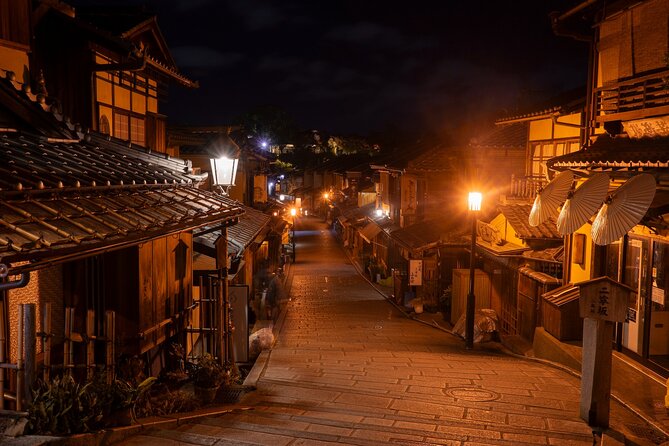
The evening setting helps. Lantern light softens the streets, and the narrow alleys feel more intimate than they do during the day. You may find the district quiet in places, especially when the group leaves the main lanes. Rain can also change the mood, making the stone streets and lights feel especially atmospheric.
You should still keep your expectations sensible. This is a short walk, and the amount of explanation can depend on the guide and the group. Some guides, including Shumpei and Mune, have been praised for friendly discussion and answers about life in Japan. If your guide is less talkative, the experience may feel more like a scenic walk with sake than a full cultural tour.
More Sake Walking Tours in Kyoto:
- Kyoto: Izakaya Bars Guided Walking Tour
★ 4.9 · 815 reviews - Kyoto Sake Brewery & Tasting Walking Tour
★ 5.0 · 623 reviews - Kyoto: Gion Evening Walk with Hidden Gems, Geisha & Sake
★ 5.0 · 41 reviews
Starting beside the Kamo River
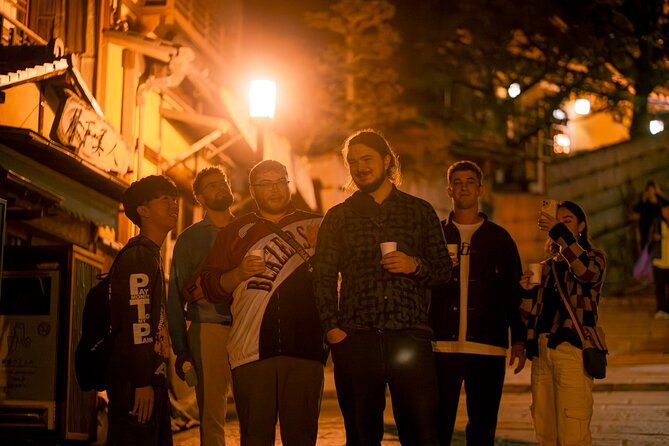
The meeting point is at Kikunoi Roan, at 118 Saitōchō, just south of Shijō in Kyoto’s Shimogyo Ward. The location is near public transportation, and the route begins close to the Kamo River.
The river is one of Kyoto’s defining features. Its banks offer a wide change of pace from Gion’s tight lanes, with open views and a calmer start to the evening. Depending on the exact route and timing, you may see the river as the walk moves toward the Gion area.
This is a useful place to meet because you begin with room to gather before entering streets where a group of 10 can feel larger. Arrive ready to walk. You will not be spending the evening in one restaurant or seated at a fixed tasting table.
Gion and Hanamikoji Street
The first main part of the walk takes you into Gion, where traditional machiya houses and teahouses line the streets. The guide’s role is important here. Without local context, you might see attractive wooden buildings but miss the meaning of the district and the rules that help protect it.
Hanamikoji Street gives you one of the clearest views of old Gion. Its preserved buildings and restrained design make it a popular photo stop, but it can also be crowded. The listed visit lasts about 10 minutes, so expect an introduction and time to look around rather than a long stop inside a building.
Photography requires care. Gion includes private homes and businesses, and the tour specifically asks you to keep your voice down in residential areas at night. Do not block doorways or follow people you think may be geiko or maiko. The best photographs usually come from observing the street itself, not from treating people as scenery.
Yasui-Konpiragu and its unusual shrine ritual
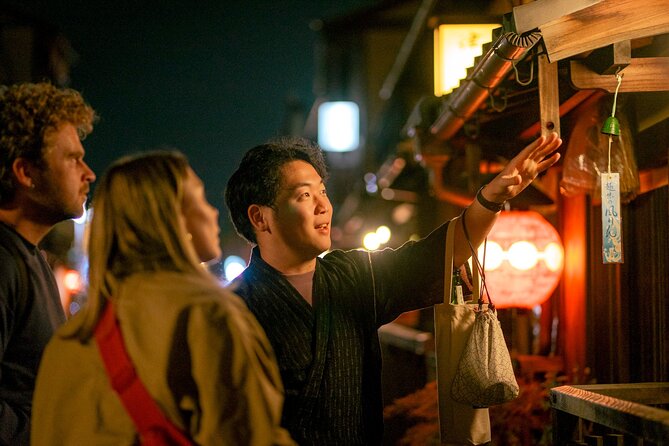
Yasui-Konpiragu Shrine is a distinctive stop in the Higashiyama area. It is associated with breaking away from harmful relationships and forming better ones, giving the shrine a different character from the grander sites nearby.
The shrine is known for its large Enkiri and Enmusubi stone. The tour allows about 15 minutes here, enough for the guide to explain the site and for you to take in its unusual appearance. The stop adds a piece of everyday religious life to the walk, rather than presenting Kyoto only through famous temples and photogenic streets.
Because the tour moves at night, lighting and visibility may vary. Listen to the guide’s explanation and stay with the group instead of lingering too far behind. This is one of several short stops, so the appeal comes from the sequence of places rather than a long visit at any one shrine.
A few more sake tours around Kyoto worth a look
- 3-Hour Kyoto Insider Sake Brewery Tour with Tastings & Pairings
★ 5.0 · 917 reviews - Kyoto: Insider Sake Brewery Tour with Sake and Food Pairing
★ 5.0 · 704 reviews - 1.5-Hour Kyoto Insider Sake Experience with 7 Tastings & Pairings
★ 5.0 · 297 reviews - Kyoto: Insider Sake Experience with 7 Tastings and Snacks
★ 5.0 · 266 reviews
Yasaka Pagoda and the Higashiyama lanes

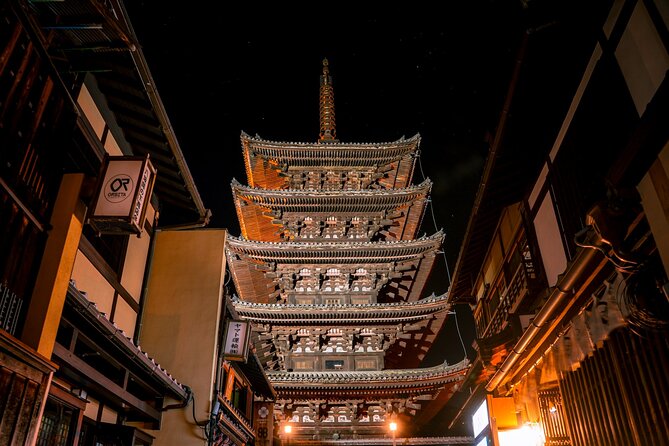
Hokan-ji Temple, usually called Yasaka Pagoda, is one of Kyoto’s most recognizable sights. Its five-story form rises above the surrounding streets, and the structure gives the walk a strong visual center.
The temple dates to the sixth century, according to the tour information, and the surrounding Higashiyama district preserves many traditional buildings. The stop is scheduled for about 15 minutes. That gives you time for photographs and a short explanation, but it does not include an extended temple visit.
From here, the route continues through Ninenzaka and Sannenzaka, two stone-paved streets known for wooden buildings, shops, and a traditional Kyoto feel. The listed stops are short, about five minutes each. That tells you something useful: these are viewing and orientation points, not shopping sessions.
The slopes are gentle, but stone paving can be uneven. Comfortable shoes matter, especially if the streets are wet. You should also avoid expecting a completely empty scene. These lanes are popular, and the charm comes from looking beyond the busiest stretches and noticing the details in the buildings.
Nene-no-Michi and a quieter change of pace

Nene-no-Michi is a stone-paved path named for Nene, the wife of Toyotomi Hideyoshi. It connects the area around Kodaiji Temple with Maruyama Park and offers a quieter passage through Higashiyama.
The walk allows about 10 minutes here. That is enough to enjoy the change from shop-lined streets to a calmer route and to hear how the area connects to Kyoto’s political and cultural past.
This section may appeal most if you prefer atmosphere over a checklist of major sights. You are not entering every temple or receiving a long formal presentation. Instead, you are moving through a series of streets that show how Kyoto’s old districts fit together.
Ending at Yasaka Shrine
The tour ends at Yasaka Shrine, also called Gion Shrine. The shrine dates to 656 AD and is closely tied to the Gion area, making it a fitting finish rather than a random drop-off point.
The scheduled visit lasts about 20 minutes, the longest stop on the route. You have time to look around the shrine grounds, hear about its role in Kyoto, and take photographs in the evening setting.
The end point is practical for sightseeing. From Yasaka Shrine, you can continue toward Maruyama Park or other Higashiyama sights if you still have energy. On the other hand, public transportation may be limited by the time the walk finishes. The operator can help arrange a taxi or help you return to the starting area, but you should not assume that late buses will still be running.
What the sake adds to the walk
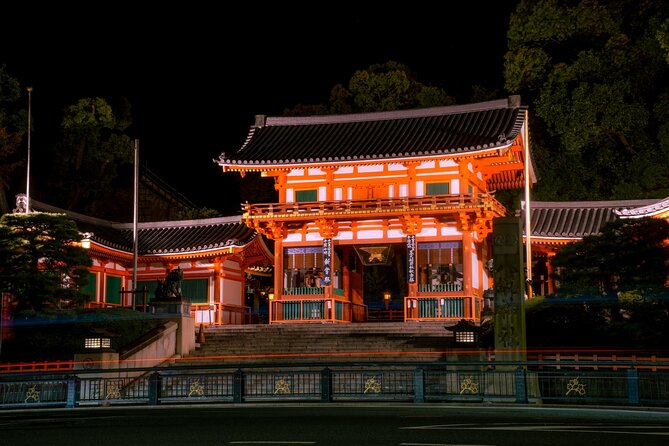
Sake is not simply a drink added to the title. It changes the rhythm of the experience. A small tasting gives you a reason to pause between streets and creates an informal setting for questions and conversation.
The tour provides alcohol along the route, and past experiences with guides such as Shunpei have included several sake selections from different regions of Japan. Some participants also enjoyed snacks with the tasting. The exact selection is not specified, so you should think of this as a casual tasting rather than a formal brewery visit or a full meal.
The value depends on what you want. If you are curious about Japanese sake but do not want to commit to a long tasting event, this is an easy introduction. If you expect detailed instruction on brewing methods, regional styles, or food pairing, the information provided does not promise that level of depth.
Participants must be at least 20 years old. Drink responsibly, since you still have to walk through narrow streets and manage uneven paving after the tasting.
Is the $27.84 price good value?
At $27.84 per person, this is priced as an affordable guided introduction rather than a premium private tour. You receive a small-group walk, cultural commentary, several well-known Kyoto locations, and a sake tasting.
I see the strongest value in the route and the guide’s local perspective. You could walk through Gion and Higashiyama on your own, but it would be harder to understand the geisha district, identify the significance of the shrines, and connect the streets to samurai and Zen traditions while keeping your bearings.
The price looks especially fair if your guide is as engaging as Shumpei or Mune, both of whom have been praised for friendly explanations and conversation. It is less compelling if you want a long, highly structured tour with extensive historical detail. One experience ended at about 70 minutes despite the advertised range reaching 90 minutes, and another found the guide too quiet.
The tour has a 4.8 out of 5 rating from 37 ratings, with 95 percent recommending it. Those figures suggest a strong overall experience, but they do not remove the main variable: your guide and the level of interaction on the night.
How much walking should you expect?
The route covers several districts and includes narrow lanes, stone streets, gentle slopes, and shrine grounds. The tour information calls for moderate physical fitness, and that is a fair description.
You should wear comfortable walking shoes and clothing suited to the weather. There is no indication of a long seated break, and the sake tasting does not turn this into a stationary evening. If you have trouble walking for 60 to 90 minutes, this may not be the right fit.
A small group helps the walk feel manageable. The maximum is 10 people, although the group could be smaller. In one particularly rainy outing, only two participants joined the guide, creating a very personal walk. You should not count on having a private tour, but the limited group size gives you better odds of hearing the commentary.
Who should book this Gion walk?
I would recommend it to first-time visitors who want a quick introduction to Gion after dark. It is also a good match for you if you enjoy walking, want some cultural context, and like the idea of tasting sake without giving up most of an evening.
Couples and small groups may enjoy the relaxed format, especially if they want a memorable night walk with photo opportunities. Solo participants can also benefit from the group setting and the guide’s local knowledge.
I would hesitate if your main goal is a guaranteed geisha encounter. You might see a geiko or maiko, but that depends on chance, timing, and respectful observation. I would also hesitate if you want a quiet private tasting, a seated meal, or a detailed lecture at every stop.
The best way to approach this experience is as a scenic cultural walk with a drink in hand. Let the guide fill in the background, but allow the streets, lanterns, shrines, and changing pace to do much of the work.
Should you book it?
Book this tour if you want to see Gion and Higashiyama at night without planning your own route. The combination of Hanamikoji Street, Yasaka Pagoda, Ninenzaka, Sannenzaka, Nene-no-Michi, and Yasaka Shrine gives you a lot of Kyoto in a short time.
The included sake and small group make the $27.84 price appealing, especially for a first evening in Kyoto. Go with comfortable shoes, modest expectations about geisha sightings, and a willingness to ask questions. If you want a more engaging experience, speak up early and tell the guide what interests you.
Free cancellation is available up to 24 hours before the start time. Changes or cancellations inside that window are not refunded, and poor weather or too few bookings can lead to a rescheduled tour or full refund.
FAQ
How long does the Gion sake walking tour last?
The tour lasts approximately 1 to 1.5 hours. One experience finished at about 70 minutes, so the exact length can vary.
Where does the tour start and end?
It starts at Kikunoi Roan at 118 Saitōchō, south of Shijō in Kyoto’s Shimogyo Ward. It ends at Yasaka Shrine in Gion.
Is sake included in the tour price?
Yes. A local sake tasting is included, and some experiences include small snacks. Alcohol is provided, so you should drink responsibly.
How old must I be to join?
Participants must be 20 years old or older because the experience includes alcohol.
How many people can join the tour?
The maximum group size is 10 participants. The group may be smaller, depending on bookings.
What happens if the weather is poor?
The tour requires good weather. If it is canceled because of poor weather, you can receive a different date or a full refund. You can also cancel up to 24 hours before the start time for a full refund.
Just added around Kyoto
- Nishiki Market, Private Sushi class & Sake Tasting in Townhouse★ 5.0 · 6 reviews
- Hidden Bamboo gem and Japanese foods in Izakaya Private Tour★ 5.0 · 3 reviews
- Private Nishiki Market Food & Sake Tour by Young Local Guides★ 5.0 · 12 reviews
- KYOTO Sake Tasting Tour at Local Breweries(tasting fee included)★ 5.0 · 16 reviews
- Kyoto: Sake Tasting Journey to Two Iconic Breweries★ 3.0 · 2 reviews
- Kyoto Food and Sake Tour Experience★ 4.0 · 5 reviews
- Experience of pairing sake tasting with snacks in Kyoto★ 5.0 · 4 reviews
- Kyoto Luxury Sake, Whisky and Cocktail Tour★ 5.0 · 4 reviews
Kyoto Sake Tours, compared.

3-Hour Kyoto Insider Sake Brewery Tour with Tastings & Pairings
Read our review →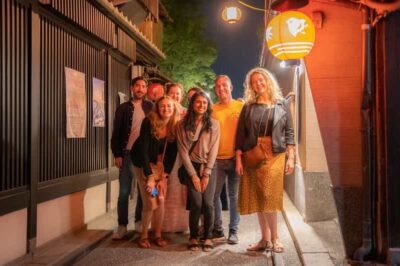

Kyoto: Insider Sake Brewery Tour with Sake and Food Pairing
Read our review →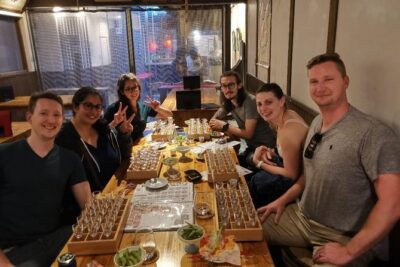
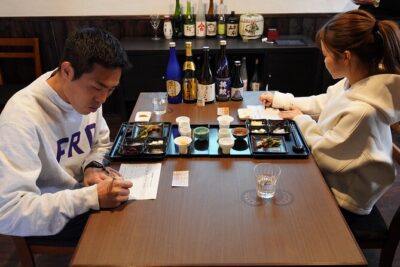
1.5-Hour Kyoto Insider Sake Experience with 7 Tastings & Pairings
Read our review →
Kyoto: Insider Sake Experience with 7 Tastings and Snacks
Read our review →
Kyoto: Afternoon Japanese Izakaya Cooking Class
Read our review →
Browse the lists this tour appears in