
REVIEW · KYOTO SAKE TOURS
Private Pewter Sake Cup Experience with a Kyoto Artisan
The best part of this Kyoto experience is simple: you do not just buy a souvenir, you make one. At Craft Gallery SALUK, artisan Kanako gives you a blank pewter cup, several hammers, and the time to create a pattern that belongs to you. You can add initials, numbers, or a date underneath.
I like the small private setting, where Kanako can adjust her instructions to your pace, and the quiet location outside central Kyoto. I also like that the cup is useful, not just decorative. The main drawback is the trip out to the workshop, which can take about an hour by scenic train from Kyoto Station.
Key points to know before booking
- Hammer your own design: Choose from several hammers and create different textures as you rotate the cup.
- Personalize the base: Add letters, numbers, initials, or a meaningful date.
- Private instruction: Only your group takes part, with Kanako guiding the process in English.
- A real working cup: The finished piece holds about 90 ml, or 115 ml when filled to the rim.
- Quiet northern Kyoto setting: The workshop is away from central Kyoto and reached by public transportation.
- Plan for the full outing: The craft session lasts about 2 hours and 30 minutes, before adding travel time.
Making a Kyoto souvenir instead of buying one
Many Kyoto souvenirs are easy to admire and easy to forget. This one asks something of you. You hold the hammer, feel the metal respond, and make decisions that slowly turn a plain cup into a personal object.
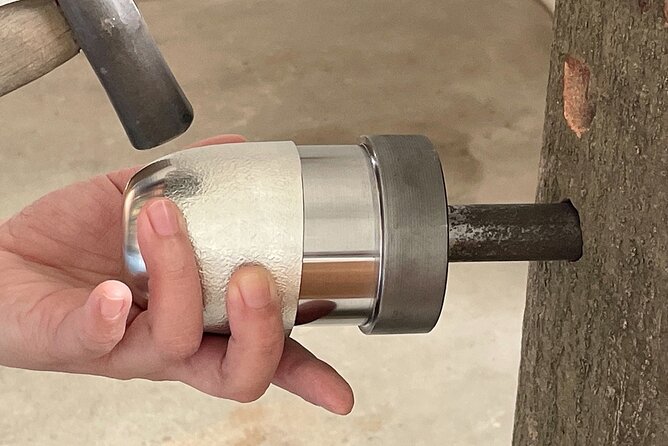
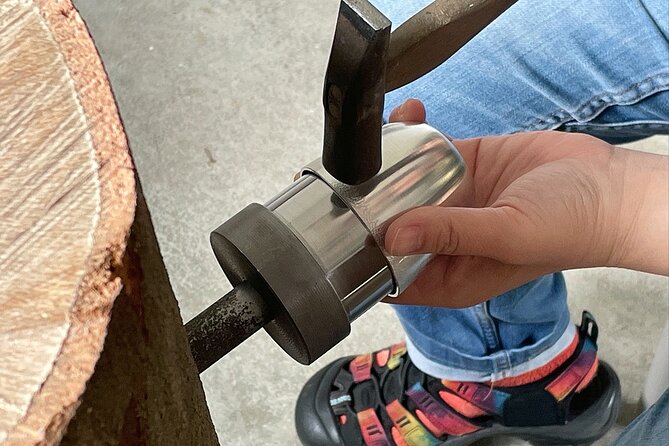
The cup begins as a prepared pewter form. Your job is to give it character. A light tap creates a different mark from a hard one. The angle of the hammer matters. So does the rhythm of your hand. As you rotate the cup across the anvil, the pattern grows around the surface.
That makes this more than a demonstration. You are not simply watching a craftswoman work. You are learning enough of the process to shape the final appearance yourself.
Kanako is the instructor and host. The practical strength of the experience is her patient, beginner-friendly teaching. You do not need a background in metalwork, and you do not need to bring tools or materials. Everything needed for the session is supplied.
The setting also helps. This is not a quick craft class squeezed between major sights in central Kyoto. The workshop is in a calmer area north of the city, where the journey becomes part of the day. A few people have described the approach as scenic, with mountain surroundings and even a nearby stream. That setting will appeal to you if you need a slower afternoon after temples and shopping.
More Private Sake Tours in Kyoto:
- Private Tea Ceremony and Sake Tasting in Kyoto Samurai House
★ 5.0 · 163 reviews - Private Sake Tasting in Central Kyoto with Sake Sommelier
★ 5.0 · 32 reviews - Private Food & Sake Tour in Central Kyoto with Sake Sommelier
★ 5.0 · 24 reviews
What happens during the 2.5-hour workshop
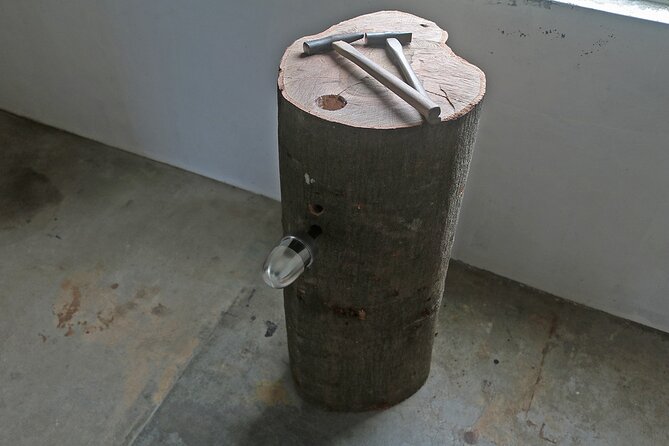
The activity is carefully staged, which matters when you are handling metal tools. First, you select a hammer from several shapes. Each tool leaves its own mark, so your choice affects the look of the cup.
Kanako shows you how to place the pewter cup on the anvil and strike it while turning it. You can use one hammer for a regular pattern or combine several for a more varied surface. The process rewards patience rather than force. If you hit too hard or lose your rhythm, the design can become uneven, but that is also part of the handmade character.
The cup itself is made to fit comfortably in the hand. Its compact size makes sense for sake, but you are not limited to one drink. The finished cup can also be used for whiskey, chilled green tea, and other beverages.
The next stage is more precise. You use a file to adjust the height and bevel the rim. This is where the cup starts to feel like something you might actually use at home. A smooth, angled rim changes the drinking experience, and filing lets you make small corrections to the shape.
For safety, Kanako handles the final polishing with a rotary machine. That is a useful division of labor. You get to do the expressive work, while the specialist takes care of the high-speed finishing step.
The completed cup measures about 64 millimeters across and 53 millimeters high. Its normal capacity is about 90 milliliters, rising to about 115 milliliters if filled to the top. Expect a small tasting cup rather than a large everyday tumbler.
Personalizing the base with letters or a date
The optional stamping is one of the most valuable details for a couple, family, or solo visitor. You can add letters, numbers, initials, or a date to the base. That might be your name, a wedding date, or simply the month and year of your Kyoto trip.
Think about the inscription before you arrive. The available information does not specify how many characters you can add, so keep your idea short and simple. A date or pair of initials is likely to be more practical than a long message.
This small mark also solves a common souvenir problem. A handmade object can look beautiful while still feeling anonymous. Personalizing the base gives it a clear connection to your time in Japan.
The surface pattern will vary from person to person. Some cups may have a regular, sparkling texture. Others may show bolder marks or an intentionally irregular design. Do not expect factory-perfect symmetry. The point is to see your hand in the object.
Why pewter makes sense for a drinking cup
Pewter has a soft, workable quality that makes hammer decoration possible for beginners. It responds to repeated taps without requiring the kind of heavy industrial equipment you might imagine in a metal studio.
The material also gives the cup a pleasing weight in the hand. That weight, combined with the textured surface, makes it feel more substantial than a typical souvenir glass. You will notice the difference the first time you pick it up.
The cup is designed for use with sake, whiskey, chilled green tea, and similar drinks. The listed capacity is modest, so it works best for small pours rather than serving a group.
The workshop also gives you a better sense of Japanese craft practice. You learn how a maker balances beauty with function. Hammer marks are not added at the very end as decoration alone. They are part of the identity of the cup, while the rim and final polish make it comfortable and safe to use.
A few more sake tours around Kyoto worth a look
- 3-Hour Kyoto Insider Sake Brewery Tour with Tastings & Pairings
★ 5.0 · 917 reviews - Kyoto: Izakaya Bars Guided Walking Tour
★ 4.9 · 815 reviews - Kyoto: Insider Sake Brewery Tour with Sake and Food Pairing
★ 5.0 · 704 reviews - Kyoto Sake Brewery & Tasting Walking Tour
★ 5.0 · 623 reviews
A private class with room for your own pace
This is a private activity, so only your group participates. That makes a real difference for a hands-on class. You can ask Kanako to repeat a step, try a different hammer, or discuss your design without worrying about holding up a large class.
It is especially well suited to couples and families. Couples can make matching cups with different patterns. Families can each create a separate design and bring them together for a toast later. One family even used the cups as a way to stay connected after returning to different places.
You do not need to be artistic. The process is tactile and clear. Your first marks may be cautious, and your pattern may change as you gain confidence. That progression is part of the fun.
The English instruction is described as clear, and Kanako’s hospitality is a major part of the experience. Tea and snacks have been offered during some sessions, but I would not book this specifically as a food stop. The craft is the main event.
If you do not drink alcohol, the cup is still useful. Green tea has been served in place of sake for non-drinkers, and the cup works for chilled tea and other beverages. Still, confirm any tasting arrangements when you book if that detail matters to you, since the core activity is cup making rather than a formal sake tasting.
The journey north of Kyoto
The meeting point is Craft Gallery SALUK at 35-2 Shizuichinonakacho in Sakyo Ward, Kyoto. The activity finishes at the same place.
This is not a central Kyoto workshop you can casually fit between Gion and Nishiki Market. The trip can take about an hour by scenic train from Kyoto Station, according to the practical experience of people who have made the journey. That is the main planning issue.
I see the travel time in two ways. If your schedule is packed, the commute may feel like too much for a 2.5-hour class. If you want a quieter side of Kyoto, the ride helps create a clear break from the city center. The surrounding area has been described as peaceful and mountainous, with natural sounds near the studio.
Allow plenty of time for the trip and avoid booking this immediately before a train, dinner reservation, or airport transfer. The session itself is approximate in length, and your return journey depends on public transportation.
The location is near public transportation, but the supplied details do not name a specific station or route. Check the meeting instructions carefully after booking. A few people received help with their return transportation, including a ride to a more convenient station, but do not assume that will always be available.
Is $144.96 a fair price?
At $144.96 per person, this is not a bargain craft activity. You are paying for private instruction, workshop time, materials, the finished cup, and access to a studio that is normally closed to the public.
The value improves if you care about making things by hand. A ready-made pewter cup may cost less, but it will not carry your hammer marks or your chosen inscription. You also miss the quiet instruction and the chance to understand how the object is made.
The price is easier to justify for a couple or small group looking for a meaningful shared activity. It gives you something to do together, and each person leaves with a separate object. It is less attractive if you are mainly searching for a cheap souvenir or a short activity close to Kyoto Station.
The finished cup is packaged for taking home, and handmade pieces have been placed in wooden boxes. That helps with gifting and travel, though you should still pack it carefully with your other belongings.
Who will enjoy this most?
I would choose this for you if you like traditional crafts, small workshops, and souvenirs with a story. It is also a good fit if you have already seen the major Kyoto temples and want an activity that uses your hands instead of your camera.
Couples get a natural shared project. Families can make a set of cups. Solo visitors can take their time and focus on the process without needing to entertain anyone else.
You should think twice if you dislike repetitive handwork or want a polished result with no visible irregularities. Hammering takes patience. Your cup may not look exactly like the sample, and that is not a flaw in this kind of craft.
It may also be a poor match for a very tight Kyoto itinerary. The workshop lasts around two and a half hours, and the trip to northern Kyoto adds more time. The location is part of the appeal, but it is also the cost in convenience.
Most people can participate, and service animals are allowed. The activity is not described as requiring special fitness, but you should be comfortable standing or working with hand tools for parts of the session. If you have concerns, contact the provider before booking.
Booking and cancellation details
Confirmation is provided when you book, and the ticket is mobile, so you do not need to print anything. Materials are supplied, which keeps your preparation simple.
Free cancellation is available if you cancel at least 24 hours before the start time. A cancellation within 24 hours is not refunded, and late changes are not accepted. The cut-off follows local Kyoto time.
The experience is booked about 37 days ahead on average. That is a useful signal for planning, especially if you want a particular date during a busy Japan itinerary. Since the class is private, availability is more limited than for a large group tour.
Should you book the pewter cup workshop?
Book it if you want a useful, personal souvenir and you are happy to spend much of an afternoon outside central Kyoto. The combination of Kanako’s patient guidance, private instruction, hand-hammered decoration, and optional engraving gives the activity more substance than a standard souvenir stop.
Skip it if your schedule is crowded, your budget is tight, or you prefer to spend your Kyoto time at major historical sights. The commute is the one real drawback, and the price demands that you value the making as much as the finished cup.
For me, the deciding question is not Do I need another cup? It is Would I like to remember Kyoto through something I made myself? If the answer is yes, this is a thoughtful choice, especially for couples and families who want a small object that can bring everyone back to the same afternoon.
FAQ
How long does the pewter sake cup experience last?
The workshop lasts approximately 2 hours and 30 minutes. Travel time to and from the meeting point is additional.
Where does the workshop begin and end?
It begins and ends at Craft Gallery SALUK, 35-2 Shizuichinonakacho, Sakyo Ward, Kyoto, 601-1122, Japan.
Is this a private activity?
Yes. Only your group participates in the activity.
Do I need to bring tools or materials?
No. The materials and tools needed for the workshop are provided.
Can I personalize the cup?
Yes. You can add letters, numbers, initials, or a date to the base of the cup.
What is the cancellation policy?
You can cancel for a full refund up to 24 hours before the experience begins. Cancellations or changes made less than 24 hours before the start time are not accepted or refunded.
Just added around Kyoto
- Nishiki Market, Private Sushi class & Sake Tasting in Townhouse★ 5.0 · 6 reviews
- Hidden Bamboo gem and Japanese foods in Izakaya Private Tour★ 5.0 · 3 reviews
- Private Nishiki Market Food & Sake Tour by Young Local Guides★ 5.0 · 12 reviews
- Kyoto Food and Sake Tour Experience★ 4.0 · 5 reviews
- KYOTO Sake Tasting Tour at Local Breweries(tasting fee included)★ 5.0 · 16 reviews
- Kyoto: Sake Tasting Journey to Two Iconic Breweries★ 3.0 · 2 reviews
- Experience of pairing sake tasting with snacks in Kyoto★ 5.0 · 4 reviews
- Kyoto Luxury Sake, Whisky and Cocktail Tour★ 5.0 · 4 reviews
Kyoto Sake Tours, compared.

3-Hour Kyoto Insider Sake Brewery Tour with Tastings & Pairings
Read our review →

Kyoto: Insider Sake Brewery Tour with Sake and Food Pairing
Read our review →
1.5-Hour Kyoto Insider Sake Experience with 7 Tastings & Pairings
Read our review →
Kyoto: Insider Sake Experience with 7 Tastings and Snacks
Read our review →
Kyoto: Afternoon Japanese Izakaya Cooking Class
Read our review →
Browse the lists this tour appears in