
REVIEW · KYOTO SAKE TOURS
Private Pewter Sake Cup Experience with a Kyoto Artisan
The best part of this Kyoto experience is that you do not simply watch a craft demonstration. You make a useful object with your own hands, using a hammer to mark a pewter sake cup and a file to shape its final form. Kanako, the artisan who leads the workshop, gives careful instruction in English or Japanese, making this a friendly choice for beginners.
I like the small size, with no more than four people, and I like the chance to add initials, numbers, or a date to the base at no extra cost. The finished cup is polished and packed in a paulownia wood box, so you leave with a proper keepsake rather than a craft project that sits unfinished in your luggage.
The main consideration is the price, $148 per person. That is a serious spend for a two-and-a-half-hour activity, and the cup itself is small. You are paying for close instruction, materials, workshop access, and a personal object tied to a long Japanese metalworking tradition.
Key Points at a Glance
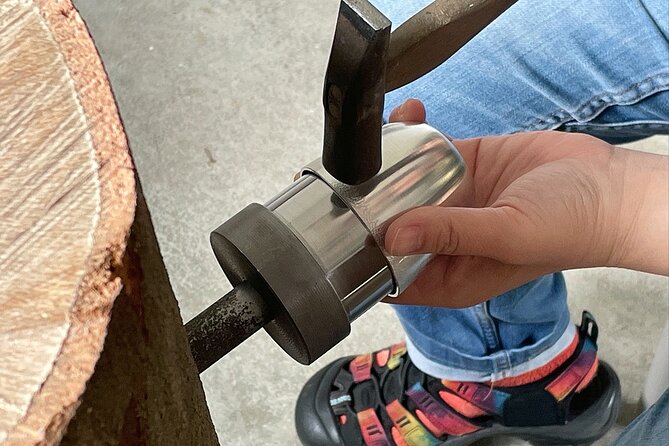
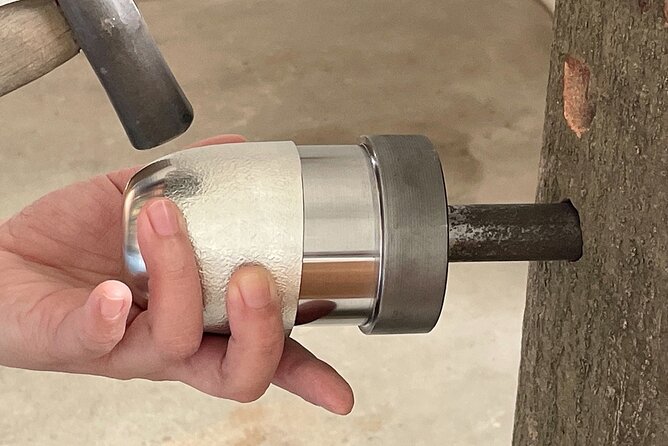
- Hammer your own pattern: Use a preferred hammer to emboss the prepared pewter cup with a design made by you.
- Add a personal mark: Engrave initials, letters, numbers, or a date on the bottom at no extra charge.
- Work in a tiny group: Sessions are private and limited to four participants, giving you time to ask questions and work at a comfortable pace.
- See the working studio: The workshop area is normally closed to the public, so you get a closer look at the tools and setting behind the craft.
- Take home a useful keepsake: Your cup holds about 90 milliliters, up to 115 milliliters to the rim, and comes in a paulownia wood box.
- Plan your clothes carefully: An apron is supplied, but wear clothing that can tolerate a little dirt or metal dust.
Why Pewter Makes This More Than a Souvenir
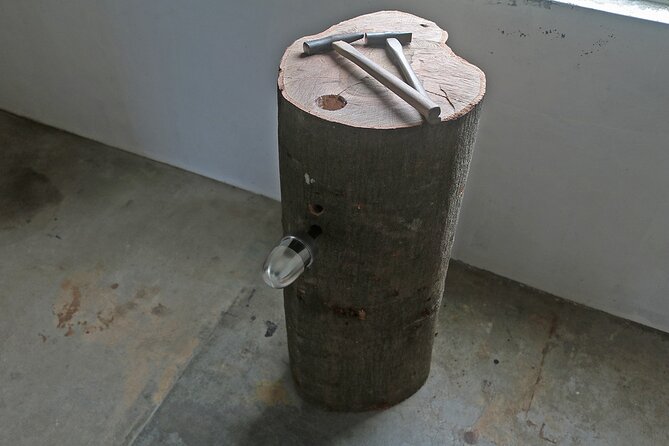
Pewter has been used in Japan since the eighth century, when nobles and temples used it for prized objects. From the seventeenth century, pewter became more common in everyday life, including sake and tea utensils.
That background gives the workshop some weight. You are not making a random trinket. You are working with a material connected to Japanese drinking culture, and the finished cup has a clear purpose. Pewter is also associated with a smoother taste for sake, although the experience does not ask you to accept that claim as a scientific fact. The pleasure is in using a cup whose shape and surface carry your own handwork.
I find this sort of activity useful during a Kyoto visit because it slows the pace. Temples and gardens ask you to look carefully, but here you must also listen, grip a tool, and make small decisions. The result is less polished than a factory-made cup in one sense, but more meaningful because you helped shape it.
More Private Sake Tours in Kyoto:
- Private Tea Ceremony and Sake Tasting in Kyoto Samurai House
★ 5.0 · 163 reviews - Private Sake Tasting in Central Kyoto with Sake Sommelier
★ 5.0 · 32 reviews - Private Pewter Sake Cup Experience with a Kyoto Artisan
★ 5.0 · 31 reviews
Arriving at Craft Gallery SALUK
Craft Gallery SALUK is at 35-2 Shizuichinonakachō in Kyoto’s Sakyo Ward, postal code 601-1122. The workshop is about an eight-minute walk from either Ichihara Station or Ninose Station on the Eizan Railway, across from Cafe & Bar Ayahana.
The Eizan Railway makes the trip part of the outing. If you arrive at Ninose Station, you can enjoy the section between Ninose and Ichihara known as the Tunnel of Autumn Leaves. The name is especially fitting in the fall, though the provided activity details do not promise a particular seasonal display, so do not book the workshop solely for that view.
Allow enough time to find the workshop and arrive before your scheduled start. If you will be more than 10 minutes late, contact the operator. A craft session has a fixed sequence, and arriving rushed can make the opening instructions harder to follow.
The activity returns to the same meeting point. That is helpful if you are carrying other Kyoto plans, since you do not need to arrange a separate end point or collect your finished piece elsewhere.
Your First Look Inside the Pewter Workshop
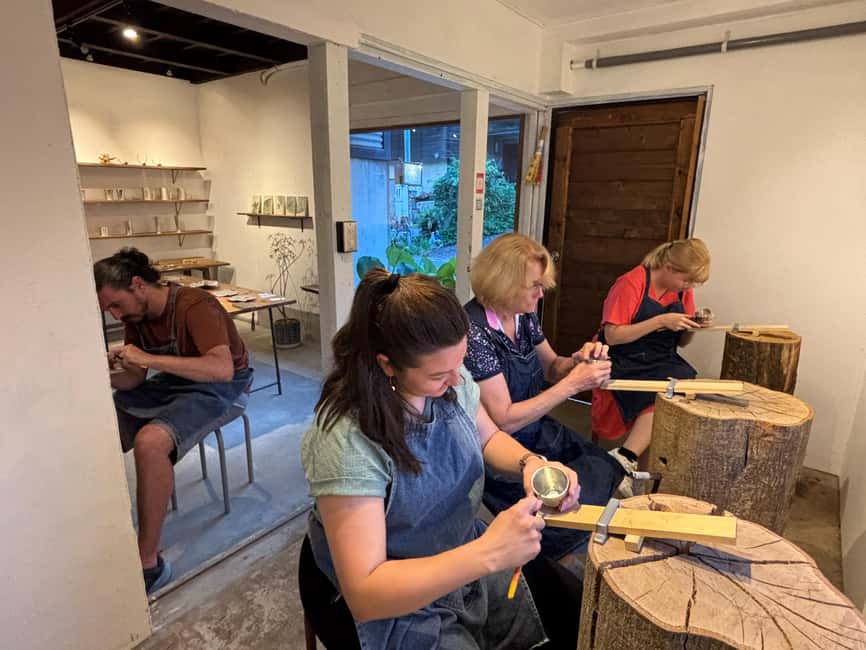
The session begins in a private setting with no more than four participants. This size matters. Metalwork is easier to enjoy when you can hear the instructions, watch the technique, and ask for help without competing with a large crowd.
You will see the artisan’s workshop, an area normally closed to the public. That gives the experience a practical edge. Instead of only hearing about Japanese pewter, you see the place where the work is prepared and finished.
No previous metalworking experience is required. The instruction is designed for beginners, and the process uses a prepared cup rather than asking you to form a vessel from raw material. That keeps the challenge manageable within 150 minutes.
The tone appears to be warm and patient. Kanako is described as both a skilled instructor and a kind host, with particular care for explaining the work and giving participants room to proceed at their own level. Another account highlights her attention to detail and generosity with time. Those points matter here because the value of the session depends heavily on direct guidance.
Hammering a Pattern Into the Cup
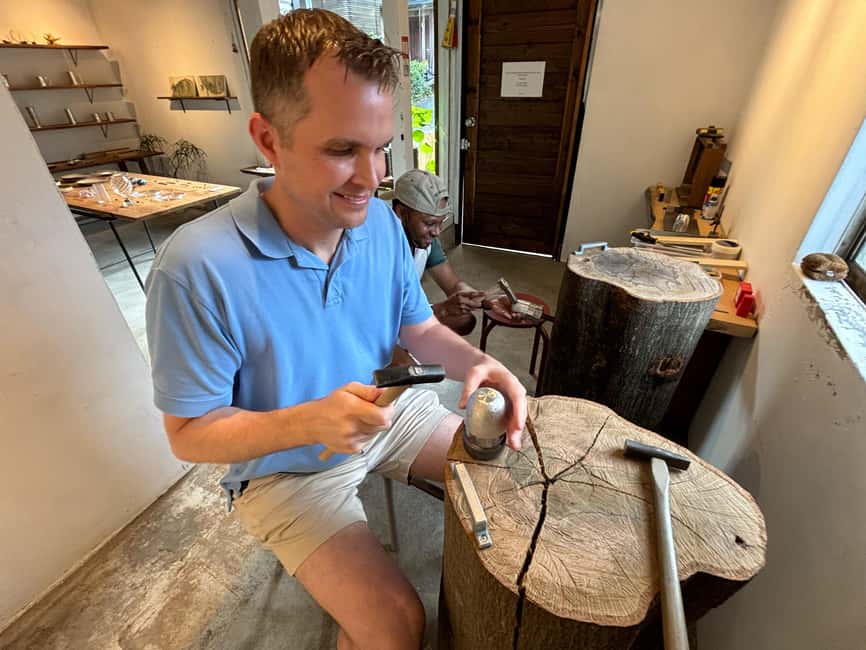
The most hands-on part begins with a prepared pewter cup and a hammer. You choose the hammer you prefer, then use it to emboss a pattern onto the surface.
This is where the cup becomes yours. The pattern is not printed on or added later. Each mark comes from the force and placement of your hammer, so the surface records the making process. A beginner should expect small variations rather than perfect uniformity. That is part of the appeal, though anyone seeking a flawless showroom finish should know that the handmade quality will remain visible.
The artisan guides you on how to work safely and effectively. Follow those instructions closely. Participants are responsible for injuries caused by ignoring the craftsman’s directions, and the activity does not permit anyone who is heavily intoxicated or under the influence of drugs.
You can also request engraving on the base. Letters, numbers, initials, or a date can be added at no extra charge. This is a small detail with real value. A date can mark a Kyoto trip, while initials can turn the cup into a personal daily-use object or a thoughtful gift.
Think about your engraving before the session begins. The available information does not specify a character limit or design menu, so contact the operator if you need to confirm a more complex request.
A few more sake tours around Kyoto worth a look
- 3-Hour Kyoto Insider Sake Brewery Tour with Tastings & Pairings
★ 5.0 · 917 reviews - Kyoto: Izakaya Bars Guided Walking Tour
★ 4.9 · 815 reviews - Kyoto: Insider Sake Brewery Tour with Sake and Food Pairing
★ 5.0 · 704 reviews - Kyoto Sake Brewery & Tasting Walking Tour
★ 5.0 · 623 reviews
Filing the Height and Smoothing the Rim
After the surface work, you adjust the cup’s height with a file. You also chamfer the rim, creating a smoother and more comfortable edge for drinking.
These steps help you understand how many small choices go into a simple cup. The object may look modest, but its height, rim, and balance affect how it feels in your hand. Filing also makes the work less decorative and more functional. You are not just marking metal. You are helping prepare something meant to hold sake, whiskey, or chilled green tea.
The cup measures about 64 millimeters in diameter and 53 millimeters in height. Its capacity is approximately 90 milliliters, or up to 115 milliliters when filled to the rim. That is a small serving, well suited to sipping rather than pouring a large drink.
The final polishing is done by the artisan with a rotary machine. This is a sensible safety measure. You still take part in the main craft work, but the most hazardous finishing step remains with the person trained to handle the equipment.
The Finished Cup and Paulownia Box
At the end, your cup is polished and presented in a traditional paulownia wood box. The box protects the piece during the journey home and makes the item easier to give as a present.
I particularly like this final touch because it respects the object. A small metal cup loose in a suitcase could pick up scratches or become lost among clothing. A fitted traditional box gives it a proper place and connects the finished work to Japanese gift presentation.
The cup is practical enough to use, but you may also decide to keep it as a memory of Kyoto. It works for sake, whiskey, or chilled green tea, so the piece does not have to sit on a shelf. You can make it part of a regular drink ritual, use it for special occasions, or offer it as a gift.
Keep in mind that the cup is compact. If you prefer large drinkware, this will feel more like a tasting cup than an everyday tumbler. Its small size is appropriate for sake, but it may not suit someone looking for a multipurpose mug.
Is $148 a Fair Price?
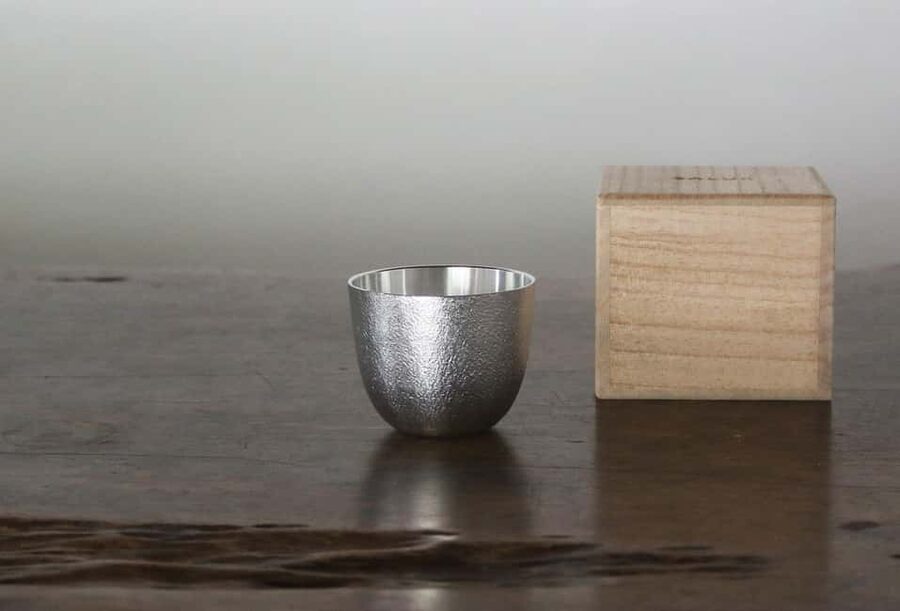
At $148 per person, this is not a budget activity. The price makes more sense when you consider what is included: 150 minutes of instruction, the prepared pewter cup, all materials, tool use, metalworking instruction, access to the private workshop, final polishing by the artisan, and the boxed finished piece.
You are also paying for a private group capped at four. A large class could offer a cheaper seat, but it would likely give you less individual attention. Here, the low participant limit allows the artisan to watch your technique, explain the next step, and help you refine the rim or surface.
The value depends on what you want from Kyoto. If you only want a low-cost souvenir, you can spend less elsewhere. If you want a structured activity that produces something personal and useful, the cost is easier to defend.
The experience also suits people who value a small object with a story. The cup records your hammer marks and can carry a date or initials. That personal element is difficult to compare with a mass-produced item bought from a shop.
Who Will Enjoy This Workshop Most?
I would choose this for solo visitors, couples, and small groups of friends or family who want a quiet activity away from the busiest sightseeing routes. The private format works especially well for a pair, since you can focus on your own pieces while still sharing the process.
It is also a good match for anyone who likes practical crafts. You do not need to arrive with metalworking skills, but you should be willing to follow directions, handle a hammer, and work carefully with a file.
Children under six cannot participate. The activity also includes tools and a rotary machine, so adults should consider the comfort and attention span of older children before booking. The stated information confirms that no previous experience is needed, but it does not list a separate child price or special child version.
Wear clothing that can get a little dirty. Aprons are provided, but the workshop involves metalworking, filing, and surface finishing. Comfortable clothes are a better choice than anything delicate or difficult to protect.
Practical Timing and Language Notes
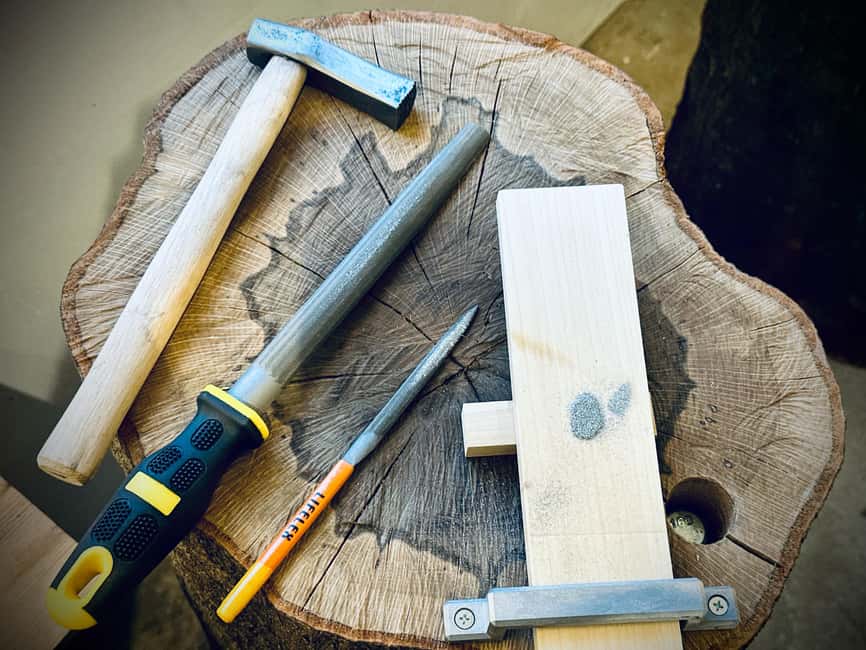
The experience lasts 150 minutes, or two and a half hours. That gives you enough time for instruction, hammering, engraving if requested, filing, rim work, and final polishing by the artisan.
English and Japanese instruction are available. That makes the workshop accessible to people who do not speak Japanese, though hands-on activities still require attention to demonstrations and safety directions.
The activity is private rather than shared with a large public class. Solo bookings are welcome, and the maximum is four participants per session. This combination is useful if you want quiet concentration or prefer not to work beside a large group.
Cancellation is free up to 24 hours before the activity for a full refund. You can also reserve now and pay later, which helps if your Kyoto schedule is still changing. These terms are useful, but I would still choose a start time that gives you a comfortable margin for the train and the walk from the station.
Should You Book the Pewter Cup Workshop?
Book it if you want a personal Kyoto souvenir, enjoy making things, and are comfortable paying for close instruction rather than a quick attraction. The small group, patient guidance from Kanako, optional engraving, and paulownia box give the experience more substance than a simple craft demonstration.
Skip it if you want a cheap activity, dislike working with tools, or need a large drinking cup. The piece is compact, the price is high, and the workshop requires careful attention to instructions.
For the right person, this is a strong choice. You spend two and a half hours learning a traditional craft, seeing a private working studio, and leaving with a cup that carries your own marks. That is a useful souvenir, and a good reason to make the trip beyond central Kyoto.
FAQ
Where is the pewter sake cup workshop held?
It is held at Craft Gallery SALUK, located at 35-2 Shizuichinonakachō in Sakyo Ward, Kyoto, Japan.
How far is the workshop from the Eizan Railway?
Craft Gallery SALUK is about an eight-minute walk from either Ichihara Station or Ninose Station. It is across from Cafe & Bar Ayahana.
How long does the experience last?
The workshop lasts 150 minutes, or two and a half hours.
How many people can join each session?
The workshop is private and limited to a maximum of four participants.
Is previous metalworking experience required?
No. The workshop is suitable for beginners, and the artisan provides personal instruction.
Can I personalize the cup?
Yes. You may engrave letters, numbers, initials, or a date on the base at no extra charge.
What size is the finished cup?
The cup measures approximately 64 millimeters in diameter and 53 millimeters in height. It holds about 90 milliliters, or up to 115 milliliters when filled to the rim.
What should I wear?
Aprons are provided, but wear clothes that can get a little dirty. The activity includes hammering, filing, and other metalworking steps.
Just added around Kyoto
- Nishiki Market, Private Sushi class & Sake Tasting in Townhouse★ 5.0 · 6 reviews
- Hidden Bamboo gem and Japanese foods in Izakaya Private Tour★ 5.0 · 3 reviews
- Private Nishiki Market Food & Sake Tour by Young Local Guides★ 5.0 · 12 reviews
- KYOTO Sake Tasting Tour at Local Breweries(tasting fee included)★ 5.0 · 16 reviews
- Kyoto: Sake Tasting Journey to Two Iconic Breweries★ 3.0 · 2 reviews
- Kyoto Food and Sake Tour Experience★ 4.0 · 5 reviews
- Experience of pairing sake tasting with snacks in Kyoto★ 5.0 · 4 reviews
- Kyoto Luxury Sake, Whisky and Cocktail Tour★ 5.0 · 4 reviews
Kyoto Sake Tours, compared.

3-Hour Kyoto Insider Sake Brewery Tour with Tastings & Pairings
Read our review →

Kyoto: Insider Sake Brewery Tour with Sake and Food Pairing
Read our review →
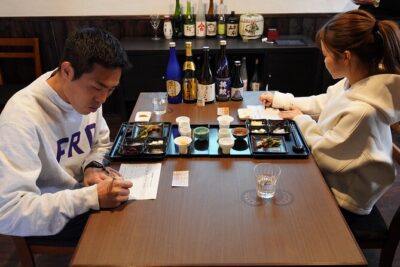
1.5-Hour Kyoto Insider Sake Experience with 7 Tastings & Pairings
Read our review →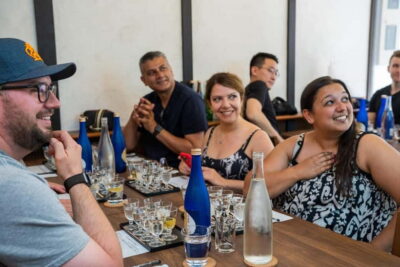
Kyoto: Insider Sake Experience with 7 Tastings and Snacks
Read our review →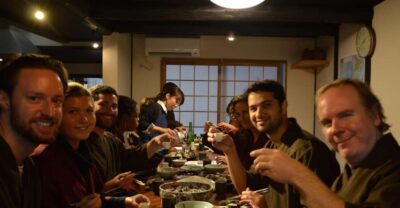
Kyoto: Afternoon Japanese Izakaya Cooking Class
Read our review →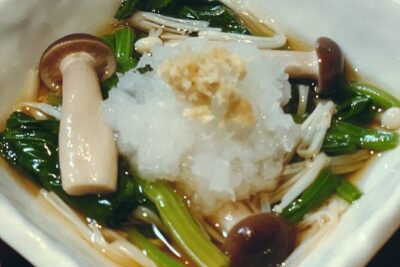
Browse the lists this tour appears in