
REVIEW · OSAKA SAKE TOURS
Osaka Home Feast Cooking and Sake Experience
The best part of this Osaka evening is that it begins in a real supermarket, not with a pile of premeasured ingredients. You browse Japanese foods, discuss playful takoyaki fillings, then carry those discoveries into a small cooking studio for an izakaya-style meal.
I like the supermarket visit because it gives you a practical look at daily food shopping in Japan. I also like the friendly, small-group setup, capped at seven people, with sake served as you cook. The main catch is that this is a social cooking class, not a quiet demonstration, so the relaxed pace may not suit anyone wanting a formal culinary lesson.
Key points before you book
- Shop first, cook second: Your evening starts at a Japanese supermarket, where you explore ingredients and choose ideas for takoyaki fillings.
- Three Osaka favorites: You prepare crispy takoyaki, wasabi-marinated tuna, and chicken with green onion, mayonnaise, and ponzu.
- Sake is part of the meal: Handpicked sake is paired with the food, with beer and soft drinks also available.
- Small and personal: The class has a maximum of seven people, and past sessions have included one-person bookings.
- A home-style mood: The meal is served in a relaxed taku-nomi setting, similar to drinking and eating at home with friends.
- Recipes come with you: A downloadable recipe pack helps you repeat the dishes after returning home.
Why this Osaka class feels different
Many cooking classes begin when you sit down at a worktable. This one starts outdoors, at the south side of FamilyMart near Minamimorimachi Station. From there, you walk to a nearby Japanese supermarket with your local guide.
That first stop matters. A supermarket shows you the food of everyday Osaka in a way a tourist market often cannot. You can look at unfamiliar vegetables, sauces, seafood, seasonings, and packaged foods while your guide explains what might work in the meal.
You also get to think about takoyaki fillings before you cook. The standard Osaka version usually centers on octopus, but this class makes room for creative choices. The exact fillings are not fixed in the information provided, so part of the fun is the discussion and selection rather than a guaranteed menu of unusual ingredients.
I like this format because you see a little of the decision-making behind Japanese home cooking. You are not simply handed a recipe and told to follow it. You get a glimpse of how ingredients are chosen, combined, and adapted.
More Cooking Classes in Osaka:
- Osaka Sake Tasting with Takoyaki Cooking
★ 5.0 · 156 reviews - Osaka Sake Tasting & Takoyaki Cooking Experience
★ 5.0 · 149 reviews - Osaka Cooking Class and Sake Tasting with Local Supermarket Visit
★ 5.0 · 79 reviews
Meeting at Minamimorimachi at 4:30 pm
The meeting point is FamilyMart Minamimorimachi station, south side, at 2-chome 3-10, 1F, in Osaka’s Kita Ward. The start time is 4:30 pm, and the activity returns to this same meeting point at the end.
You should allow a few extra minutes to find the correct side of the station. A convenience store is a useful landmark, but station exits can still cause confusion in Osaka. Keep the mobile ticket ready, since this is a mobile-ticket experience and confirmation is provided when you book.
The timing works well for dinner. You begin while shops are still open, then move into the cooking portion as the evening gets underway. Because the class lasts about three hours, you should finish around 7:30 pm, though the exact end time may vary slightly.
The location is near public transportation, which makes it practical to fit into a day of sightseeing. You do not need to arrange a separate return transfer because the activity ends where it began.
Inside the supermarket with your local guide
The grocery stop is more than a quick ingredient pickup. Your guide helps you identify foods and think through how they might work in the dishes you will prepare later.
This can be especially useful if Japanese supermarkets are new to you. Packaging can be hard to read, and familiar ingredients may appear in unfamiliar forms. An English-speaking guide gives you a way to ask questions as you shop instead of guessing at every label.
The guide also adds local context. Chie, who has led this experience, has been praised for answering questions about Japan and adding background beyond the food itself. Nina has also led a memorable session, including a private booking for one person. You may meet one of them, though the guide assigned to your date is not guaranteed in the details provided.
One small cultural observation from the shopping portion is worth noting: the payment and bagging process can differ from what you are used to at home. In Japan, shoppers often handle their own bags, and that ordinary detail becomes part of the experience.
Do not expect a long food tour through several shops. The plan calls for one nearby Japanese supermarket before the cooking session. That keeps the evening focused, but it also means the shopping portion will be brief compared with a dedicated market tour.
Putting on the apron and starting with easy bites
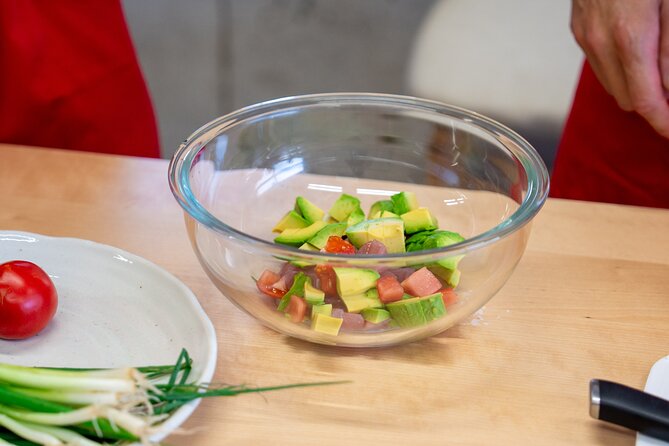
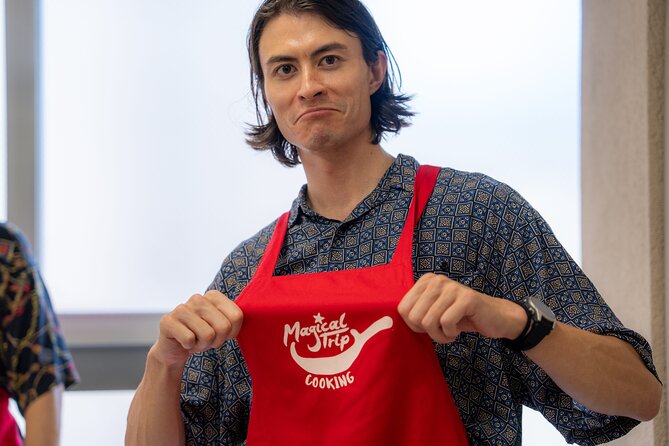
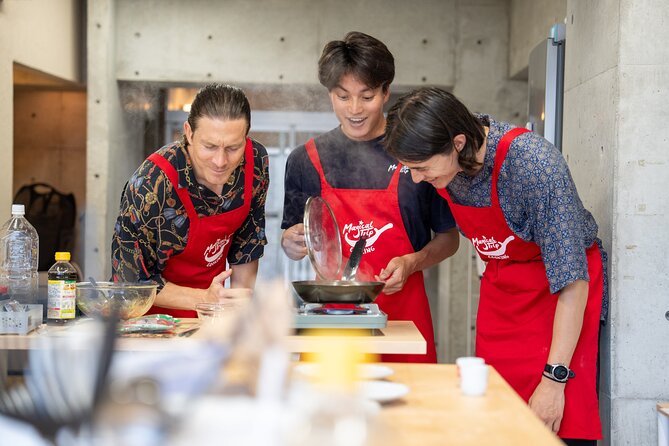
After shopping, you head to a cozy cooking studio and put on a MagicalTrip apron. The cooking begins with approachable dishes, including Mugen Cabbage and Wasabi Tuna Salad.
These early dishes help set the tone. You can start eating while the rest of the food is prepared, and you get a chance to taste the flavors before handling the more involved takoyaki cooking.
Wasabi-marinated tuna brings a sharp Japanese flavor without turning the class into an advanced culinary course. Mugen Cabbage is a simple, savory cabbage dish that works well as a quick side for a home-style spread. Since the full method and ingredient quantities are provided later in the recipe pack, you can focus on learning and eating rather than writing everything down.
The class is designed around participation. You should expect to chop, mix, shape, cook, and taste, not simply watch someone perform each step. That makes it a good choice if you want an activity with conversation and shared work.
It also means your final dishes may not look exactly like a chef’s version. That is part of the charm, but people seeking polished restaurant technique may prefer a more formal class.
A few more sake tours around Osaka worth a look
- Osaka: Izakaya Bars Guided Walking Tour
★ 4.9 · 385 reviews - Osaka: Cooking Class & Sake Tasting with Local Market Visit
★ 4.8 · 31 reviews - 3.5h Osaka Night guided Local Bar Hopping, Sake & Karaoke
★ 5.0 · 27 reviews - Same Day OK! Osaka: Local Food, Izakaya & Local Bites Tour!
★ 4.8 · 17 reviews
The takoyaki lesson is the main event
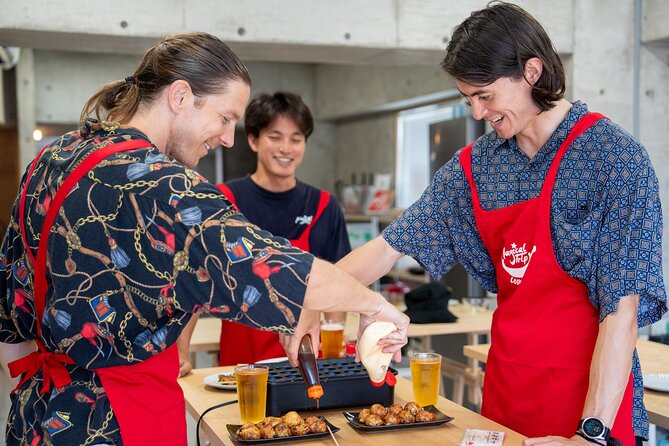
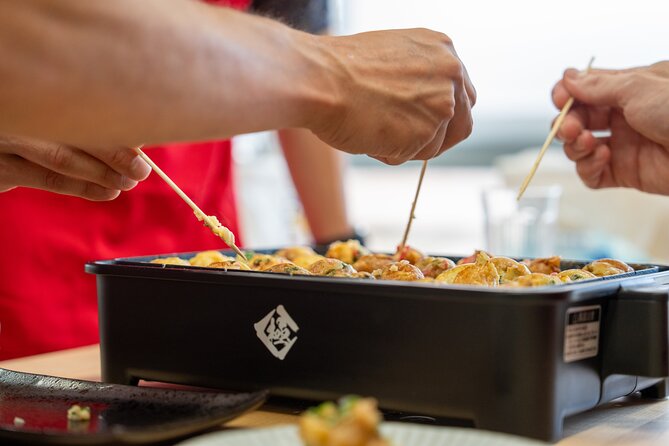
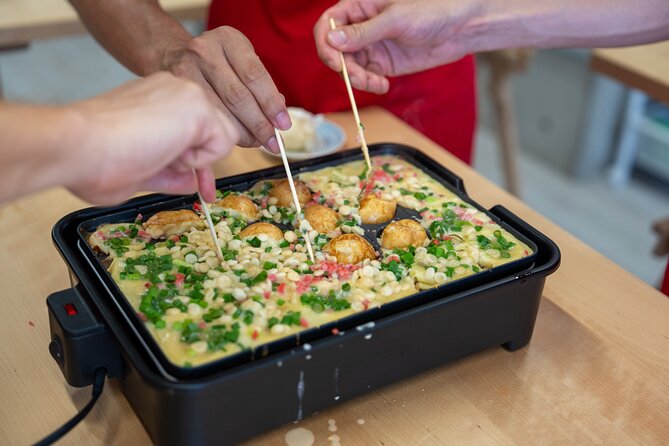
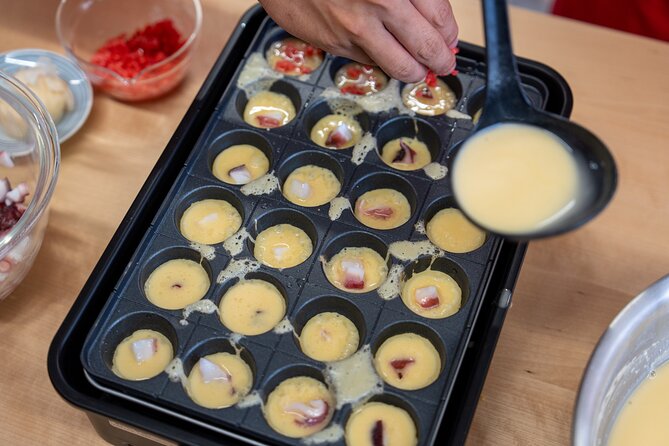
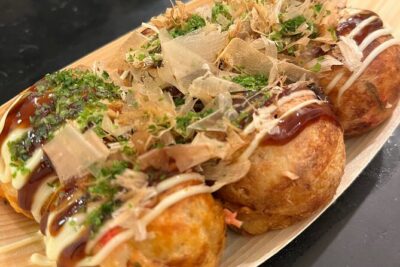
Takoyaki is the dish most closely tied to Osaka, and this is the centerpiece of the cooking session. You learn to make the outside crisp while keeping the inside tender, then fill the small round pieces with the ingredients chosen earlier.
Takoyaki can look easy until you try turning it. The batter cooks around the filling, and the pieces need attention as they take shape. The class gives you a chance to practice that process in a friendly setting rather than simply receiving a finished plate.
The supermarket visit makes this section more meaningful. You have already considered the ingredients, so the takoyaki becomes a continuation of the evening rather than an isolated recipe.
The available information does not promise a specific filling beyond the chance to brainstorm fun Osaka-style combinations. If you have a particular filling in mind, ask the guide what can be prepared on your date rather than assuming every option will be available.
I would treat the takoyaki portion as hands-on and playful. It is less about producing perfect spheres and more about understanding the method well enough to repeat it at home.
Chicken, green onion, mayo, and ponzu
The other substantial dish is chicken with green onion, mayonnaise, and ponzu. It brings together creamy, citrusy, and savory flavors, and it gives the meal a filling centerpiece beyond the snack-sized takoyaki.
Ponzu is a Japanese citrus-based sauce with a clean tang. Combined with mayonnaise and green onion, it creates a flavor profile that is easy to enjoy even if you are new to Japanese home cooking.
This part of the class also shows why the meal is described as izakaya-style. An izakaya is a casual Japanese drinking place where dishes arrive to share, rather than a restaurant focused on one large entrée. The food here is made for grazing, pairing, and conversation.
You also taste the dishes as they are prepared. That keeps the class from feeling like a long wait for dinner and lets you compare the food at different stages.
Sake pairing in a relaxed home-drinking setting
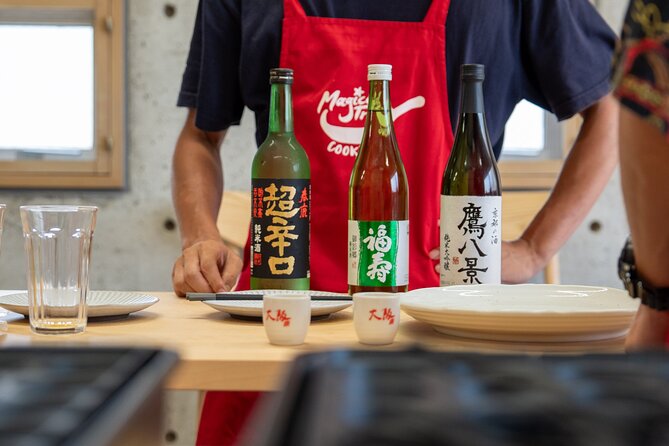
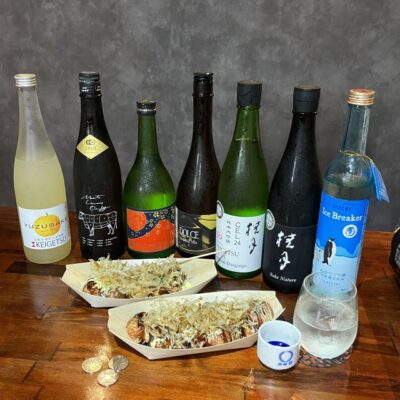
Sake is not an afterthought here. Handpicked sakes are paired with the food, and you can sip as you cook. Beer and soft drinks are also available, so you do not have to drink sake to take part.
The final meal is served in a taku-nomi style, a casual home-drinking atmosphere. The idea is less formal than a restaurant pairing. You sit down with the food you helped make, enjoy the drinks, and share the results in a friendly setting.
That setting is one of the experience’s strongest features. You get food, drink, and conversation in one evening, with the guide acting as a host as well as a cooking teacher.
Still, the sake element will matter more to some people than others. If you are primarily interested in learning knife skills, precise techniques, or advanced Japanese cuisine, the drinking and social side may feel like a distraction. If you enjoy food stories and casual conversation, it adds real value.
A small group, with private-feeling potential
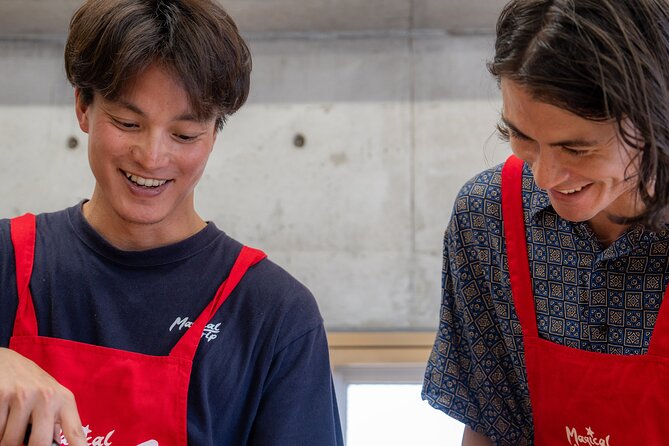
The maximum group size is seven people. That is small enough to keep the class personal without guaranteeing a private booking.
The experience can also work for solo participants. Nina has hosted a booking where only one person signed up, and the session still went ahead as a fun private cooking experience. You should not assume you will have the studio to yourself, but a small number can make the evening feel more personal than a large group class.
For couples and friends, the group limit gives you room to participate without crowding around a single counter. For solo visitors, it offers a structured way to meet people while doing something more active than sitting at a bar.
The social format does require a little flexibility. You may be cooking with people who have different skill levels, food preferences, and ideas about how much conversation they want. The guide helps set the pace, but this is not a silent lesson.
What the $91.04 price includes in practical terms
At $91.04 per person, this is not the cheapest way to eat dinner in Osaka. You can find a filling meal for much less, and you could buy takoyaki from a street stand without taking a class.
The value comes from combining several parts into one evening: a supermarket visit, an English-speaking local guide, hands-on cooking, multiple dishes, drinks, a sake pairing, and the recipes to use later.
You are also paying for context. The guide can explain ingredients, answer questions about Japan, and connect the meal to everyday food habits. That makes the experience more useful than a restaurant meal if you want to understand what you are eating.
I think the price makes the most sense for people who would otherwise pay for both a cooking class and a night out. If you only want dinner, it is expensive. If you want a practical food activity with drinks and a take-home recipe pack, it is easier to justify.
The group size also matters to the value. A seven-person limit is more appealing than an open-ended class where you might struggle to reach the instructor. The information does not promise a private class, so do not pay this price expecting one unless your booking confirms it.
Who should book this experience
I would recommend this class to you if you enjoy learning through food and prefer a relaxed local activity over a formal tour. It is especially well suited to first-time visitors who want an easy introduction to Japanese ingredients, Osaka comfort food, and sake.
It also suits couples, friends, solo visitors, and small family groups who can take part in a social cooking session. The three-hour length is manageable, and the 4:30 pm start leaves the day open for sightseeing.
You may want to choose another activity if you need strict dietary control, advanced culinary instruction, or a fully private setting. The provided details do not explain dietary substitutions, allergy procedures, or accessibility arrangements, so ask the provider before booking if those issues affect your decision.
The class is also not the right fit if you want a broad Osaka food crawl. You visit one supermarket, then remain at the cooking studio. The focus is learning and eating together, not sampling many restaurants across the city.
Useful booking details and cancellation terms
The experience accepts mobile tickets, and confirmation arrives at the time of booking. It is booked an average of 29 days in advance, so reserving early is sensible if your Osaka schedule is fixed.
You can cancel for a full refund up to 24 hours before the 4:30 pm start time. Cancellations or changes made less than 24 hours before the activity are not accepted for a refund, and cut-off times follow Osaka local time.
The activity is operated by MagicalTrip Inc. Since the experience ends at the original meeting point, keep that location saved for your return.
Should you book the Osaka Home Feast?
Book it if you want a warm, hands-on evening that connects Japanese supermarket shopping with Osaka cooking. The strongest reasons are the small group, the chance to shape your own takoyaki ideas, the sake pairing, and the fact that you eat the meal you prepare.
I would be more cautious if your priority is a technical cooking course or the lowest possible dinner cost. For most food-focused visitors, though, the combination of local guidance, shared cooking, and recipes to take home gives the $91.04 price a fair basis.
FAQ
Where does the Osaka Home Feast Cooking and Sake Experience begin?
It begins at FamilyMart Minamimorimachi station on the south side, at 2-chome 3-10, 1F, Osaka, Kita Ward, Tenjinbashi.
What time does the experience start?
The start time is 4:30 pm.
How long does the activity last?
The experience lasts approximately three hours.
Where does the experience end?
It ends back at the original meeting point.
What food will I prepare?
You will prepare dishes including crispy takoyaki, Mugen Cabbage, Wasabi Tuna Salad, and chicken with green onion, mayonnaise, and ponzu.
Are drinks included?
You can enjoy handpicked sake pairings while cooking and eating. Beer and soft drinks are also available.
How many people can join?
The activity has a maximum of seven travelers.
Will I receive recipes after the class?
Yes. You receive a downloadable recipe pack so you can recreate the dishes at home.
Can I cancel for a full refund?
Yes. You can cancel at least 24 hours before the experience start time for a full refund. Cancellations or changes made less than 24 hours before the start time are not accepted for a refund.
Just added around Osaka
- Osaka Soul : IZAKAYA Shinsekai to Dotonbori Food Paradise!★ 5.0 · 15 reviews
- Osaka Sake & Food Tour★ 5.0 · 8 reviews
- Sake “Omakase” in Osaka : Guided Tasting by a Active Sake brewer★ 5.0 · 11 reviews
- Same Day OK! Osaka: Local Food, Izakaya & Local Bites Tour!★ 4.8 · 17 reviews
- Osaka Bar Hopping | Explore Hidden Bars & Izakayas in Namba★ 4.7 · 18 reviews
- 3.5h Osaka Night guided Local Bar Hopping, Sake & Karaoke★ 5.0 · 27 reviews
- Osaka: Cooking Class & Sake Tasting with Local Market Visit★ 4.8 · 31 reviews
- Osaka Cooking Class and Sake Tasting with Local Supermarket Visit★ 5.0 · 79 reviews
Osaka Sake Tours, compared.

Osaka Sake Tasting & Takoyaki Cooking Experience
Read our review →
Osaka Cooking Class and Sake Tasting with Local Supermarket Visit
Read our review →
Osaka: Cooking Class & Sake Tasting with Local Market Visit
Read our review →
3.5h Osaka Night guided Local Bar Hopping, Sake & Karaoke
Read our review →
Osaka Bar Hopping | Explore Hidden Bars & Izakayas in Namba
Read our review →Browse the lists this tour appears in