
REVIEW · OSAKA SAKE TOURS
Osaka Soul : IZAKAYA Shinsekai to Dotonbori Food Paradise!
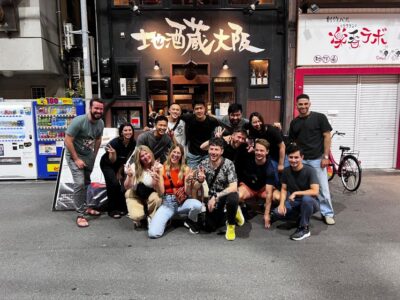
Osaka’s food culture makes the most sense at street level, with a skewer in one hand and a drink in the other. This evening tour links Shinsekai’s retro alleys with Dotonbori’s neon signs, stopping for kushikatsu, izakaya dishes, okonomiyaki, and takoyaki along the way.
I like the small maximum of eight people, which should make it easier to ask questions and keep up in crowded streets. I also like the mix of food and place: you get Tsutenkaku Tower, Janjan Yokocho, Hozenji Temple, and the Glico sign, not just a string of restaurant tables. The main caution is that this may feel more like dinner with several food stops than a classic crawl through many separate eateries.
Key points to know before booking
- Shinsekai starts the evening: See Tsutenkaku Tower, walk through Janjan Yokocho, and begin with kushikatsu and izakaya food.
- A full dinner is included: Expect six pieces of kushikatsu, sashimi, edamame, tofu salad, fried gyoza or fried chicken, and a choice involving okonomiyaki or fried noodles, plus takoyaki.
- Two drinks are included: You can choose alcoholic or non-alcoholic drinks, with extra orders available at your own cost.
- The route ends in Dotonbori: Hozenji Temple, Hozenji Yokocho, the Glico sign, and Michelin-rated takoyaki complete the evening.
- The group is capped at eight: That is a useful size for an English-speaking guide and a crowded Osaka route.
- Plan for walking and train fare: Transportation from Dobutsuen-Mae to Dotonbori is not included, and the tour lasts about three hours.
Why this Osaka food walk works
This tour gives you a useful first look at two very different sides of Osaka. Shinsekai feels older and more local in character, with its retro storefronts, narrow Janjan Yokocho Alley, and long connection to casual food. Dotonbori is louder and more polished, filled with giant signs, bright lights, food stalls, and the famous running man above the canal.
The route also follows a sensible eating pattern. You begin with small savory bites and drinks in Shinsekai, then continue toward central Osaka for okonomiyaki and takoyaki. You are not simply being taken to one expensive restaurant. You are sampling several foods that help explain why Osaka is often treated as Japan’s kitchen.
The guide matters here. This is not a self-guided list of famous streets. Your English-speaking guide provides history and explanations as you walk, points out places along the route, and helps you understand what you are eating. One guide, Kenny, has lived in Osaka for more than 50 years and is known for sharing extra local suggestions, including a recommended spicy ramen restaurant. If you can request a guide, Kenny’s long connection with the city could add a lot.
Still, set your expectations carefully. The included meal is concentrated at a few food venues rather than a stop at every tempting stall. If your idea of a food tour means six or seven separate restaurants, this format may feel limited. If you want a guided evening meal with several signature dishes and neighborhood context, it makes more sense.
More Izakaya and Bar Hopping in Osaka:
- Osaka: Izakaya Bars Guided Walking Tour
★ 4.9 · 385 reviews - 3.5h Osaka Night guided Local Bar Hopping, Sake & Karaoke
★ 5.0 · 27 reviews - Osaka Bar Hopping | Explore Hidden Bars & Izakayas in Namba
★ 4.7 · 18 reviews
Starting at Shinsekai and Tsutenkaku Tower
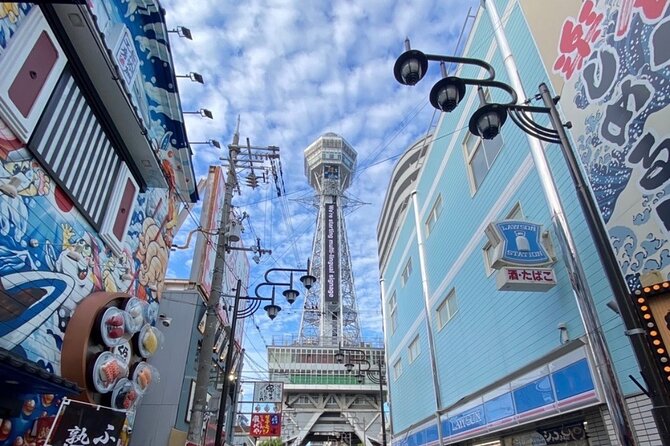
Meet at Dobutsuen-Mae Station at 5:00 p.m. in the Taishi area of Nishinari Ward. The tour opens in Shinsekai, one of Osaka’s most recognizable old entertainment districts, with Tsutenkaku Tower as its visual marker.
You will have time to take in the district before settling into the food. Tsutenkaku is not just a photo stop. It helps you place Shinsekai within Osaka’s city center and gives the guide a natural point from which to explain the area. This opening is especially useful if you have only seen Osaka through Dotonbori’s modern signs and shopping streets.
The first 80 minutes are devoted to Shinsekai and the izakaya experience. That is a substantial part of a three-hour tour, so expect to eat early rather than save everything for the final stop. You will walk through Janjan Yokocho Alley, a narrow arcade known for small restaurants and casual local atmosphere.
You will also meet the lucky Billiken figure, a familiar Shinsekai symbol. It is a small detail, but it gives the walk some personality. This is the kind of cultural marker that is easy to miss when you rush straight to a famous restaurant.
Kushikatsu and a retro izakaya dinner
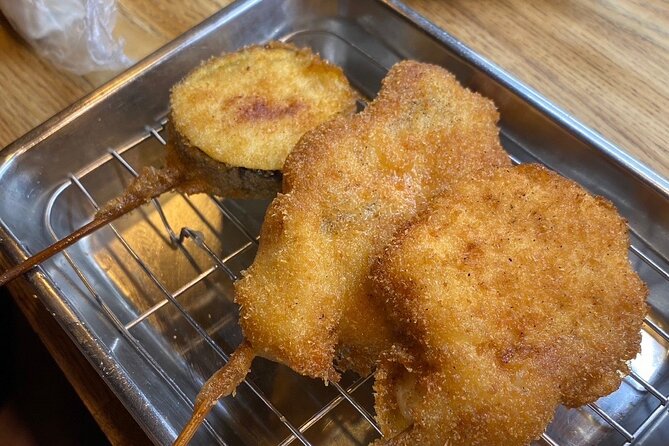
Kushikatsu is the signature Shinsekai food here. These are breaded and fried skewers, usually eaten as casual bar food. Six pieces are included, giving you a proper taste without making the entire meal one long plate of fried food.
The izakaya portion adds more range. The included dishes are listed as edamame, sashimi made from the day’s fresh fish, tofu salad with sesame dressing, and either fried gyoza or soy-flavored fried chicken. These small plates suit an izakaya, where food is shared and drinks are part of the experience.
This is one of the tour’s strongest features. You get contrasting textures and flavors: crisp fried skewers, cool sashimi, creamy tofu salad, and another hot fried dish. You also get two drinks, alcoholic or non-alcoholic. That choice matters if you want the atmosphere of an evening bar but do not drink alcohol.
The meal is included, but additional food and drinks cost extra. That gives you some flexibility, though you should remember that the $125 price is not an open-ended eating allowance. You are paying for the guide, the two included drinks, the arranged meal, neighborhood walking, and cultural explanation.
The food format may be the main point of uncertainty. One included stop has been described as especially good, while the later food stop may feel more focused on fried items. You should book this for variety across the evening, not for a carefully designed tasting menu at every venue.
Sennichimae and the move toward central Osaka
After Shinsekai, the route continues toward Sennichimae, an area known for entertainment, theaters, nightlife, and food. This section lasts about 20 minutes, so it is more of a guided transition than a long attraction visit.
That short walk helps connect Osaka’s southern districts. The guide can point out places you might return to later, and you can ask for suggestions while the group is still relatively fresh. A guide who knows Osaka well can be especially useful here, since the area contains far more restaurants and side streets than you can sort through during one evening.
Transportation between Dobutsuen-Mae Station and Dotonbori is not included. The tour information specifically excludes transportation fees, so budget separately for that part of the route. Private transport and hotel pickup are also not provided.
This is worth noting before you start. You are responsible for following the group’s movement and covering the train fare. The meeting point and ending point are in different parts of Osaka, which is practical for seeing more of the city but less convenient if you expected a round-trip activity from your hotel.
More Sake and Food Tours in Osaka:
- [1 Group Only] Osaka Street Food Tour for Family
★ 5.0 · 208 reviews - Same Day OK! Osaka: Local Food, Izakaya & Local Bites Tour!
★ 4.8 · 17 reviews - Sake “Omakase” in Osaka : Guided Tasting by a Active Sake brewer
★ 5.0 · 11 reviews - Osaka Sake & Food Tour
★ 5.0 · 8 reviews
A quiet pause at Hozenji Temple
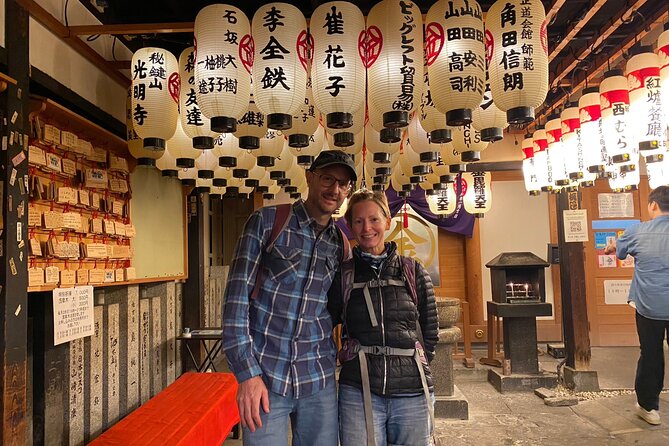
Hozenji Temple offers a sharp change of pace. After the food, traffic, signs, and city noise, you reach a small temple known for its moss-covered stone statue. The stop lasts about 10 minutes, with lanterns glowing in the evening.
Do not expect a long temple visit. This is a compact cultural pause, not a full temple tour. Its value comes from the contrast. Hozenji sits near the center of Dotonbori’s entertainment district, yet it offers a quieter atmosphere and a glimpse of older Osaka close to the main nightlife streets.
The nearby Hozenji Yokocho is another appealing part of the route. Its narrow lanes and traditional-style restaurants help soften the impact of Dotonbori’s giant signs. The timing is also sensible: an evening visit lets you see the area after dark, when the lanterns and restaurant fronts are most atmospheric.
For photographers, this is one of the better stops. You get a different kind of Osaka image than the usual neon-and-food picture. For anyone who has had enough eating by this point, the temple also provides a short break before the final dishes.
Okonomiyaki in Hozenji Yokocho
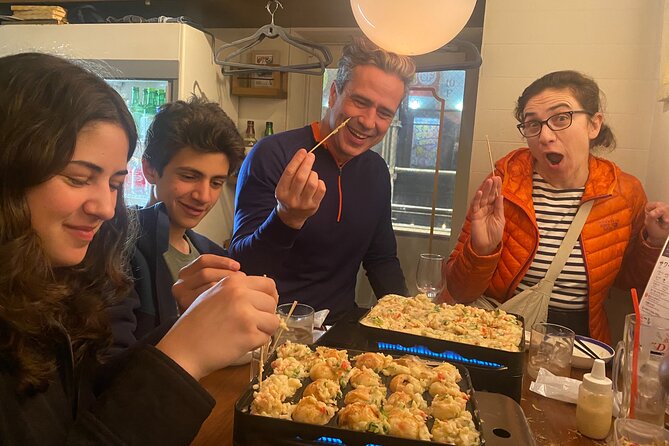
The next major food stop is an okonomiyaki restaurant. Okonomiyaki is a savory pancake made with a batter and other ingredients, then finished with toppings and sauce. It is one of Osaka’s best-known comfort foods and a logical centerpiece for the second half of the meal.
The restaurant is chosen based on local recommendation, and the included meal offers okonomiyaki or fried noodles. The exact choice may depend on the day or the restaurant arrangement, so do not assume you will receive both. Either way, this is a heavier, more filling dish than the earlier small plates.
The timing allows about 50 minutes, making this the longest single food stop after Shinsekai. You should have enough time to eat without being rushed, though the three-hour schedule means the group will still move along.
This is where the $125 price begins to make more sense for some people. You are receiving a substantial evening meal in several settings, not merely paying for a guide to point out famous streets. The value is weaker if you eat very little, avoid alcohol, or prefer to choose every restaurant yourself. It is stronger if you want a fixed plan and would otherwise spend time guessing which places are worth entering.
Michelin-rated takoyaki in Dotonbori
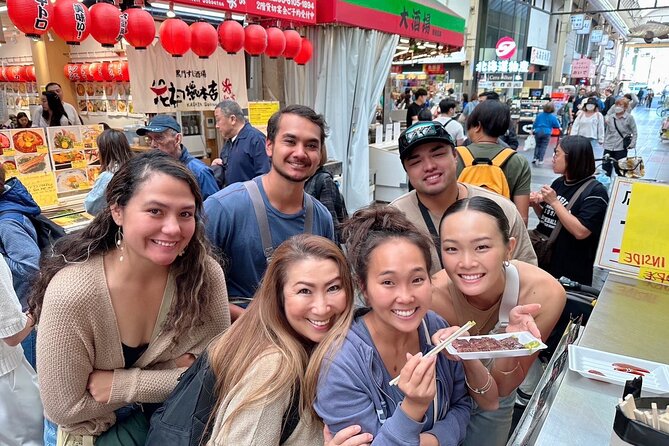
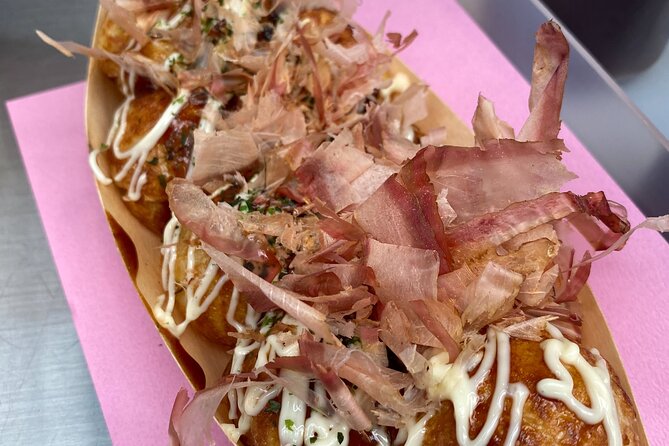
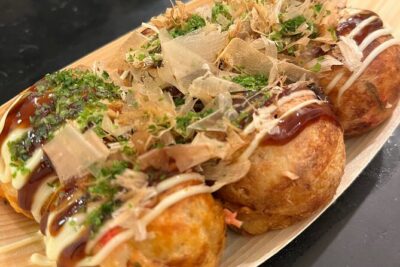
The final food stop is takoyaki from a street stall in Dotonbori. These round octopus-filled batter balls are a classic Osaka snack, usually served hot with sauce and toppings. They are small, but they can be surprisingly filling after kushikatsu, sashimi, salad, okonomiyaki, and drinks.
The stall is described as Michelin-rated, which gives this stop extra appeal for food-focused visitors. Still, the label should not make you expect a formal restaurant setting. Takoyaki is street food. You will be trying it in the middle of Dotonbori’s busy evening scene, where the setting is part of the pleasure.
This is also the point where the tour’s format becomes clear. The itinerary does not simply move from one quiet restaurant to another. It combines seated eating with street food, neighborhood walks, and quick cultural stops. Some people will find that varied rhythm exciting. Others may prefer more time at each restaurant.
If you have dietary restrictions, ask before booking. The supplied information does not provide vegetarian, seafood-free, or allergy-friendly substitutions. Sashimi, kushikatsu, takoyaki, and okonomiyaki can involve ingredients that are not obvious at first glance.
Dotonbori, the Glico sign, and the final photo
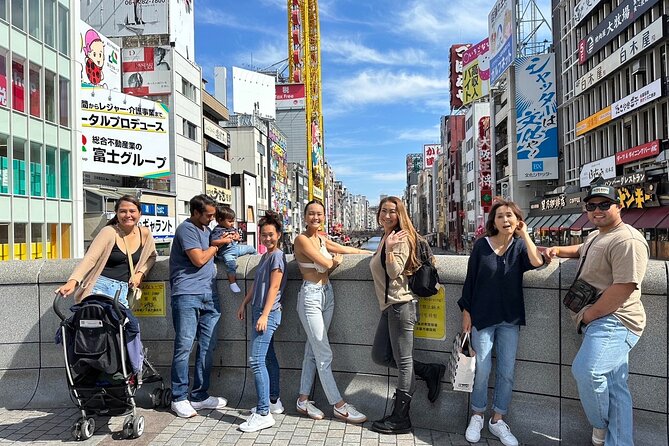
The tour ends near the Glico running man sign, one of Osaka’s best-known photo spots. The final 10 minutes focus on Dotonbori itself, with its bright signs, food businesses, street activity, and performances.
The Glico sign is a simple stop, but it gives the evening a clear finish. You arrive at a place you can easily recognize and continue exploring on your own. Since the activity ends here rather than returning you to Shinsekai, you can stay for more food, shopping, or nightlife if you still have energy.
Dotonbori is also where the tour may feel most crowded. Keep close to the guide, especially while crossing streets or moving through narrow areas. The group size of eight is helpful, but you should still expect a busy urban setting rather than a relaxed country walk.
Is $125 a fair price?
At $125 per person, this is not the cheapest way to eat in Osaka. You could buy individual street foods for much less. The price is easier to justify if you value a planned route, English explanations, a small group, two drinks, and a full dinner with several signature dishes.
Included food covers six kushikatsu pieces, edamame, fresh-fish sashimi, tofu salad, fried gyoza or fried chicken, okonomiyaki or fried noodles, and takoyaki. That is a considerable amount of food for one evening. The two included drinks add to the value, especially if you choose alcoholic drinks.
You should not treat the price as a guarantee of unlimited sampling. Extra food and drinks are available for purchase, but they are not included. Transportation, hotel pickup, private transportation, and gratuities are also separate.
The tour is most worthwhile on a first visit, when you want someone to connect the food with the neighborhoods. If you already know Osaka’s restaurant scene and feel comfortable ordering anywhere, you may get better value by making your own route. If you want a friendly introduction without spending hours researching, the fixed plan has a clear advantage.
Who should book this evening tour?
I would recommend it to first-time visitors who want a substantial Osaka dinner and a guided look at Shinsekai and Dotonbori. It also suits people who like trying several famous foods but do not want to manage reservations, menus, and train connections alone.
The small group should work well for solo visitors and couples. The tour is capped at eight, and most people can participate, though you should be ready for walking between districts and for an evening in crowded streets.
Families with older children may enjoy the food and the Glico sign, while very young children may find the late-day walking and fried-heavy meal less comfortable. The supplied information does not state a minimum age, child price, or stroller policy, so ask the provider if those details matter to your plans.
Food-focused visitors should note the difference between a tasting crawl and this experience. You will eat a lot, but some food is served as part of a dinner setting rather than at many separate stalls. If that distinction matters to you, contact Sakura Concierge before booking and ask how the food is divided on your date.
The tour has free cancellation up to 24 hours before the start time. Cancellations inside that window are not refunded, and poor weather or failure to reach the minimum group size can lead to a different date or a full refund.
My verdict on Osaka Soul
Book this if you want Osaka’s classic foods paired with neighborhood stories, evening atmosphere, and a route that moves from old Shinsekai to neon Dotonbori. The strongest points are the small group, the generous included meal, two drinks, and the chance to see Hozenji Temple between food stops.
Skip it if you expect a nonstop crawl through many independent restaurants or if you want complete control over every dish. At $125, the experience asks you to pay for guidance and structure, not just food. For a first Osaka evening, especially with a guide such as Kenny available by request, that structure can be worth the cost.
FAQ
Where does the tour begin?
It begins at Dobutsuen-Mae Station, at 1-chōme-6-12 Taishi in Osaka’s Nishinari Ward.
What time does the tour start?
The start time is 5:00 p.m.
Where does the tour end?
The tour ends at the Glico Sign in Dotonbori, at 1-chōme-10-4 Dotonbori, Chuo Ward.
How long does the experience last?
The tour lasts approximately three hours.
How many people can join the group?
The maximum group size is eight travelers.
Are drinks included?
Yes. Two alcoholic or non-alcoholic drinks are included. Additional drinks cost extra.
Is transportation included?
No. Transportation fees between Dobutsuen-Mae Station and Dotonbori are not included. Private transportation and hotel pickup are also not provided.
More Food Tours in Osaka
- Best of Shinjuku: Izakaya Food Tour (4 Stops, 14+ Tastings)
★ 5.0 · 1,863 reviews - Kyoto: Insider Sake Brewery Tour with Sake and Food Pairing
★ 5.0 · 704 reviews - Tokyo: The Best of Izakaya in Shinjuku Food & Cultural Tour
★ 4.9 · 221 reviews - [1 Group Only] Tokyo Shinjuku Food Tour for Family
★ 5.0 · 147 reviews
Just added around Osaka
- Osaka Sake & Food Tour★ 5.0 · 8 reviews
- Sake “Omakase” in Osaka : Guided Tasting by a Active Sake brewer★ 5.0 · 11 reviews
- Osaka Home Feast Cooking and Sake Experience★ 5.0 · 3 reviews
- Same Day OK! Osaka: Local Food, Izakaya & Local Bites Tour!★ 4.8 · 17 reviews
- Osaka Bar Hopping | Explore Hidden Bars & Izakayas in Namba★ 4.7 · 18 reviews
- 3.5h Osaka Night guided Local Bar Hopping, Sake & Karaoke★ 5.0 · 27 reviews
- Osaka: Cooking Class & Sake Tasting with Local Market Visit★ 4.8 · 31 reviews
- Osaka Cooking Class and Sake Tasting with Local Supermarket Visit★ 5.0 · 79 reviews
Osaka Sake Tours, compared.
Osaka Sake Tasting & Takoyaki Cooking Experience
Read our review →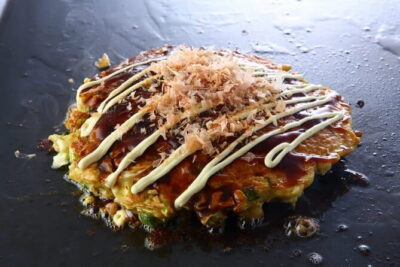
Osaka Cooking Class and Sake Tasting with Local Supermarket Visit
Read our review →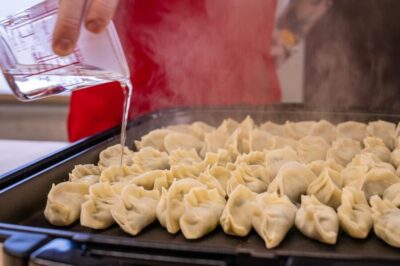
Osaka: Cooking Class & Sake Tasting with Local Market Visit
Read our review →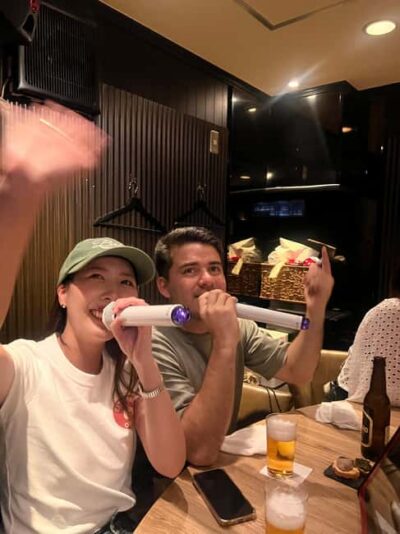
3.5h Osaka Night guided Local Bar Hopping, Sake & Karaoke
Read our review →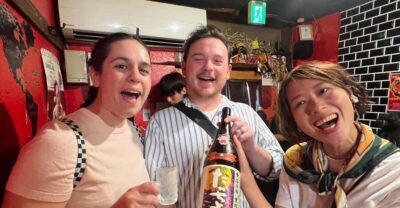
Osaka Bar Hopping | Explore Hidden Bars & Izakayas in Namba
Read our review →Browse the lists this tour appears in