
REVIEW · KYOTO SAKE TOURS
Izakaya Style Cooking Class
Izakaya food is Japan’s casual, shareable cooking, and this class lets you make it rather than simply order it. In a traditional wooden house at Cooking Sun, you learn dashi, Japanese seasoning, and several small dishes before sitting down to eat what you prepared.
I like the hands-on format and the practical recipes, many of which can be repeated at home without specialist cooking skills. I also like the efficient team teaching style, with instructors explaining ingredients, cleaning work areas, and helping several cooks at once. The main consideration is that the menu changes with seasonal ingredients, and some participants have received a sake offer that carried an extra charge.
Key points to know
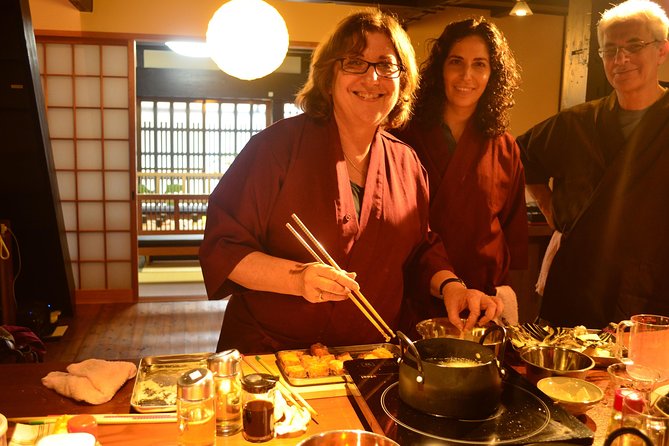
- Three hours of cooking and dinner: The 2pm class combines instruction, preparation, and a sit-down meal.
- Up to eight people: The small maximum allows for personal help, though the room may feel busier when fully booked.
- Dashi is part of the lesson: You learn the stock that forms the base of many Japanese soups and sauces.
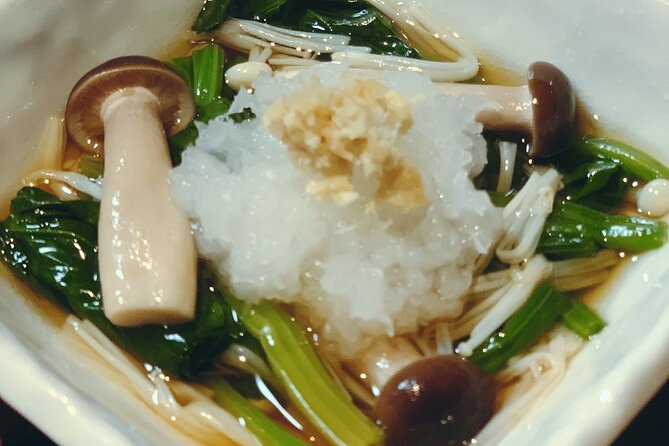
- Six dishes may be prepared: Past menus have included spinach with sesame sauce, teriyaki yellowtail, soup, tempura, rice dishes, pasta, and mochi.
- Recipes go home with you: The class is designed to help you repeat the dishes for family and friends.
- Ask about drinks before accepting them: Dinner is included, but additional drinks such as sake may cost extra.
Why izakaya cooking is worth your Kyoto afternoon
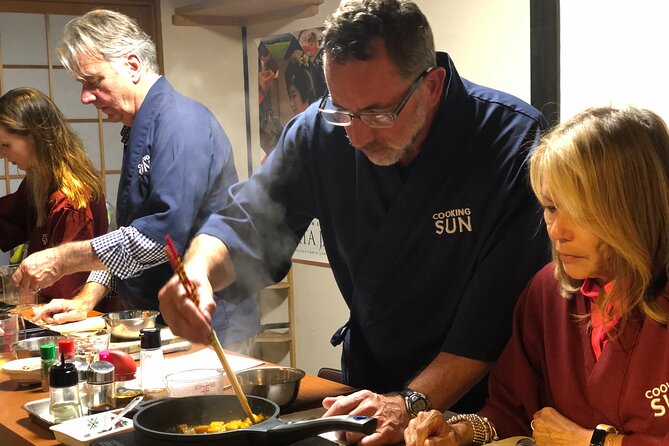
An izakaya is often described as Japan’s answer to tapas, though the comparison only goes so far. These casual places serve small dishes with drinks, making them popular for relaxed meals, family gatherings, and after-work socializing.
The food is usually less formal than sushi and more varied than the familiar restaurant version of teriyaki. You might find vegetables, grilled fish, fried items, rice, soup, and small salads sharing the same table. That variety makes this class useful for understanding how ordinary Japanese meals are put together.
The class also gives you a bit of cultural context. Izakaya culture is commonly traced to the Edo period, when sake shops began serving food to encourage customers to stay and drink. That old connection between simple food, sake, and conversation still shapes the way izakaya dining works today.
I like this focus because it moves beyond the standard list of sushi, ramen, and teriyaki. You learn techniques that explain the flavor of many Japanese dishes, especially the balance of soy sauce, mirin, miso, sesame, and dashi.
More Izakaya and Bar Hopping in Kyoto:
- Kyoto: Izakaya Bars Guided Walking Tour
★ 4.9 · 815 reviews - Kyoto: Afternoon Japanese Izakaya Cooking Class
★ 4.9 · 241 reviews - Kyoto Local Gourmet Night Experience: Kaiseki & Izakaya & Matcha
★ 5.0 · 22 reviews
Starting at 2pm in a Kyoto wooden house
The meeting point is Cooking Sun at 679 Funayacho, Shimogyo Ward, Kyoto. The class begins at 2pm and ends back at the same meeting point. The setting is a traditional wooden house, which gives the afternoon a more personal feel than a modern demonstration kitchen.
The exact cooking studio location is provided at booking, so check your confirmation carefully before setting out. The location is near public transportation, but the supplied details do not name a particular station or give a walking time. I would allow enough time to find the house without rushing, especially if this is your first visit to the neighborhood.
You receive an apron and all ingredients. That matters because you can focus on technique instead of shopping for unfamiliar products or bringing equipment. The class is conducted in English, making it suitable for you if you want explanations of both the method and the cultural background.
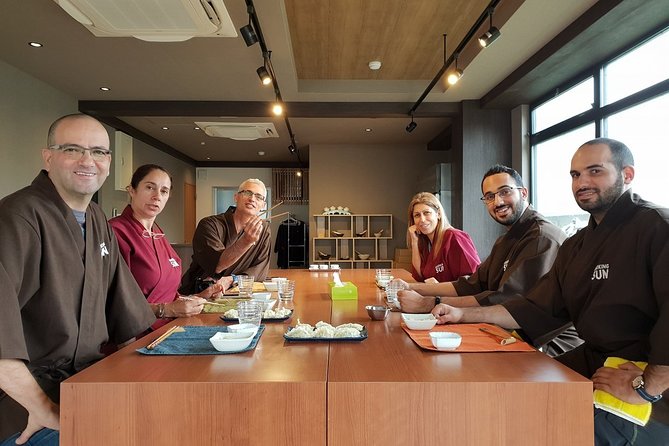
The maximum group size is eight. That is small enough for a teacher to watch your knife work, answer questions, and help when a sauce or cooking step goes wrong. A full class will still feel like a group activity, not a private lesson, but the format offers more personal help than a large demonstration.
Learning dashi and Japanese seasoning
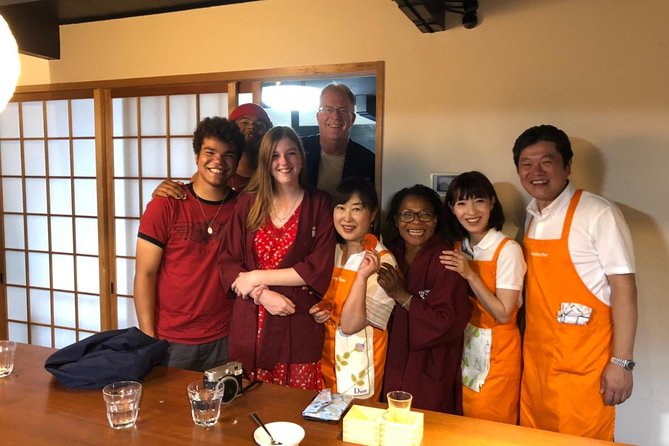
The first practical lesson is dashi, the soup stock used throughout Japanese cooking. Dashi may look simple, but it is one of the key reasons Japanese soups, sauces, and simmered dishes taste full without feeling heavy.
You also learn how Japanese seasonings work together. The useful part is not just being told the names of ingredients. The instructors explain the differences between sauces and condiments, then show how each changes the final dish.
This is the kind of information I find most valuable in a cooking class. A recipe tells you to add soy sauce, sesame, or a sweet seasoning. A good lesson helps you understand what each one contributes, so you can adjust the dish later when cooking at home.
The class is designed for different levels of experience. You might be an avid home cook looking for new flavor combinations, or you might rarely cook beyond simple meals. The instructions are presented clearly enough for beginners, while more experienced cooks can pay attention to knife work, Japanese utensils, and seasoning balance.
Preparing several dishes instead of one long recipe
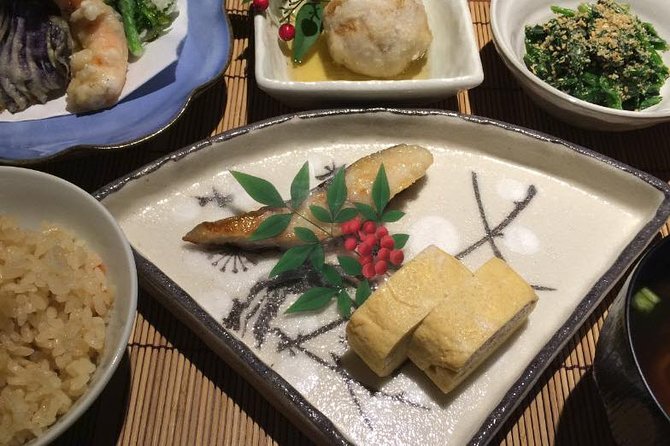
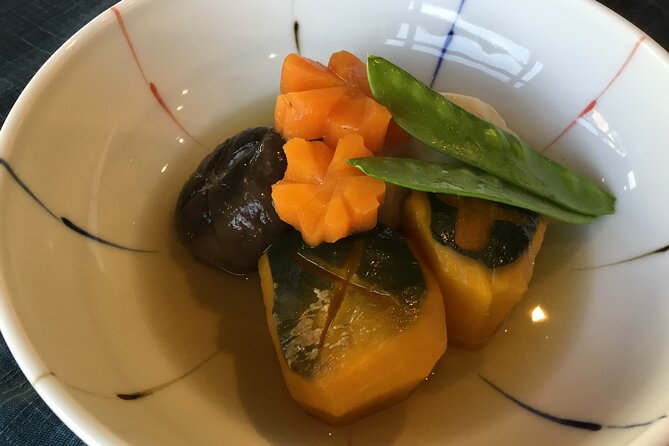
After the introduction and demonstration, you work through a selection of izakaya-style home dishes. The menu is seasonal, so no fixed list can be guaranteed. Suggested examples include spinach with sesame sauce, teriyaki yellowtail, vegetable chowder, mushroom tempura, and rice with vegetables.
Previous class menus have also included cucumber salad, pumpkin soup, pasta, and mochi dessert. One menu included six dishes, which gives you a broad look at Japanese home cooking in a single afternoon. A participant noted that pasta appeared instead of Japanese noodles, so you should expect the menu to reflect the class plan and available ingredients rather than a rigid definition of izakaya food.
That variety is a strength. You are not spending three hours perfecting one complicated dish. Instead, you move through several preparations and see how Japanese cooking handles vegetables, fish, soup, fried food, rice, and dessert.
The staff prepare some ingredients in advance. This keeps the class moving and leaves you with more time to cook and taste. The trade-off is that you may not perform every single preparation from start to finish. If you want to learn a particular cutting or cleaning technique, ask the instructor before the next recipe begins.
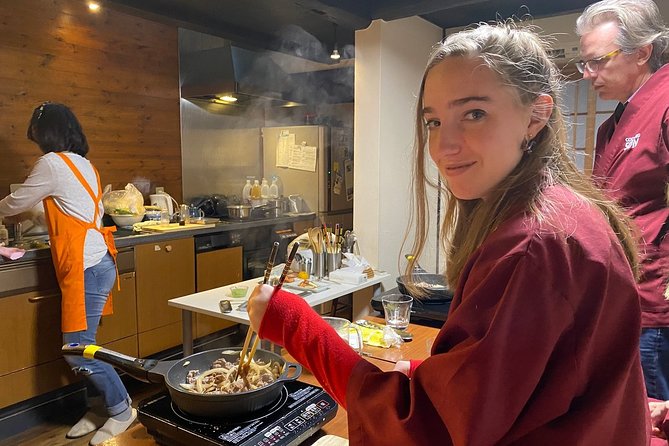
The team teaching style also helps. Keiko and the Cooking Sun instructors are described as organized, patient, and ready to answer questions. The teachers work together, bring ingredients forward, clean stations, and keep the group moving from one recipe to the next.
More Cooking Classes in Kyoto:
- Kyoto Udon & Tempura Cooking Class with Professional Chefs
★ 3.8 · 3 reviews - Ramen and Sushi Cooking Class with Sake Pairing Set in Tokyo
★ 5.0 · 291 reviews - Tokyo Washoku 4-hour Cooking Class: From Market to Table
★ 5.0 · 253 reviews - Osaka Sake Tasting with Takoyaki Cooking
★ 5.0 · 156 reviews
Eating the meal you prepared
The class finishes with dinner at the cooking studio. Rather than watching a chef prepare a meal for you, you sit down with the other participants and eat the dishes made during the session.
That shared meal is an important part of the experience. You can taste how the dishes work together, compare the effect of different seasonings, and ask questions while the cooking is still fresh in your mind. You also leave with recipes, so the class continues after your Kyoto visit.
You should arrive hungry. Several dishes may be served, and the amount of food can be generous. The meal is included, but drinks need clarification. One participant was offered sake and later found there was a charge of 600 yen per glass. I would ask the price before accepting any additional drink. That avoids an awkward surprise and is simply good practice in any paid activity.
The class has also handled vegetarian meals and allergies successfully, but you must report dietary requirements when booking. Do not wait until the cooking begins. Japanese ingredients can include fish stock, soy, wheat, and other items that are not always obvious from a dish’s appearance.
What the price means at $71.63
At $71.63 per person, this is not the cheapest way to eat in Kyoto. You could buy a casual Japanese meal for much less. The value comes from combining dinner with instruction, ingredients, equipment, an apron, cultural context, and recipes for later use.
If you only want to sample food, spend the money at an izakaya. If you want to understand how Japanese flavors are built and bring useful skills home, the price is more reasonable. Preparing several dishes gives you more than a single cooking demonstration, and the meal is part of the afternoon rather than an extra stop.
The class also saves you from sourcing ingredients and equipment on your own. That is helpful if your Kyoto stay is short or if you want a structured activity in English. Group discounts may be available, which can improve the value for families or friends booking together.
The group limit of eight is another reason the price can make sense. You are paying for a guided, interactive class rather than a passive food talk. Still, the experience is not private. If you want one-on-one attention throughout, a smaller or private class would be a better fit, though no private format is specified here.
Who will enjoy this class most
I would choose this class for you if you want a practical food experience and like learning by doing. It works especially well for:
- First-time visitors who want something beyond sushi and teriyaki
- Home cooks looking for Japanese sauces, stocks, and side dishes
- Families with older children, since children aged 10 and 12 have successfully followed the class
- Couples and friends who want a social afternoon
- Vegetarians and people with allergies who notify the provider in advance
- Cooks at different skill levels sharing the same activity
You do not need advanced kitchen experience. The recipes are designed to be approachable, and the instruction is paced for a mixed group.
I would think twice if you dislike group activities, need a fixed menu, or want to spend the afternoon eating without cooking. The menu changes with seasonal availability, and advance preparation by the staff means you may not handle every ingredient from its original state.
Timing, transport, and practical details
The experience lasts about three hours, beginning at 2pm. That makes it a useful afternoon plan, followed by an evening walk or another Kyoto activity. Since the class ends at the meeting point, you do not need to arrange a separate return transfer.
Hotel pickup and drop-off are not included. You need to make your own way to Cooking Sun, and the activity is near public transportation. A mobile ticket is available, and confirmation is sent when you book.
The maximum is eight people per booking and eight participants for the activity. Service animals are allowed. Tell the provider about allergies or other dietary needs when booking, not on the day.
Cancellation is free up to 24 hours before the start time for a full refund. Inside that 24-hour window, cancellations and changes are not accepted for a refund. The cut-off uses Kyoto local time, so check the timing carefully if you are booking from another time zone.
The food knowledge you take home
The most useful souvenir is not a packaged product. It is the set of recipes and the ability to recognize how Japanese seasonings work together.
You may leave knowing how to make dashi, how to use sesame sauce with vegetables, how to season a teriyaki-style dish, and how to handle a selection of common Japanese ingredients. You also get a clearer idea of how small dishes can form a complete meal.
I like that the food is described as approachable and healthy rather than restaurant theater. The recipes are meant to be cooked again for family and friends. That makes the class a better choice than an activity built around one impressive dish that is difficult to repeat outside Japan.
The menu will not always be strictly traditional in the narrowest sense. Pasta has appeared in one session, and ingredients change by season. For me, that is acceptable if you view the class as an introduction to Japanese home cooking and izakaya habits, not as a formal course in regional cuisine.
Should you book the Izakaya Style Cooking Class?
I would book it if you want an active Kyoto experience, enjoy food, and would like to recreate part of the trip at home. The strongest reasons are the small maximum group, practical instruction, several dishes, and included dinner.
Before booking, consider three things. Confirm your dietary needs early, ask about the cost of any offered drinks, and accept that the menu may change. If those points suit you, $71.63 buys a useful three-hour lesson rather than just another meal.
For a family, a couple, or a curious home cook, this is a sensible way to spend an afternoon in Kyoto. You leave with a full meal, a better grasp of dashi and Japanese seasoning, and recipes that can keep the memory working in your own kitchen.
FAQ
Where does the cooking class take place?
The meeting point is Cooking Sun at 679 Funayacho, Shimogyo Ward, Kyoto, 600-8466, Japan. The class takes place in a traditional wooden house cooking studio.
What time does the class begin?
The class starts at 2pm.
How long does the experience last?
The cooking class lasts approximately three hours.
Is dinner included?
Yes. Dinner made during the class is included. Additional food and drinks are not included unless specified.
Is the class taught in English?
Yes. An English-speaking cooking instructor leads the class.
How many people can join?
The activity has a maximum of eight participants. A maximum of eight people can be included in one booking.
Can dietary requirements or allergies be accommodated?
You should advise the provider of specific dietary requirements when booking. The class has accommodated vegetarian meals and allergies, but the request must be made in advance.
What is the cancellation policy?
You can cancel at least 24 hours before the start time for a full refund. Cancellations or changes made less than 24 hours before the start time are not accepted for a refund.
Just added around Kyoto
- Nishiki Market, Private Sushi class & Sake Tasting in Townhouse★ 5.0 · 6 reviews
- Hidden Bamboo gem and Japanese foods in Izakaya Private Tour★ 5.0 · 3 reviews
- Private Nishiki Market Food & Sake Tour by Young Local Guides★ 5.0 · 12 reviews
- KYOTO Sake Tasting Tour at Local Breweries(tasting fee included)★ 5.0 · 16 reviews
- Kyoto: Sake Tasting Journey to Two Iconic Breweries★ 3.0 · 2 reviews
- Kyoto Food and Sake Tour Experience★ 4.0 · 5 reviews
- Japanese Sake Breweries Tour in Fushimi Kyoto★ 5.0 · 10 reviews
- Experience of pairing sake tasting with snacks in Kyoto★ 5.0 · 4 reviews
Kyoto Sake Tours, compared.

3-Hour Kyoto Insider Sake Brewery Tour with Tastings & Pairings
Read our review →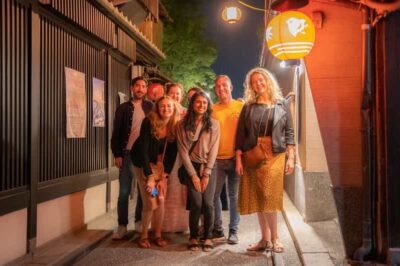

Kyoto: Insider Sake Brewery Tour with Sake and Food Pairing
Read our review →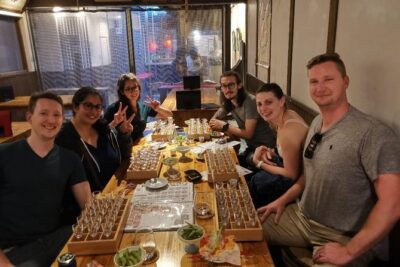
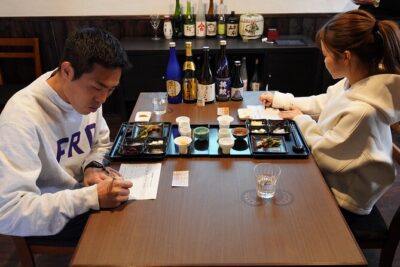
1.5-Hour Kyoto Insider Sake Experience with 7 Tastings & Pairings
Read our review →
Kyoto: Insider Sake Experience with 7 Tastings and Snacks
Read our review →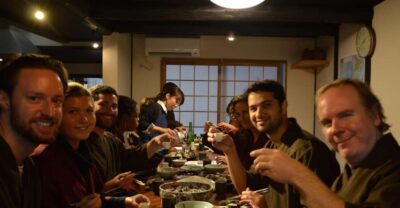
Kyoto: Afternoon Japanese Izakaya Cooking Class
Read our review →
Private Tea Ceremony and Sake Tasting in Kyoto Samurai House
Read our review →Browse the lists this tour appears in