
REVIEW · TOKYO SAKE TOURS
Ramen and Sushi Cooking Class with Sake Pairing Set in Tokyo
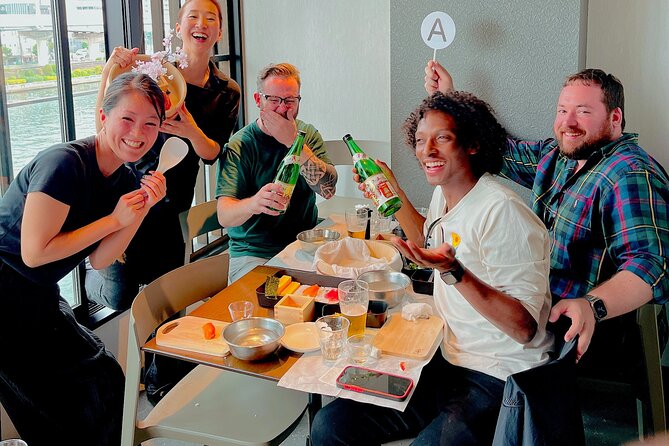
The best part of this Tokyo cooking class is its small size. With no more than eight people, you get close help as you shape sushi, season ramen, and taste sake selected for the meal. It feels more like a friendly kitchen lesson than a large demonstration.
I like the practical focus, especially the sushi techniques you can repeat at home and the chance to build ramen broth from scratch. I also like the relaxed teaching style linked with instructors such as Sato, Ryushi, Alex, Kaori, and Taka. The one catch is that the ramen portion may be less hands-on than the sushi, so this is not a full three-hour session of nonstop cooking.
Key points at a glance
- Small groups of up to eight: You get direct help instead of trying to see a demonstration from the back of a crowded room.
- Three Japanese staples in one class: Prepare sushi, make ramen, and taste sake chosen to go with the food.
- Sushi gets the most hands-on attention: The class is especially useful if you have tried making sushi at home and struggled with the technique.
- A meal is included: You eat the dishes you prepare, with ingredients and drinks covered in the price.
- Friendly, personal instruction: Sato, Ryushi, Alex, Kaori, and Taka are among the instructors named in class feedback.
- Convenient Tokyo setting: The class begins and ends at HAUS Tsukishima in Chuo City, near public transportation.
Why this class works for food-focused visitors
Tokyo gives you endless chances to eat ramen and sushi. The smarter question is what you will remember after the meal is gone. This class gives you a useful answer: you learn how the dishes come together, then sit down and eat what you made.
That makes the experience more valuable than a simple tasting. You learn basic handling, seasoning, and presentation while hearing stories about Japanese food culture. A short quiz about sushi and ramen history may also be part of the session, adding context without turning the class into a lecture.
The mood appears to be one of the strongest parts. Instructors are described as warm, polite, and easy to approach. That matters in a cooking class because sushi can feel fiddly at first. You want someone to correct your hand position or explain why the rice is behaving badly, not simply show you a perfect finished roll.
The food itself receives high marks. The prepared sushi is described as delicious, and the ramen includes pork belly that adds a hearty touch. Sake is not treated as an afterthought. Several choices are offered, with pairings intended to suit the dishes.
More Sake Tastings in Tokyo:
- Best of Shinjuku: Izakaya Food Tour (4 Stops, 14+ Tastings)
★ 5.0 · 1,863 reviews - Sake Tasting Masterclass in Shinjuku (8+ Varieties with a Pro)
★ 5.0 · 271 reviews - Sake Omakase in Tokyo: Guided Tasting by Certified Sommeliers
★ 5.0 · 239 reviews
Arriving at HAUS Tsukishima
The meeting point is HAUS Tsukishima, at 2-chōme 13-5 Tsukuda, Chuo City, Tokyo 104-0051. The class returns to this same location, so you do not need to arrange a separate pickup or figure out a second endpoint afterward.
The area is near public transportation, but hotel pickup and drop-off are not included. Build in enough time to reach the address, especially if you are coming from another part of Tokyo. Your confirmation arrives at booking, so keep the mobile ticket available on your phone.
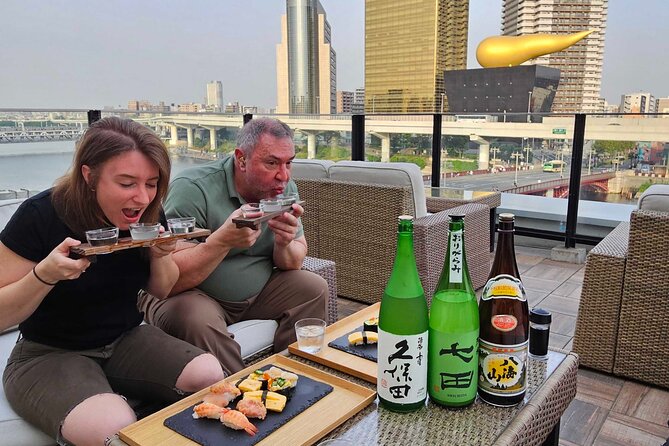
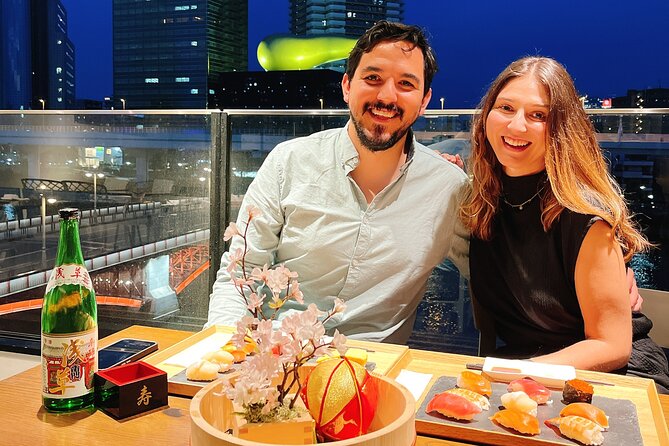
The setting adds character. Several people specifically liked the view, including a river-facing outlook. That is a small but worthwhile detail: you are not cooking in a generic basement room with no sense of place. The view gives the class a calmer feel and makes the meal portion more pleasant.
The opening lesson: Japanese food with a local frame
The class begins by setting up the dishes and explaining what you will make. The instructors do more than hand over ingredients. They explain the stories behind the food and offer professional tips that help you repeat the process at home.
This introduction is useful because sushi and ramen are often reduced to simple labels. Sushi is not just fish and rice, and ramen is not just noodles in soup. The class gives you a closer look at preparation, balance, and the place these foods hold in Japanese dining.
You should expect a social lesson rather than a silent workshop. The instructors use humor and conversation to help people relax. A quiz about sushi and ramen facts may be included, which gives the group something to talk about while ingredients are being prepared.
If you prefer a strict chef-led course with technical vocabulary and long demonstrations, the informal tone may feel light. For most people, though, the easy pace is an advantage. You can ask questions without feeling that you are slowing down the room.
Sushi making: the most useful hands-on section
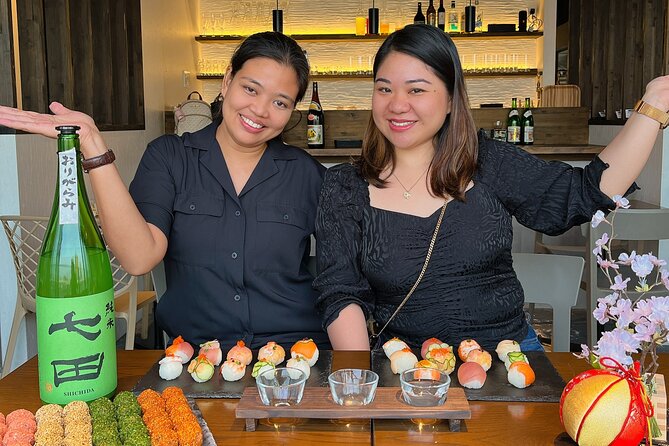
Sushi is the part of the experience where personal instruction matters most. Rolling and shaping rice can look simple in a video, yet small errors can leave you with loose, crowded, or uneven pieces. Here, the instructor can show you how to handle the rice and guide you through the process at close range.
The small group makes a real difference. With a maximum of eight people, you are less likely to miss a step, and the instructor can watch what your hands are doing. One class with only five people gave participants especially close instruction, which is exactly the kind of attention that makes a technique easier to remember.
You also eat the sushi you prepare. That creates a satisfying finish to the lesson, but it serves a practical purpose too. You can see how your finished pieces compare with the intended result, then taste the balance of rice, filling, and seasoning.
This is a good fit if you have attempted sushi at home and found online videos frustrating. The class cannot turn every beginner into a professional sushi chef in one afternoon, but it can replace vague instructions with direct correction.
The quality of the ingredients matters here. The class uses ingredients selected to support the dishes, rather than treating the activity as a novelty with bargain materials. That helps you understand what good sushi should taste like, even if your technique is still developing.
More Cooking Classes in Tokyo:
- Tokyo Washoku 4-hour Cooking Class: From Market to Table
★ 5.0 · 253 reviews - Tokyo: Sushi and Ramen Cooking Class with Sake Pairing Set
★ 5.0 · 81 reviews - Tokyo Night Cooking Class: 5 Home-Cooked Japanese Dishes
★ 5.0 · 70 reviews - Tokyo: Sushi Cooking Class with Sake Tasting
★ 4.8 · 55 reviews
Ramen broth and pork belly: a different kind of lesson
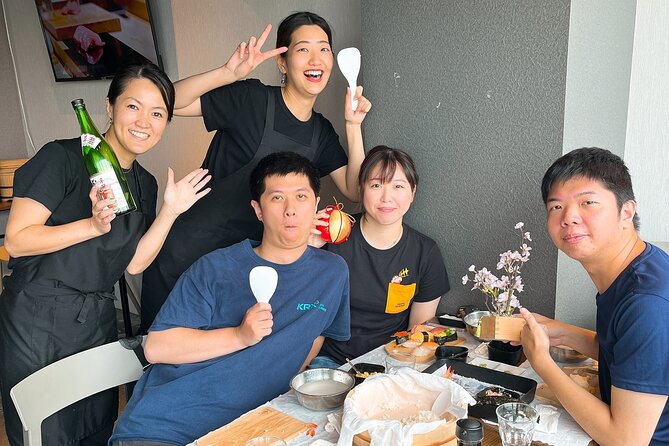
The ramen portion focuses on making savory broth from scratch. This gives you a look at the foundation of the bowl, where seasoning and balance matter as much as the noodles themselves.
Compared with the sushi section, the ramen work may be less hands-on. The class still teaches you how the broth is built and allows some customization, but you should not expect to spend the entire ramen segment stirring a pot or preparing every component from raw ingredients.
That is not necessarily a flaw. Broth often depends on preparation time and careful coordination, and a three-hour class has to keep moving. The advantage is that you get to taste a complete bowl without turning the session into an all-day cooking project.
Pork belly is one of the memorable elements mentioned in the class experience. It adds richness and texture to the ramen, making the finished meal feel substantial. You will not leave hungry, particularly because both sushi and ramen are served as part of the activity.
For a home cook, the most useful takeaway may be the seasoning logic rather than a single fixed recipe. You learn how the broth supports the noodles and toppings, and how small adjustments can change the final bowl.
Sake pairing with the meal
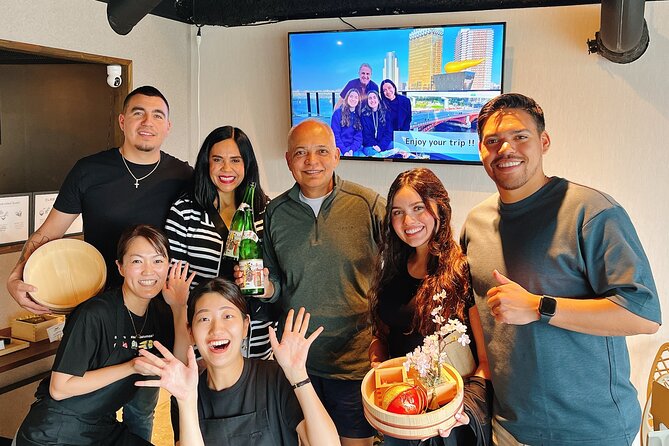
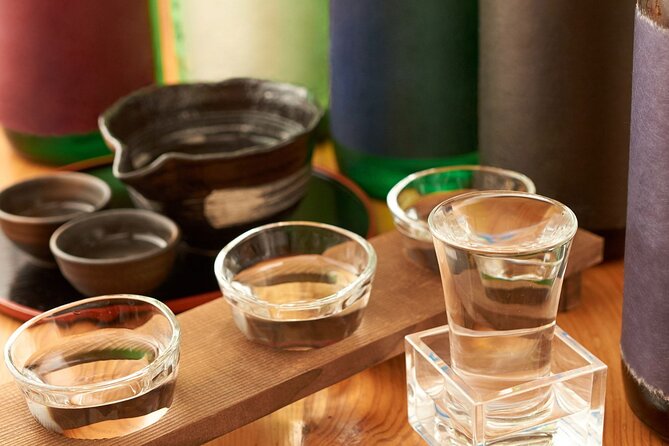
Sake is included, and the class presents it as a pairing rather than simply a drink poured on the side. Different choices are available, with attention to how they work alongside sushi and ramen.
This is a good addition for anyone who wants more than a cooking lesson. You can compare the taste of the sake with the food and learn how the drink changes the meal. Several selections are described as smooth, which may make the tasting approachable even if you do not know much about sake.
The exact amount and selection can vary, so do not treat this as a dedicated sake seminar. The main purpose is still cooking. Think of the sake as part of the meal and cultural setting, not as a separate guided tasting course.
Because all drinks are included, you do not need to budget separately for the pairing. If you do not drink alcohol, confirm arrangements before booking if that matters to you, since the available information specifically describes sake and all drinks but does not explain nonalcoholic alternatives.
The instructors and the feel of the room
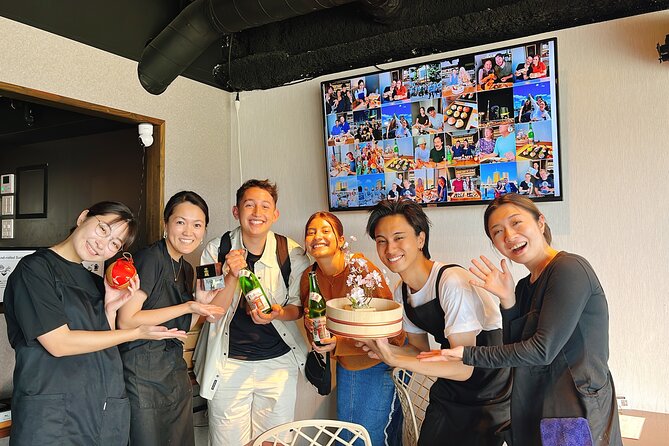
The class is led in English, which removes a major barrier for many international visitors. Names connected with the teaching team include Sato, Ryushi, Alex, Kaori, and Taka. The available class information does not guarantee which person will lead your particular date, so treat these as possible instructors rather than a fixed roster.
The teaching style is a major strength. The class is described as warm, smiling, polite, and personal. That kind of atmosphere helps if you are nervous about handling sushi in front of strangers or worried that your cooking skills are weak.
You should also expect laughter and conversation. The experience is built for participation, not quiet observation. Couples, siblings, and small groups can enjoy it together, but solo visitors may also find the limited group size less awkward than a large workshop.
The relaxed setting has one tradeoff. If you want a highly formal culinary course with a written curriculum, exact measurements for every dish, and advanced knife work, this may not go far enough. It is better suited to practical learning, cultural context, and a memorable meal.
What the $79.59 price includes
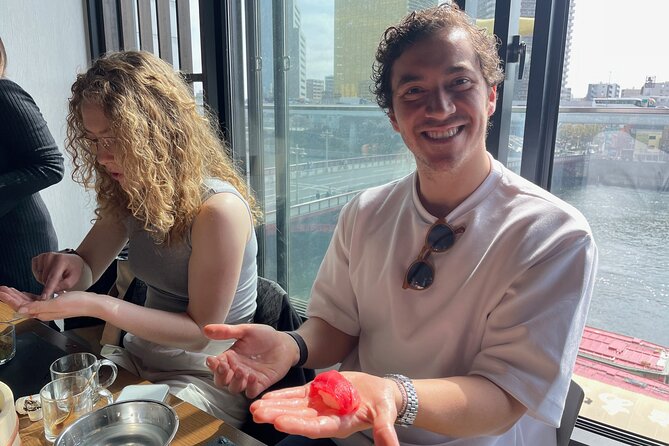
At $79.59 per person, the class is not the cheapest way to eat sushi and ramen in Tokyo. You can find less expensive meals throughout the city. But the comparison is not really restaurant bill versus restaurant bill.
The price covers roughly three hours, an English-speaking instructor, cooking ingredients, the meal you prepare, and all drinks, including the sake pairing. You are also paying for a small group capped at eight, direct instruction, and a central Tokyo activity that combines food, culture, and entertainment.
I consider that fair value for visitors who would otherwise book a separate food tour, sake tasting, or cooking lesson. The value is strongest if you want to take home skills rather than simply consume another meal.
The value is weaker if you have little interest in cooking. Someone who wants a quick tasting or a polished restaurant experience may find the pace too instructional. You will spend time preparing food, listening, and following steps before you eat.
The class had been booked at least five times in the previous week, and it carries a five out of five rating from 291 reviews with 100 percent recommendation. Those figures suggest steady demand, but they should not replace your own judgment about the format. The important question is simple: do you want to make the food, or only eat it?
Timing, transport, and cancellation details
The activity lasts about three hours and ends back at HAUS Tsukishima. That makes it easy to fit into a morning or afternoon plan, though you should avoid scheduling something immediately afterward if you want time for the meal and conversation.
There is no hotel pickup or drop-off. Use the mobile ticket and confirm the address before setting out. The meeting point is near public transportation, but the supplied information does not name a specific station or travel time from major neighborhoods.
Free cancellation is available if you cancel at least 24 hours before the start time. Cancellations within 24 hours are not refunded, and changes during that period are not accepted. Service animals are allowed.
Who should book this Tokyo cooking class?
I would recommend it most strongly to food-focused visitors, couples, families with older children, and anyone who tried making sushi at home without much success. The close instruction can turn a confusing technique into something you understand.
It also suits people who want a social activity that is more personal than a large group tour. The maximum of eight keeps the room manageable, and the instructors appear to spend time helping individuals rather than simply moving through a script.
It may be less suitable for someone seeking advanced chef training. The ramen section is not as hands-on as the sushi work, and the class is designed around approachable food, conversation, and a complete meal.
You should also consider the alcohol element. Sake is part of the experience, so anyone avoiding alcohol should confirm what alternatives are possible before booking.
Should you book it?
Book this class if you want to learn useful sushi techniques, understand the basics of ramen broth, and enjoy sake in a friendly Tokyo setting. The small group, river view, included meal, and patient instruction give it more substance than a quick food-themed photo stop.
I would pass if your priority is an advanced cooking course or a restaurant-style tasting with no preparation. For everyone else, $79.59 buys a well-rounded three-hour activity, a full meal, and skills you can try again after you return home.
FAQ
How long does the ramen and sushi cooking class last?
The class lasts approximately three hours.
Where does the class begin?
It begins at HAUS Tsukishima, Japan, 104-0051 Tokyo, Chuo City, Tsukuda, 2-chōme 13-5.
Where does the activity end?
The activity ends back at the meeting point at HAUS Tsukishima.
How many people can join the class?
The class has a maximum of eight participants.
Is the class taught in English?
Yes. An English-speaking instructor is included.
What food will I prepare?
You will prepare sushi and make savory ramen broth from scratch. Ramen toppings include pork belly in the finished dish.
Is sake included?
Yes. The experience includes all drinks, including sake selected to pair with the dishes.
Is hotel pickup included?
No. Hotel pickup and drop-off are not included.
Can I cancel for a full refund?
Yes, if you cancel at least 24 hours before the experience start time. Cancellations made within 24 hours are not refunded, and changes during that period are not accepted.
More Sake and Food Tours in Tokyo
- Tokyo: The Best of Izakaya in Shinjuku Food & Cultural Tour
★ 4.9 · 221 reviews - [1 Group Only] Tokyo Shinjuku Food Tour for Family
★ 5.0 · 147 reviews - Wagyu & Sake Pairing in Shinjuku – Steak, Shabu-Shabu & More
★ 5.0 · 112 reviews - Tokyo Wagyu & Sake Pairing Tasting Experience with Local Flavors
★ 5.0 · 108 reviews
Just added around Tokyo
- Tokyo Sake Tasting Tour with a Sake Expert★ 5.0 · 7 reviews
- Wagyu BBQ & Sukiyaki with Sake Pairing Experience near Ginza★ 5.0 · 2 reviews
- Tokyo: Serene Sakura & Sake: An Exclusive Brewery Pairing Lunch★ 5.0 · 2 reviews
- Japanese Sake Tasting & Wagyu Sukiyaki Cooking Class in Tokyo★ 5.0 · 10 reviews
- Tokyo Izakaya crawl (A tour of 2 izakayas, 1 bar, and a shrine)★ 5.0 · 8 reviews
- Private Tokyo Food Tour – Retro Akabane Izakaya Experience★ 5.0 · 14 reviews
- Tokyo: Learn the Art of Chopsticks in a Cozy Izakaya!★ 5.0 · 2 reviews
- Shinjuku Underground Nightlife Tour: Izakaya Food & Bar Hopping★ 5.0 · 11 reviews
Tokyo Sake Tours, compared.
Best of Shinjuku: Izakaya Food Tour (4 Stops, 14+ Tastings)
Read our review →
Tokyo: Shinjuku Local Bar and Izakaya Guided Walking Tour
Read our review →


Sake Tasting Masterclass in Shinjuku (8+ Varieties with a Pro)
Read our review →
Tokyo Washoku 4-hour Cooking Class: From Market to Table
Read our review →
Sake Omakase in Tokyo: Guided Tasting by Certified Sommeliers
Read our review →
Tokyo: The Best of Izakaya in Shinjuku Food & Cultural Tour
Read our review →Browse the lists this tour appears in