
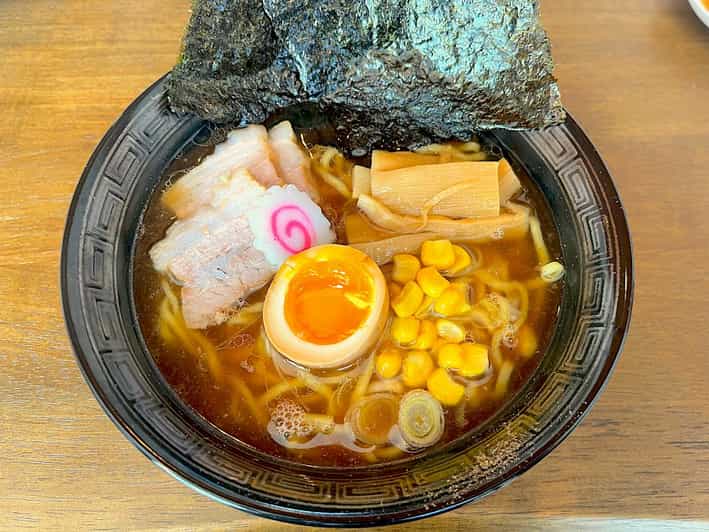
REVIEW · TOKYO SAKE TOURS
Tokyo: Sushi and Ramen Cooking Class with Sake Pairing Set
Tokyo’s best food lessons do more than show you how to shape rice. This three-hour class explains where sushi and ramen came from, then puts you to work with broth, chashu pork, and nigiri. Instructors such as Sato, Haruko, and Risa keep the mood warm and personal, with groups limited to eight.
I like the small-group format, which gives beginners room to ask questions, and I like the practical recipe booklet, ingredient-substitution advice, and souvenir chopsticks. The main catch is that this is not suitable for vegans or vegetarians, and the $129 price is a serious investment for one meal.
Key points
- Two Japanese staples in one class: Make ramen and nigiri sushi rather than choosing between separate food workshops.
- Hands-on chashu and broth: Learn the parts of ramen that make it more than noodles in a bowl.
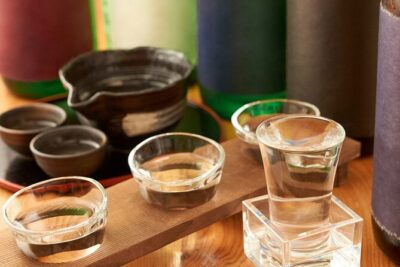
- Three-sake tasting: A certified sake sommelier selects three Japanese sakes to pair with the meal.
- Very small groups: The class is limited to eight, with some sessions feeling almost private when attendance is low.
- Useful take-home tools: You receive a recipe booklet and high-quality chopsticks for trying the dishes again at home.
- Easy central Tokyo setting: The venue is a five-minute walk from Tsukishima Station, with Ginza and Tokyo Station nearby by taxi.
Why this Tokyo food class is worth your afternoon
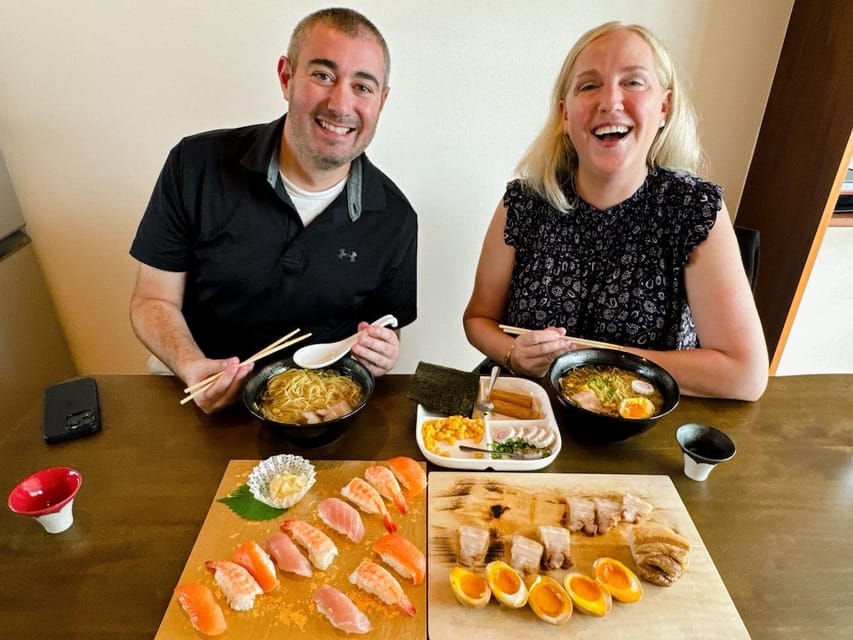
Sushi and ramen are easy to order in Tokyo, but much harder to understand from the dining-room side. This class gives you a look at the work behind both dishes in one sitting. You learn to prepare nigiri sushi by hand, make ramen soup, and work with chashu, the soft pork belly that gives many ramen bowls their character.
That combination is the class’s biggest strength. A sushi-only lesson can feel narrow, while a ramen-only lesson may leave you with less variety. Here, you move between cold, precise sushi work and the warmer, slower business of broth and pork. The result is a full meal and a better sense of how different Japanese cooking techniques fit together.
The setting is in Tsukishima, a Tokyo neighborhood reached easily from the subway. The address is 2nd Floor, HAUS Tsukishima, 2-13-5 Tsukuda, Chuo-ku. From Exit 4 of Tsukishima Station, it is about a five-minute walk. That makes it a practical choice before or after time around Ginza, Tsukiji, Tokyo Station, or teamLab Planets.
More Sake Tastings in Tokyo:
- Best of Shinjuku: Izakaya Food Tour (4 Stops, 14+ Tastings)
★ 5.0 · 1,863 reviews - Ramen and Sushi Cooking Class with Sake Pairing Set in Tokyo
★ 5.0 · 291 reviews - Sake Tasting Masterclass in Shinjuku (8+ Varieties with a Pro)
★ 5.0 · 271 reviews
A small room with real personal attention
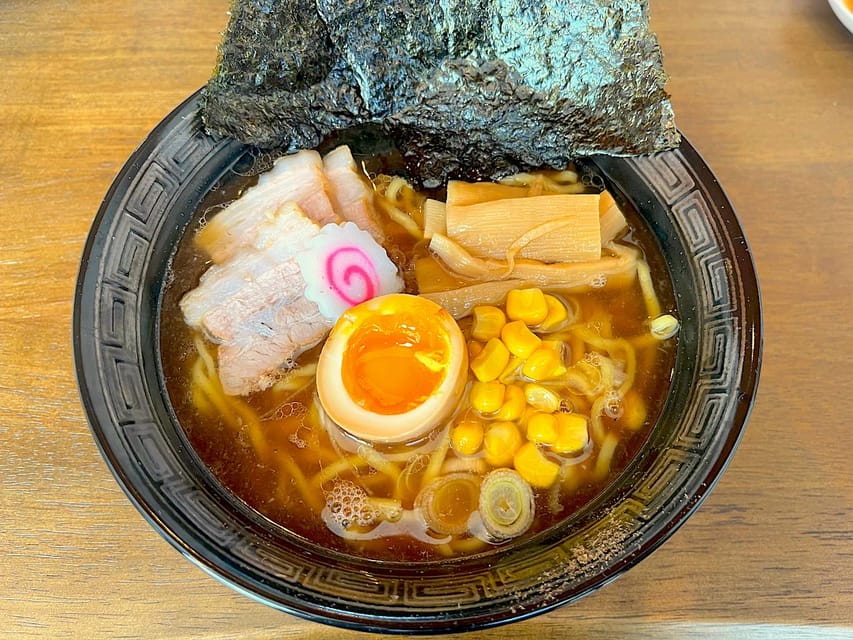
The class is capped at eight people, though some sessions have only two or even one participant. That matters. You are not standing at the back of a large demonstration, trying to see a cutting board from across the room. You can ask for help with rice, shaping sushi, or the order of the cooking steps.
The instructors speak English and are described as warm, patient, and encouraging. Sato, Haruko, Risa, Alex, Misa, and Luna are among the names associated with the classes. The teaching style appears friendly rather than formal, with cultural stories, questions, and even a pop quiz used in one session to get people working together.
I especially like this approach for families and couples. The food gives everyone a job, while the small room makes conversation easy. It also works well for a solo visitor. One participant had a one-on-one lesson with Sato, while another couple found that a low attendance session felt like a private experience.
The only limitation is that the experience depends a little on the makeup of your group. A full group of eight will feel more social and less personal than a quiet session with two or three people. The small-group promise still keeps things manageable, but you should not assume every booking will be private.
Starting with the story behind sushi and ramen
The cultural introduction is not filler. You learn about the origins of sushi and ramen before handling the ingredients, which gives the cooking a useful frame. Sushi has changed considerably over time, and ramen reflects both Japanese technique and outside influences. The class connects those broad ideas to what you are about to eat.
That context helps you notice details. Sushi is not simply fish placed on rice. Rice texture, seasoning, hand pressure, and proportion all matter. Ramen is not merely a packet of noodles with toppings. The broth, pork, and timing shape the bowl.
The instructors also explain ingredients and offer substitution tips for cooking outside Japan. That is one of the most useful parts for home cooks. You may not find every Japanese product in your local supermarket, so knowing what can be replaced, and what should not be compromised, makes the recipes more realistic.
Making ramen broth and tender chashu pork
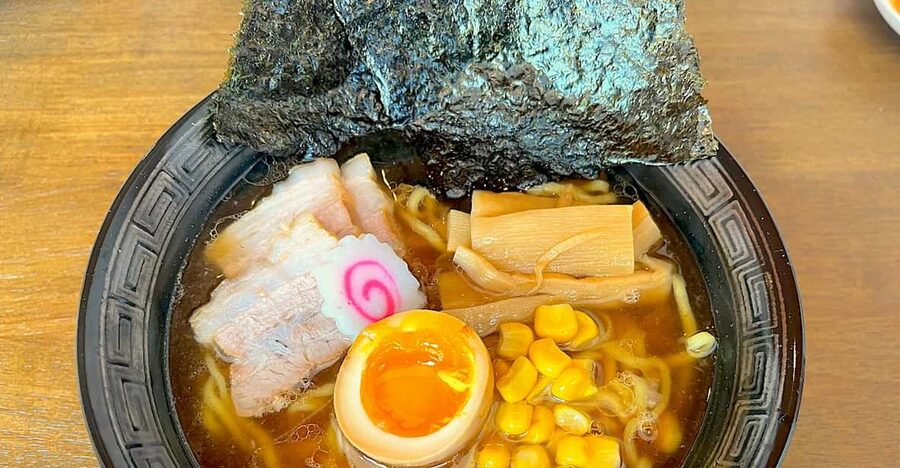
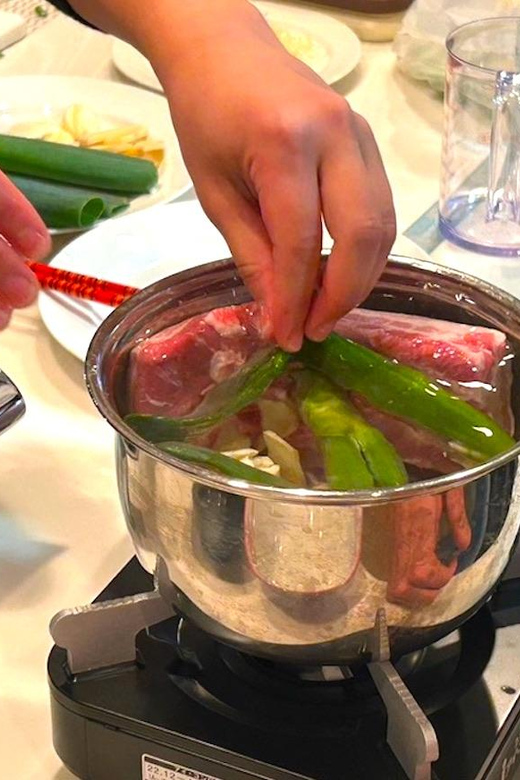
The ramen portion focuses on the soup and chashu pork, two parts that often separate a homemade bowl from a restaurant-style one. The class teaches you how to build a flavorful broth and prepare pork belly until it is tender enough to slice for the bowl.
Some components are prepared ahead of time to fit the three-hour schedule. That is worth knowing before you arrive. You will not be making every ingredient from raw materials over a full day, but the preparation is sensible. It leaves time for actual practice, explanation, tasting, and the sushi portion without making you rush.
The timing between ramen and sushi is handled as part of the lesson. You work through the dishes in a planned order, then sit down to eat what you made. That makes the class feel like both a workshop and a meal.
The food is intended to be plentiful. Several participants found they could not finish everything, so you should arrive hungry but not expect a small tasting plate. The class includes all necessary ingredients, and the ingredients are presented as fresh, with food sourced from the Toyosu market according to one session’s description.
Do keep your expectations sensible. A three-hour class can teach you the method and key techniques, but it cannot turn you into a ramen shop owner. The recipe booklet helps you repeat the process at home, where you can adjust broth strength, seasoning, and portion size with practice.
More Cooking Classes in Tokyo:
- Tokyo Washoku 4-hour Cooking Class: From Market to Table
★ 5.0 · 253 reviews - Tokyo Night Cooking Class: 5 Home-Cooked Japanese Dishes
★ 5.0 · 70 reviews - Tokyo: Sushi Cooking Class with Sake Tasting
★ 4.8 · 55 reviews - Tokyo Sushi Making Class : Sake Ceremony & Matcha Experience
★ 5.0 · 44 reviews
Shaping nigiri sushi by hand
Nigiri is the most visibly hands-on part of the class. You use provided ingredients and tools to shape sushi by hand, learning how to place the topping and form the rice without crushing it.
For first-timers, this is exactly the sort of activity that benefits from direct instruction. The rice can be sticky, the portions need to stay neat, and too much pressure changes the texture. An instructor can show you the movement once, then correct your hand position as you work.
You also get to eat the sushi soon after making it, which gives the technique an immediate payoff. That may sound obvious, but it changes how you learn. You can compare your finished pieces with the instructor’s example and understand why shape, size, and balance matter.
This is not presented as a professional sushi-chef apprenticeship. It is a friendly introduction designed for beginners, while still giving experienced cooks useful details. The class is a good fit if you love sushi but have always treated it as something best left to specialists.
Three sakes with a certified sommelier
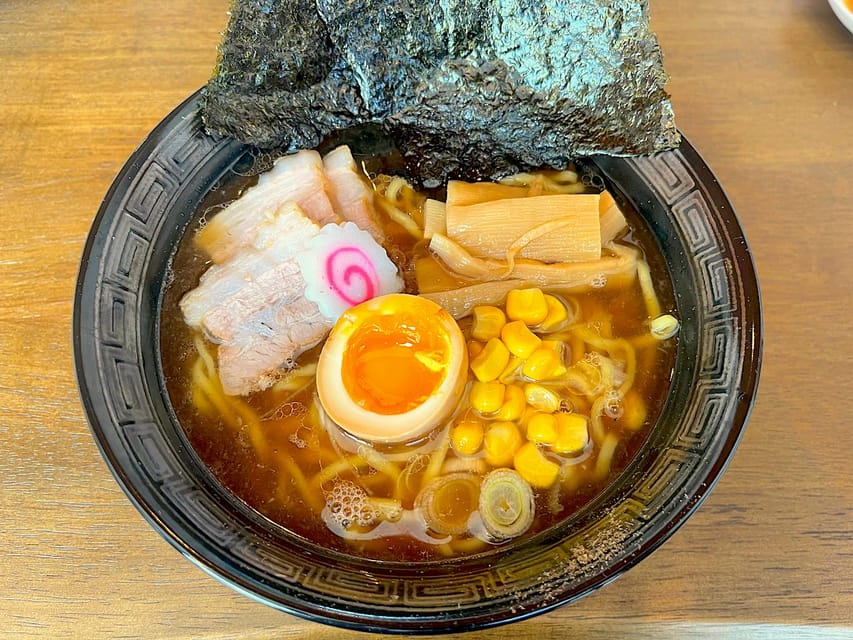
The sake pairing set adds a second layer to the meal. You taste three Japanese sakes selected by a certified sake sommelier, and the session may also include beer and other drinks. One instructor comes from a sake-brewing family, adding a personal connection to the subject.
The value here is not simply the amount of alcohol. It is the chance to compare styles alongside food rather than drinking one sake without context. A pairing can show how sweetness, acidity, aroma, and warmth affect sushi and ramen differently.
You can skip the alcohol if needed, but the supplied details emphasize the sake tasting as part of the experience. For anyone who already enjoys sake, this is a useful bonus. If you do not drink, the food lesson remains the main event, but this class may not be the best fit if you want a completely alcohol-free activity.
Because the class includes drinking, pacing matters. Eat as you go, and remember that the session lasts three hours. The atmosphere is relaxed, but it is still a cooking lesson rather than a bar visit.
What the $129 price really covers

At $129 per person, this is not a budget meal. You can buy an excellent bowl of ramen and sushi in Tokyo for much less, so the price only makes sense if you want instruction, cultural background, drinks, and a meal you helped prepare.
The value improves because several extras are included. You receive all ingredients, the sushi and ramen lesson, three sake pairings, a professionally prepared recipe booklet, ingredient advice, and souvenir chopsticks. You also get three hours of guided activity rather than a short demonstration.
I would compare it with the cost of a private or semi-private cooking lesson in Tokyo. Since groups are limited to eight and can be much smaller, the personal attention is a real part of what you are paying for. A larger class at a lower price may give you less time with the instructor and fewer chances to practice.
Still, the price will feel high if your only goal is to eat ramen. Book it for the learning and the shared experience, not as a cheap way to fill an afternoon. Couples, families, and food-focused visitors are more likely to feel they received good value than someone simply looking for lunch.
Getting to HAUS Tsukishima
The venue is five minutes from Exit 4 of Tsukishima Station, identified as Y21. That subway access is the best option for most people. Arrive five minutes early so you can find the second-floor room without cutting into the introduction.
A taxi takes about six minutes from Tsukiji Fish Market, nine minutes from Ginza, 10 minutes from Tokyo Station, and 11 minutes from teamLab Planets. From Shinjuku, the taxi estimate is about 30 minutes, though Tokyo traffic can affect that timing.
If you use a taxi, show the driver this Japanese address:
東京都中央区佃2-13-5 HAUS Tsukishima 2階
There is no hotel pickup or drop-off. Plan your route before the class, especially if you are coming from a major attraction. Tsukishima is well placed for several central Tokyo stops, but you should not assume a taxi ride will take exactly the listed time during busy periods.
Wear comfortable clothes that can tolerate a splash or a bit of food. You do not need to dress for a fine restaurant. This is a working kitchen, and practical clothing will make the session more enjoyable.
Who will enjoy this class most
I would recommend it to first-time visitors who want a food activity with some cultural content. You get enough explanation to understand what you are doing, but the class remains active and social rather than turning into a lecture.
It is especially good for:
- Couples looking for a shared activity
- Families with children who can take part in hands-on cooking
- Solo visitors who want an easy way to meet people
- Sushi and ramen fans who want recipes they can repeat
- Home cooks interested in Japanese ingredients and substitutions
- Visitors who enjoy sake and want guided comparisons
It is not suitable for vegans or vegetarians. The supplied information does not promise dietary adaptations, so anyone with other dietary needs should confirm before booking.
You should also think about your schedule. Three hours is long enough to feel substantial, but it takes a real block of your day. Do not place it between two attractions with tight admission times. The food and sake can also make it a better afternoon anchor than a rushed morning stop.
Booking details and cancellation flexibility
You can reserve now and pay later, which helps if your Tokyo schedule is still changing. Cancellation is free up to 24 hours before the class for a full refund.
Starting times vary, so check availability for your date. The instructor language is English, and the group limit is eight participants. Arriving five minutes early is part of the practical advice, especially because the venue is on the second floor.
Should you book this Tokyo sushi and ramen class?
Book it if you want to do more than eat Japanese food. You will learn two major dishes, hear the cultural background, taste three sakes, and leave with recipes and chopsticks. The warmth of instructors such as Sato, Haruko, and Risa appears to be a central part of the experience, not an afterthought.
Skip it if you are mainly seeking the cheapest meal, avoid alcohol entirely, or need a vegan or vegetarian menu. At $129, the class earns its price through hands-on teaching and a small group, so the decision comes down to how much you value the learning.
For a food-loving couple, family, or solo visitor, I would put this high on a Tokyo activity list. It gives you something useful to take home, not just another meal that disappears as soon as you leave the restaurant.
FAQ
How long does the sushi and ramen class last?
The class lasts three hours. You learn to make ramen and nigiri sushi, take part in sake tasting, and eat the food you prepare.
Where is the cooking class held?
It is held on the second floor of HAUS Tsukishima at 2-13-5 Tsukuda, Chuo-ku, Tokyo 104-0051. The venue is about a five-minute walk from Exit 4 of Tsukishima Station.
Is the class taught in English?
Yes. The instructors teach in English.
How many people can join the class?
The small group is limited to eight participants. Depending on the booking, the class may have fewer people.
Are sake tastings included?
Yes. Three Japanese sakes selected by a certified sake sommelier are included. Beer and other drink choices may also be available during the session.
Is the class suitable for vegans and vegetarians?
No. The activity is listed as not suitable for vegans or vegetarians.
What should I wear?
Wear comfortable clothing that you do not mind getting a little dirty. You should also arrive five minutes before the scheduled start time.
More Sake and Food Tours in Tokyo
- Sake Omakase in Tokyo: Guided Tasting by Certified Sommeliers
★ 5.0 · 239 reviews - Tokyo: The Best of Izakaya in Shinjuku Food & Cultural Tour
★ 4.9 · 221 reviews - [1 Group Only] Tokyo Shinjuku Food Tour for Family
★ 5.0 · 147 reviews - Wagyu & Sake Pairing in Shinjuku – Steak, Shabu-Shabu & More
★ 5.0 · 112 reviews
Just added around Tokyo
- Tokyo Sake Tasting Tour with a Sake Expert★ 5.0 · 7 reviews
- Wagyu BBQ & Sukiyaki with Sake Pairing Experience near Ginza★ 5.0 · 2 reviews
- Tokyo: Serene Sakura & Sake: An Exclusive Brewery Pairing Lunch★ 5.0 · 2 reviews
- Japanese Sake Tasting & Wagyu Sukiyaki Cooking Class in Tokyo★ 5.0 · 10 reviews
- Tokyo Izakaya crawl (A tour of 2 izakayas, 1 bar, and a shrine)★ 5.0 · 8 reviews
- Private Tokyo Food Tour – Retro Akabane Izakaya Experience★ 5.0 · 14 reviews
- Tokyo: Learn the Art of Chopsticks in a Cozy Izakaya!★ 5.0 · 2 reviews
- Shinjuku Underground Nightlife Tour: Izakaya Food & Bar Hopping★ 5.0 · 11 reviews
Tokyo Sake Tours, compared.
Best of Shinjuku: Izakaya Food Tour (4 Stops, 14+ Tastings)
Read our review →
Tokyo: Shinjuku Local Bar and Izakaya Guided Walking Tour
Read our review →

Ramen and Sushi Cooking Class with Sake Pairing Set in Tokyo
Read our review →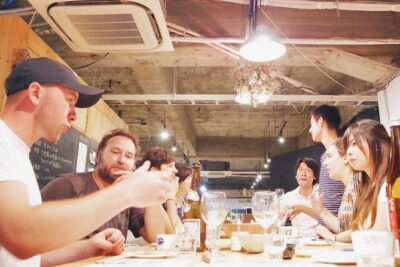
Sake Tasting Masterclass in Shinjuku (8+ Varieties with a Pro)
Read our review →
Tokyo Washoku 4-hour Cooking Class: From Market to Table
Read our review →
Sake Omakase in Tokyo: Guided Tasting by Certified Sommeliers
Read our review →Browse the lists this tour appears in