
REVIEW · TOKYO SAKE TOURS
Sake Tasting Masterclass in Shinjuku (8+ Varieties with a Pro)
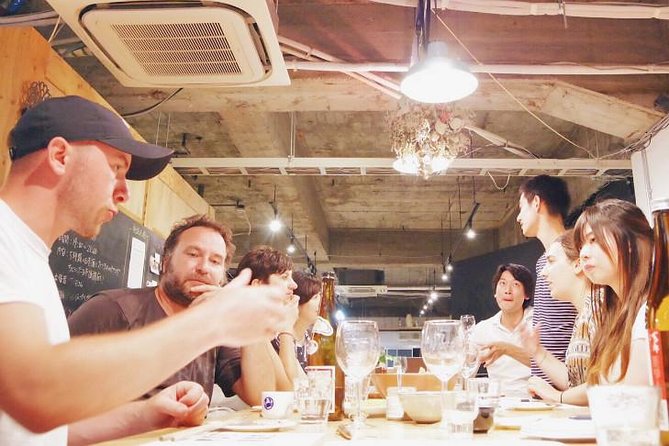
This Shinjuku class turns sake from a mysterious menu item into something you can actually choose. In about two hours, you taste at least six varieties, study how they differ, and learn enough Japanese sake vocabulary to order with some confidence. Guides including Max, Joe, Tadashi, Andrea, and Megan bring their own style to the session.
I like the small group of no more than eight, which leaves room for questions and can sometimes feel almost private. I also like the practical focus: you do not just drink sake, you learn how to read labels, match it with food, and spot bottles worth buying. The main caution is simple: the pours can add up quickly, especially when the session includes nine or ten samples.
Quick take: what makes this tasting worth your afternoon
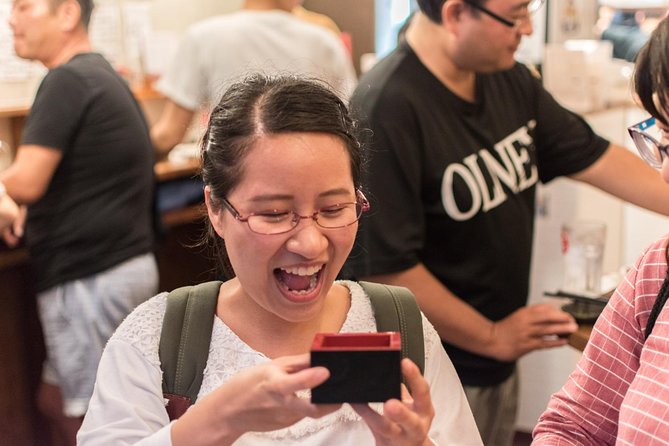
- A real sake lesson, not just a flight of drinks: You cover brewing methods, history, labels, styles, and tasting technique.
- At least six varieties, often more: The selection may reach nine or ten sakes, giving you a broad sense of the category.
- Snacks are matched to the sake: These are accompaniments, not a full meal, but they show how sake changes with food.
- A small class capped at eight people: You get more personal attention than at a large bar tasting.
- Practical advice for the rest of your trip: Guides explain how to buy sake and order it in restaurants.
- A useful first-day activity: You can use the new vocabulary and tasting notes throughout your time in Japan.
Meeting your sake sommelier in Nishishinjuku
The meeting point is Ushinobi Shinjuku, a wagyu and sake venue in the NSK Building at 1-chome-22-1 Hyakuninchō, Shinjuku City. The class begins at 1:00 pm and finishes back at the same meeting point.
That fixed start and end point make the experience easy to fit into a Tokyo day. You do not need to arrange a separate transfer, and hotel pickup is not included, so plan your route to Shinjuku before the afternoon begins. The location is near public transportation, but one practical detail deserves attention: confirm the current meeting-point instructions before setting out. One participant arrived at the wrong place after encountering confusion over the location.
The setting in central Shinjuku also makes sense for a sake lesson. You are not being taken far outside Tokyo for a brewery visit. Instead, you get a focused tasting in the city, followed by plenty of chances to use your new skills in restaurants, department-store food halls, and bottle shops.
Your guide may be Max, Joe, Tadashi, Andrea, Megan, Cassy, or another member of the team. The strongest common thread is the teaching style. Max is praised for mixing clear explanations with humor, Joe for his practical food advice and entertaining approach, Tadashi for making the class welcoming and useful, and Andrea for explaining body, style, and brewing in an approachable way. The exact guide matters because each person brings a different personality, but the format remains the same.
More Sake Tastings in Tokyo:
- Best of Shinjuku: Izakaya Food Tour (4 Stops, 14+ Tastings)
★ 5.0 · 1,863 reviews - Ramen and Sushi Cooking Class with Sake Pairing Set in Tokyo
★ 5.0 · 291 reviews - Sake Omakase in Tokyo: Guided Tasting by Certified Sommeliers
★ 5.0 · 239 reviews
Sake 101: brewing, history, and the language on the bottle
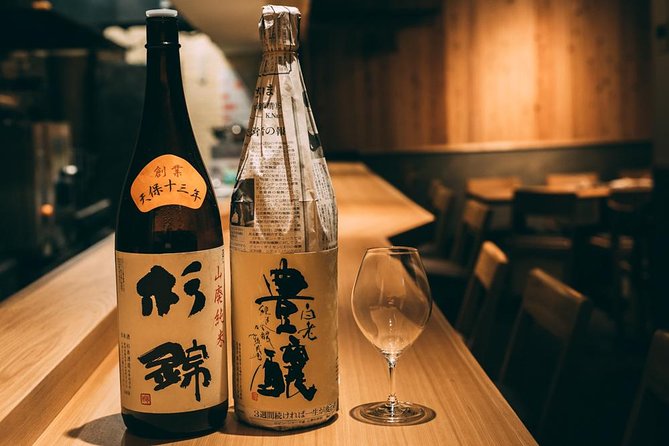
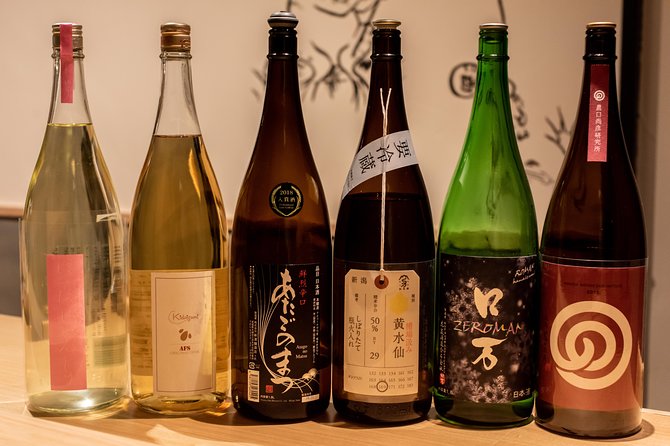
The class starts with the basics. You learn how sake is made, how brewing choices affect flavor, and why the information on a label matters. That foundation is useful because sake can look confusing when you first encounter terms such as junmai or daiginjo.
The lesson is not limited to one style. You compare lighter and fuller expressions, traditional and modern approaches, and different flavor profiles. The point is not to memorize every technical term. It is to give you a few reliable ways to describe what you like.
I find this especially helpful if you already enjoy sake but feel lost when ordering. You may know that you prefer something dry, fragrant, soft, or full-bodied, but lack the words to explain it. A tasting chart gives you a simple way to record those impressions as you go.
For a first-time drinker, the amount of information can feel brisk. One session includes a lot: production, history, terminology, labels, tasting methods, and food pairing. You should ask questions as they occur rather than waiting until the end. The small group makes that easier.
Tasting six or more varieties in one sitting
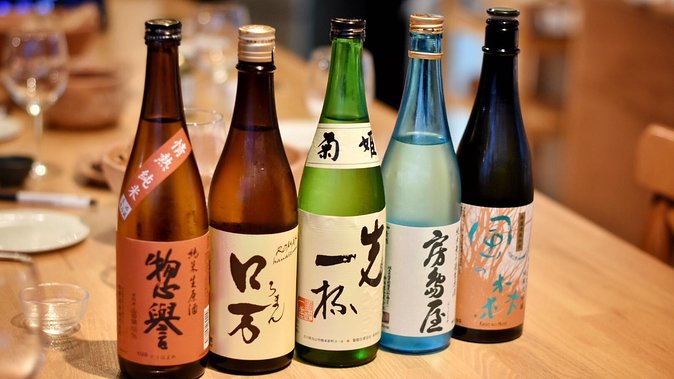
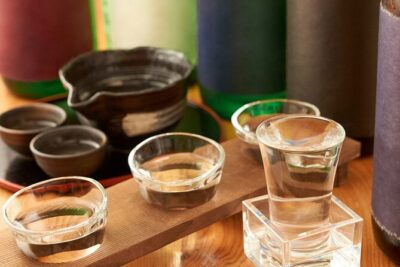
The central part of the afternoon is the tasting itself. You sample at least six different sakes, and some sessions have included nine or ten. That range is a major reason to book the class. One glass rarely tells you much about sake, but a side-by-side comparison makes differences easier to notice.
You may find that the sake you expected to like is not your favorite. That is part of the value. A person who thinks sake is too strong or too sweet may find a style that suits them, while a regular drinker may discover a new direction to explore.
The class encourages you to build your own tasting chart. Pay attention to aroma, sweetness, acidity, body, and finish, then note which bottles appeal to you. You do not need a polished palate. The exercise simply turns a vague reaction into something you can remember later.
The quantity is also the class’s biggest practical drawback. Sake has no customary spit bucket in this setting, and several full samples can leave you more affected than expected. Eat before arriving, drink water during the class, and pace yourself. The tasting is more useful when you can still follow the explanation near the end.
The minimum drinking age is 20. Alcohol is included, so this is not the right activity for someone who does not drink or who wants only a short introductory sip.
Snacks that show how sake works with food
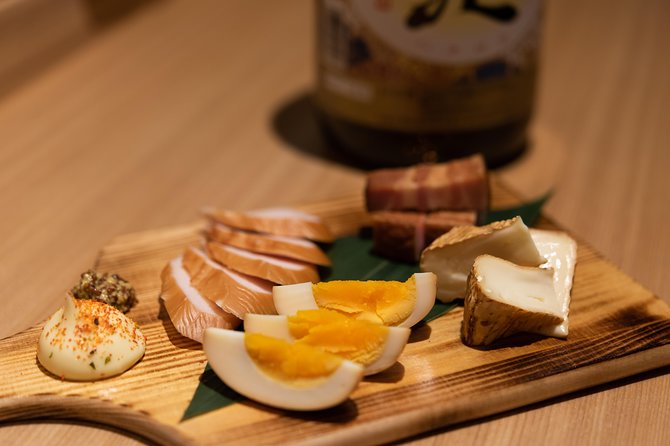
Small snacks are provided alongside the sake. They are not a full-size meal, but they serve an important purpose: they let you see how food can alter your impression of a drink.
A sake that seems sharp on its own may feel rounder with a salty bite. A fragrant style may work better with a lighter snack than with something rich. You are not simply being fed between pours. You are learning one of the most useful parts of Japanese drinking culture, which is how to think about sake as part of a meal.
This also explains why you should eat before the session. The included snacks are helpful but not enough to replace lunch. Arriving hungry can make the alcohol hit hard, and one participant found the tasting moved quickly enough to become intoxicating.
If you have food restrictions, message the operator at least a week before the tour date. The supplied information does not promise that every request can be met, so early notice matters.
A few more sake tours around Tokyo worth a look
- Tokyo: Shinjuku Local Bar and Izakaya Guided Walking Tour
★ 4.9 · 1,794 reviews - Tokyo: Shinjuku Local Bar & Izakaya Crawl Tour
★ 5.0 · 890 reviews - Shibuya: Local Bar & Izakaya Crawl
★ 4.9 · 354 reviews - Tokyo: The Best of Izakaya in Shinjuku Food & Cultural Tour
★ 4.9 · 221 reviews
Buying and ordering sake after class
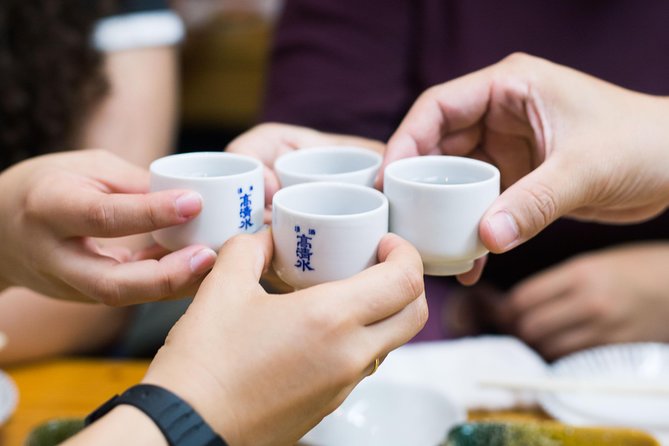
The most useful outcome is confidence. By the end, you should have a better idea of how to order sake in a restaurant or choose a bottle in a shop. Guides explain local tips for buying and ordering, rather than leaving you with a list of production facts and no way to use them.
The class can help you ask better questions. Instead of saying only that you want sake, you might describe the flavor or body you prefer. You can also use the tasting notes to remember the styles that worked for you.
Several participants found the take-home reference sheet useful. It gives you something to consult later, when the bottles in front of you no longer sit in a neat tasting order. One person used the new confidence to order junmai daiginjo on the flight home, which is a fine sign that the lesson translates into real decisions.
I would book this near the start of a Japan trip if sake interests you. The advice can guide later meals in Tokyo, Kyoto, Osaka, or elsewhere. A class at the end of your trip still works, but you lose some of the chance to put the information to use.
Is $72.29 a fair price?
At $72.29 per person, this is not a cheap afternoon drink. It is also more than you would pay for a casual sake flight at a bar. The question is what you want from the money.
You receive at least six pours, sometimes nine or ten, plus snacks and two hours of instruction. You also get a small group, a structured comparison, and access to a guide who can answer questions about labels, food pairing, and local buying. If you would otherwise spend money on several sake tastings without understanding what you are drinking, the class can offer better value.
The price is less attractive if you already know the main sake styles, read labels comfortably, and mainly want a large meal. Snacks are included, but this is not a dinner. You are paying for the teaching and the range of samples, not for a full restaurant experience.
The 99 percent recommendation rate and 5 out of 5 rating from 271 ratings suggest very strong satisfaction, but the useful detail is in the pattern of the feedback: the guides receive the most praise, and the smaller groups make it easy to ask questions. The one recurring concern is the amount of alcohol and, for some beginners, the speed and technical level of the lesson.
Who should book this Shinjuku sake class?
This experience suits you if:
- You want to understand sake before ordering it in Japan.
- You enjoy food and drink experiences with a teaching element.
- You prefer a small class over a large group activity.
- You like comparing several styles side by side.
- You want recommendations for bottles and restaurants during your trip.
- You are new to sake but willing to ask questions and take notes.
It also works well for couples and small groups of friends. One booking even proceeded with a single person, creating a private-style session, though you should not assume every date will have the same group size.
Experienced sake drinkers can benefit too, especially if they want to compare varieties with a local expert or learn a few new ways to describe what they taste. Still, someone with advanced sake training may find the introductory material familiar.
This is less suitable if you need a substantial lunch, avoid alcohol, have difficulty with several drinks in a short period, or want to visit a brewery. The activity is a city-based tasting workshop in Shinjuku, not a countryside production tour.
Useful planning details before you go
The tour lasts approximately two hours and ends where it begins. Be at the meeting point for the 1:00 pm start, and allow extra time to find the venue in Shinjuku.
Beverages and snacks are included. Hotel pickup, drop-off, and transportation to other attractions are not. You receive a mobile ticket, and booking confirmation is issued at the time of booking.
The group maximum is eight people. That limit matters because sake lessons can become passive when the room gets crowded. Here, you should have a fair chance to ask about a label, a flavor, or a food pairing.
Free cancellation is available if you cancel at least 24 hours before the start time. Cancellations within 24 hours are not refunded, and changes during that period are not accepted. The cut-off follows local Tokyo time.
Should you book it?
I would book this class if you want more than a few random pours. The combination of six or more sakes, snacks, label guidance, and an expert host gives you a practical starting point for drinking sake in Japan.
Go in with a meal already in you, drink water, and expect the lesson to move at a healthy pace. If you want a full meal or a brewery visit, choose something else. If you want to leave Shinjuku able to recognize your preferences and order with confidence, this is a strong use of two hours.
FAQ
Where does the sake tasting take place?
It takes place at Ushinobi Shinjuku, a wagyu and sake venue in the NSK Building, 201, 1-chōme-22-1 Hyakuninchō, Shinjuku City, Tokyo 169-0073, Japan.
What time does the class start?
The scheduled start time is 1:00 pm.
How long does the experience last?
The activity lasts approximately two hours and ends back at the meeting point.
How many sakes will I taste?
You will taste at least six different varieties. Some sessions have included nine or ten samples.
Are food and drinks included?
Yes. Beverages and snacks are included, but the snacks are not a full-size meal.
What is the minimum drinking age?
The minimum drinking age is 20.
Can I cancel for a refund?
You can receive a full refund if you cancel at least 24 hours before the experience begins. Cancellations or changes made within 24 hours are not accepted and are not refunded.
Just added around Tokyo
- Tokyo: Serene Sakura & Sake: An Exclusive Brewery Pairing Lunch★ 5.0 · 2 reviews
- Tokyo Sake Tasting Tour with a Sake Expert★ 5.0 · 7 reviews
- Wagyu BBQ & Sukiyaki with Sake Pairing Experience near Ginza★ 5.0 · 2 reviews
- Japanese Sake Tasting & Wagyu Sukiyaki Cooking Class in Tokyo★ 5.0 · 10 reviews
- Tokyo Izakaya crawl (A tour of 2 izakayas, 1 bar, and a shrine)★ 5.0 · 8 reviews
- Private Tokyo Food Tour – Retro Akabane Izakaya Experience★ 5.0 · 14 reviews
- Tokyo: Learn the Art of Chopsticks in a Cozy Izakaya!★ 5.0 · 2 reviews
- Shinjuku Underground Nightlife Tour: Izakaya Food & Bar Hopping★ 5.0 · 11 reviews
Tokyo Sake Tours, compared.
Best of Shinjuku: Izakaya Food Tour (4 Stops, 14+ Tastings)
Read our review →
Tokyo: Shinjuku Local Bar and Izakaya Guided Walking Tour
Read our review →
Ramen and Sushi Cooking Class with Sake Pairing Set in Tokyo
Read our review →
Tokyo Washoku 4-hour Cooking Class: From Market to Table
Read our review →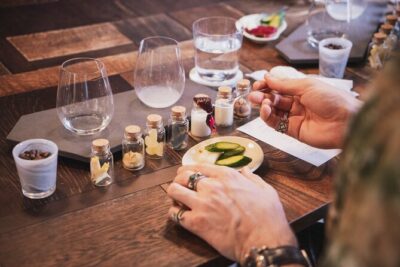
Sake Omakase in Tokyo: Guided Tasting by Certified Sommeliers
Read our review →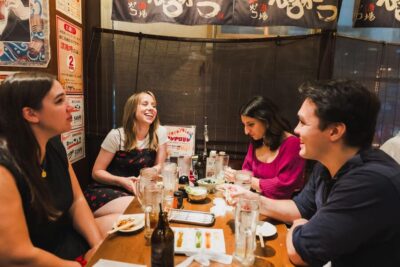
Tokyo: The Best of Izakaya in Shinjuku Food & Cultural Tour
Read our review →Browse the lists this tour appears in