
REVIEW · TOKYO SAKE TOURS
Tokyo: Learn the Art of Chopsticks in a Cozy Izakaya!
The clever part of this Tokyo activity is that you do not just sit through a chopstick demonstration. You practice with beans, learn the proper grip, take on a small competition, then use your new skills over izakaya snacks. It turns a simple utensil into a hands-on piece of daily Japanese culture.
I like the small group of no more than nine, which gives the English-speaking guide room to correct your grip. I also like the useful souvenir: you take home the chopsticks you used, rather than leaving with another forgettable paper ticket or trinket.
The main drawback is the short one-hour format. You get a focused introduction, light food, and one drink, but not a full meal or a long cooking class. Food and drinks beyond the included items cost extra.
Key points at a glance
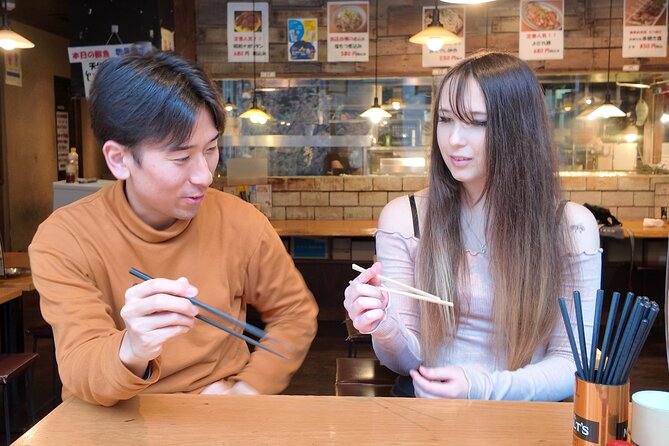
- Practice starts with beans: The bean-grabbing tryout gives you a quick, amusing test of coordination before the formal lesson.
- Taka, Shu, and Hanako lead the fun: The English-speaking guide team helps you improve technique while keeping the mood relaxed.
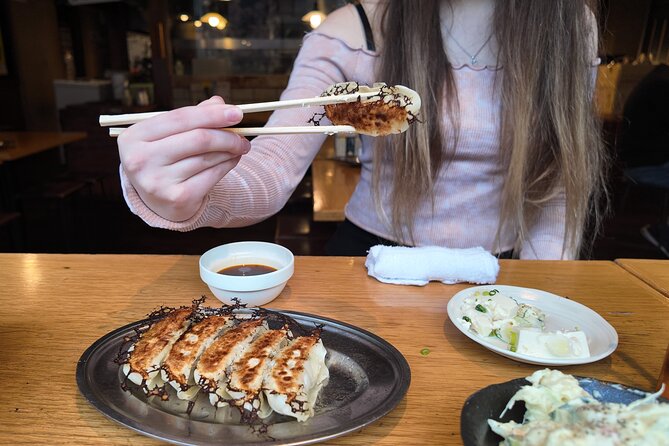
- The food is part of the lesson: Gyoza, karaage, and tofu give you a practical reason to use your chopsticks right away.
- A mini competition adds purpose: You are not only listening. You get a chance to test your grip and control.
- The price covers the basics: At $22.89, you receive the lesson, light meal, one drink, and your used chopsticks to take home.
- It fits neatly into a Tokyo day: Meet at 4:30 pm near Shibuya, spend about an hour inside, and finish back at the meeting point.
Why chopsticks make a good Tokyo activity
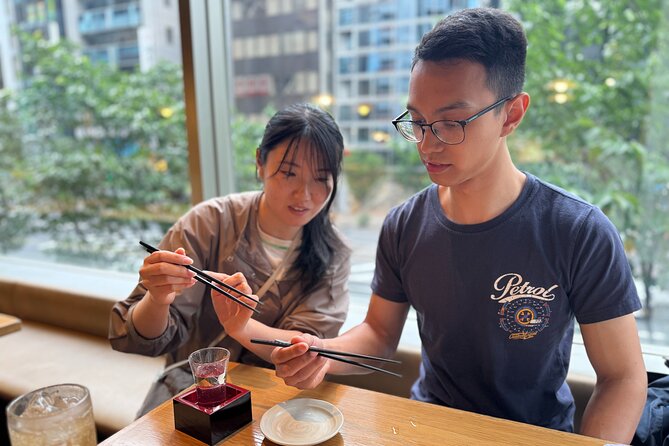
Chopsticks can look easy until you try to pick up something small, slippery, or soft. In Japan, they are used for far more than lifting rice. The activity presents them as all-purpose tools for eating and even cooking, with control coming from finger position and steady movement rather than brute force.
That makes this more useful than a novelty lesson. You get a small piece of dining etiquette and practical skill that can serve you throughout a Japan trip. Afterward, you may feel more at ease with noodles, vegetables, tofu, sushi, and shared izakaya dishes.
I also like the setting. An izakaya is a Japanese-style bar built around casual food and drinks, not a formal dining room. You can expect a relaxed atmosphere rather than a stiff classroom. The food and the lesson happen together, so the subject feels connected to ordinary Japanese eating habits.
This is not a serious professional course. You will not leave ready to cook an entire dinner with chopsticks. You will, however, get a clear introduction, some guided practice, and a better sense of why Japanese diners handle the utensils with such precision.
More Izakaya and Bar Hopping in Tokyo:
- Best of Shinjuku: Izakaya Food Tour (4 Stops, 14+ Tastings)
★ 5.0 · 1,863 reviews - Tokyo: Shinjuku Local Bar and Izakaya Guided Walking Tour
★ 4.9 · 1,794 reviews - Tokyo: Shinjuku Local Bar & Izakaya Crawl Tour
★ 5.0 · 890 reviews
Meeting near Shibuya at 4:30 pm
The meeting point is FamilyMart at 3-chōme-17-2 Shibuya, Tokyo 150-0002. The activity begins at 4:30 pm and ends at the same meeting point after about one hour. It is near public transportation, which makes it fairly easy to add to a day in Shibuya.
The location matters because this is a short activity. You do not want to spend a large part of your afternoon crossing Tokyo for a one-hour lesson. Plan your route carefully and arrive ready to start. The mobile ticket is handy for a quick check-in, and confirmation is normally provided when you book.
The late afternoon time works well after sightseeing. You can spend the earlier part of the day outdoors, shopping, or visiting nearby sights, then take a seat and do something less demanding. You will still have the evening open for dinner, though the included snacks may take the edge off your appetite.
The meeting point is a convenience store, not the izakaya itself. Pay attention to the address and activity instructions so you do not wander into a different branch. Since the experience returns you to the starting point, you can continue your evening from the same general area.
The bean-grabbing test gets everyone involved
The first activity is a bean-grabbing tryout. It is a simple idea, but a good one. Rather than beginning with a long explanation, you immediately discover how much control a chopstick pair requires.
For beginners, this is a low-pressure way to make mistakes. Beans are small enough to be challenging, and the exercise gives you something concrete to work on. You can see if your grip is too tight, if your fingers are doing the work in the wrong place, or if you are moving the entire hand instead of guiding the sticks.
The tryout also gives the group a shared laugh without making the lesson childish. You may be surprised at how quickly a basic task becomes competitive. That is useful because it makes technique memorable.
Do not treat the first attempt as a test you must pass. The point is to find your starting level. If you already use chopsticks often, you may move quickly. If you rarely use them, the exercise shows exactly where the lesson can help.
The chopsticks lesson focuses on control
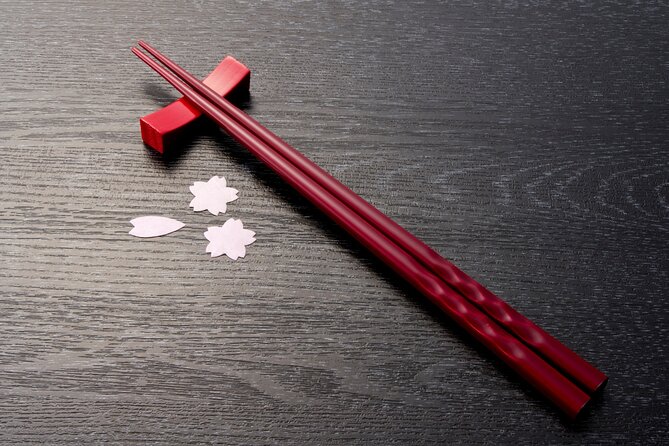
After the opening activity comes the formal chopsticks lesson. The guide shows you how to handle the sticks properly, then gives you time to copy the movement. The small group helps here. With no more than nine people, the guide can watch individual technique instead of speaking to a crowd.
The guide team includes Taka, Shu, and Hanako. The available information does not promise that all three lead every session, but their roles are clear from the experience: English-speaking instruction, encouragement, and hands-on help. Taka and Shu are specifically connected with helping participants become better chopstick users, while Taka and Hanako have also led a food-focused session.
A useful lesson should do more than tell you to hold the chopsticks. You need to understand which stick stays more stable and how the fingers guide the upper stick. The practice format lets you repeat the motion until it feels less awkward.
You should also expect a friendly tone rather than a formal etiquette lecture. The goal is to help you eat with more confidence, not to make you nervous about every movement at the table.
One strength of the activity is that it treats chopsticks as part of food culture, not just a party trick. Japanese people use them for many kinds of meals and can even use them while cooking. That wider context gives the lesson a practical purpose.
A few more sake tours around Tokyo worth a look
- Shibuya: Local Bar & Izakaya Crawl
★ 4.9 · 354 reviews - Ramen and Sushi Cooking Class with Sake Pairing Set in Tokyo
★ 5.0 · 291 reviews - Sake Tasting Masterclass in Shinjuku (8+ Varieties with a Pro)
★ 5.0 · 271 reviews - Sake Omakase in Tokyo: Guided Tasting by Certified Sommeliers
★ 5.0 · 239 reviews
The mini competition turns practice into a game
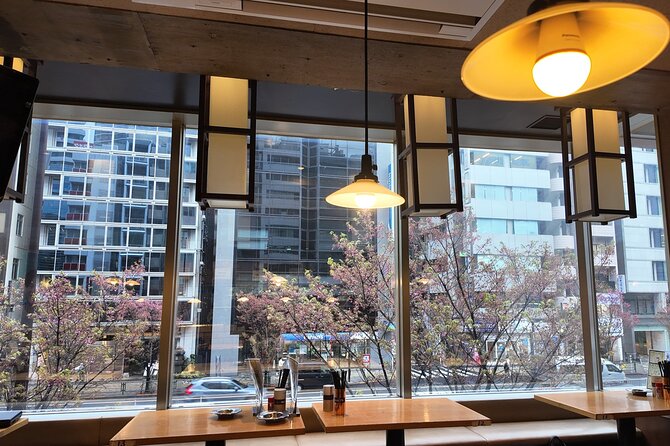
The mini competition follows the lesson. The details of the contest are not specified, so you should not expect a particular race or prize. What is clear is that you get a second chance to use the technique after instruction.
That timing is smart. You learn, practice, then test yourself. A small contest can show whether you actually improved or simply nodded along during the explanation. It also keeps the one-hour program moving.
Competition is not for everyone, but this is presented as a mini challenge rather than a high-stakes event. You can enjoy the effort without needing to be the fastest person in the room. If you are traveling with friends or family, it gives the activity a shared moment and a little friendly rivalry.
For solo visitors, the group structure helps prevent the lesson from feeling private or awkward. You have a clear task, a guide to keep things moving, and other people making their own attempts.
Snack time brings gyoza, karaage, and tofu
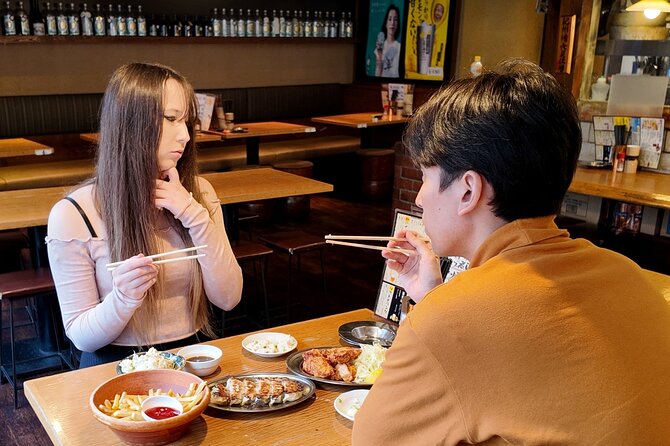
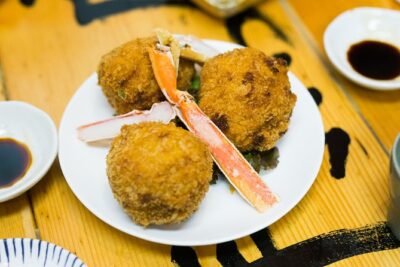
The final part combines kampai, a Japanese toast, with a light meal. One drink is included, along with food. Specific dishes reported from a session include gyoza, karaage, and tofu, though the exact menu may vary.
These are good foods for this kind of class. Gyoza requires enough control to pick up a small dumpling without splitting it. Karaage, or Japanese fried chicken, is easy to grasp but can still test your grip when pieces are irregular. Tofu is softer and more delicate, which gives you another kind of challenge.
The food also keeps the activity from feeling like a dry lesson. You practice on beans first, but the real reward is using the chopsticks with familiar Japanese dishes. The meal is light rather than a full dinner, so plan to eat elsewhere if you arrive hungry.
The drink is another pleasant touch. It helps the group shift from practice to social time, and the kampai moment fits the izakaya setting. Additional food and drinks are not included, so check before ordering beyond the provided serving.
Food was a major strength of the session with Taka and Hanako. The meal included gyoza, karaage, and tofu, all of which were singled out as especially enjoyable. That makes the food more than filler between activities, although you should still think of it as a snack-sized meal.
A souvenir you will actually use
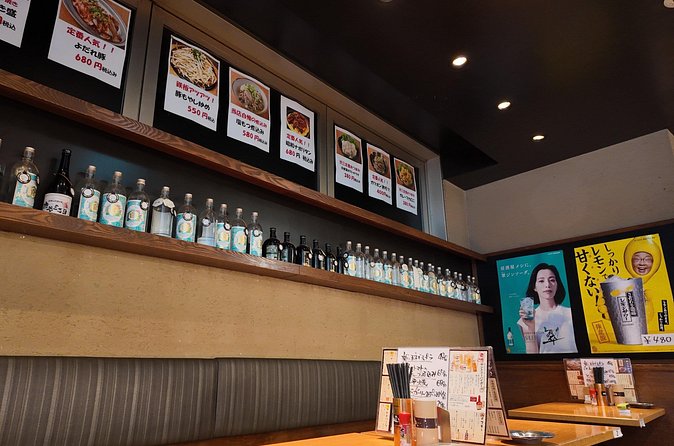
At the end, you can take your used chopsticks home. This is a better souvenir than it may sound. You have practiced with them, used them during the meal, and connected them with a specific evening in Tokyo.
They also give you a chance to keep practicing after the activity. Use them at home with food that is easy to manage, then work toward smaller or softer items as your control improves. The souvenir has a clear purpose, which is rare for inexpensive city activities.
The description does not specify the material, design, or packaging, so do not book this expecting a premium handcrafted pair. The value is in the personal connection and the reminder to keep using what you learned.
Is $22.89 a fair price?
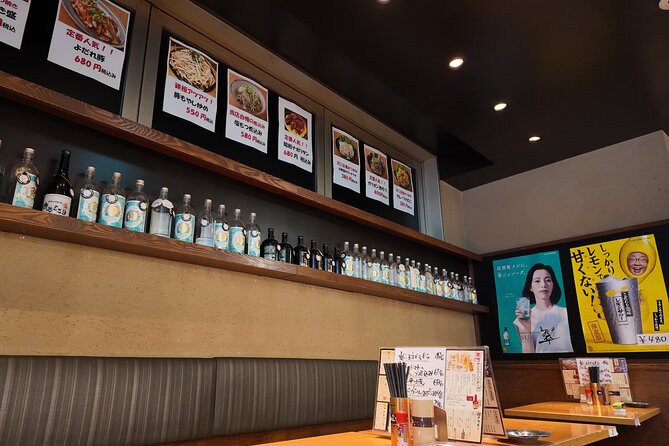
At $22.89 per person, the price is reasonable for a one-hour, small-group activity in Tokyo. You are paying for an English-speaking guide, instruction, a light meal, one drink, and the chopsticks you take home.
The value is strongest if you want a social cultural activity rather than a full dining experience. A one-hour class with food gives you more structure than simply eating at an izakaya, and the small group should make the instruction more personal.
It is less attractive if your main goal is dinner. The meal is described as light, other food and drinks cost extra, and the program ends after about an hour. In that case, compare the price with what you would spend on a normal casual meal and decide if the lesson and souvenir justify the difference.
I would also compare it with the cost of other short Tokyo activities. This one has a low total price and little time commitment. You are not giving up half a day, which is important in a city where sightseeing time disappears quickly.
Who should book this activity?
I would recommend it most strongly to first-time visitors who want a simple introduction to Japanese dining customs. It also suits families, couples, solo visitors, and anyone who enjoys hands-on activities more than passive sightseeing.
It is a good choice if you are nervous about using chopsticks in Japan. The bean exercise lets you make errors in a relaxed setting before you face a restaurant table. The guide can help you improve, and the short format keeps the task manageable.
Children may enjoy the bean challenge and mini competition, but the supplied information does not give an age requirement. Check the current booking terms if you are arranging the activity for young children.
Experienced chopstick users may find the formal lesson basic. You can still enjoy the food, the izakaya setting, and the social element, but the skill-building value will be smaller if you already use chopsticks comfortably.
This is also a good rainy-day or recovery activity. After a long day of walking, you can sit down, eat, and learn something without committing to a long class. The 4:30 pm start leaves the rest of the evening free.
Booking details worth noting
The group size is capped at nine people. That is small enough for personal guidance but large enough to create a friendly class atmosphere.
Free cancellation is available if you cancel at least 24 hours before the 4:30 pm start time. Cancellations made less than 24 hours before the activity are not refunded, and changes inside that period are not accepted. Cut-off times follow Tokyo local time.
Confirmation normally arrives when you book. If you book within one day of the activity, confirmation comes as soon as possible and depends on availability. The activity is near public transportation, begins and ends at the stated FamilyMart meeting point, and uses a mobile ticket.
Should you book the chopsticks workshop?
Book it if you want a short, social Tokyo activity that mixes practical instruction with Japanese snacks. The strongest reasons are the small group, the hands-on bean practice, the included drink and food, and the useful chopsticks souvenir.
Skip it if you want a full dinner, an advanced cooking course, or a long cultural lecture. At one hour, this is a compact introduction, not a major evening event.
For most visitors, the price makes sense when you treat it as a light meal plus a friendly lesson. Arrive at the Shibuya meeting point on time, keep your expectations focused, and you will get a cheerful break from sightseeing with a skill you can use for the rest of your Japan trip.
FAQ
Where does the chopsticks activity meet?
It meets at FamilyMart, 3-chōme-17-2 Shibuya, Tokyo 150-0002, Japan.
What time does the activity start?
The activity starts at 4:30 pm.
How long does the experience last?
It lasts approximately one hour.
Where does the activity end?
It ends back at the meeting point.
How many people can join the activity?
The group has a maximum of nine participants.
Is an English-speaking guide included?
Yes. An English-speaking guide is included.
What food is included?
A light meal is included. Food served in a session has included gyoza, karaage, and tofu, but the exact menu is not specified as fixed.
Is a drink included?
Yes. One drink is included. Additional drinks and food are not included.
Can I take the chopsticks home?
Yes. You can take home the chopsticks used during the program as a souvenir.
Can I cancel for a full refund?
Yes, if you cancel at least 24 hours before the experience start time. Cancellations made less than 24 hours before the start are not refunded.
Just added around Tokyo
- Tokyo Sake Tasting Tour with a Sake Expert★ 5.0 · 7 reviews
- Wagyu BBQ & Sukiyaki with Sake Pairing Experience near Ginza★ 5.0 · 2 reviews
- Tokyo: Serene Sakura & Sake: An Exclusive Brewery Pairing Lunch★ 5.0 · 2 reviews
- Japanese Sake Tasting & Wagyu Sukiyaki Cooking Class in Tokyo★ 5.0 · 10 reviews
- Tokyo Izakaya crawl (A tour of 2 izakayas, 1 bar, and a shrine)★ 5.0 · 8 reviews
- Private Tokyo Food Tour – Retro Akabane Izakaya Experience★ 5.0 · 14 reviews
- Shinjuku Underground Nightlife Tour: Izakaya Food & Bar Hopping★ 5.0 · 11 reviews
- Osaki, Togoshi Ginza Private Walking Food , Izakaya dinner tour★ 5.0 · 5 reviews
Tokyo Sake Tours, compared.
Best of Shinjuku: Izakaya Food Tour (4 Stops, 14+ Tastings)
Read our review →
Tokyo: Shinjuku Local Bar and Izakaya Guided Walking Tour
Read our review →
Ramen and Sushi Cooking Class with Sake Pairing Set in Tokyo
Read our review →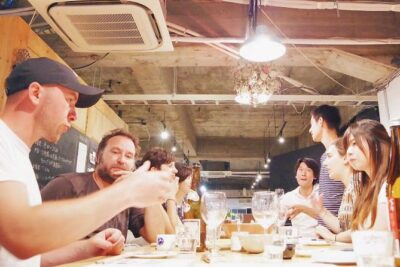
Sake Tasting Masterclass in Shinjuku (8+ Varieties with a Pro)
Read our review →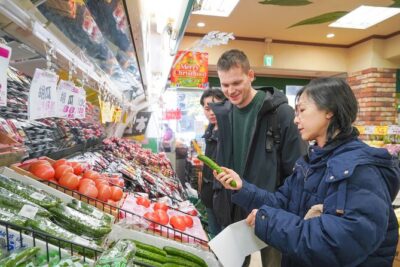
Tokyo Washoku 4-hour Cooking Class: From Market to Table
Read our review →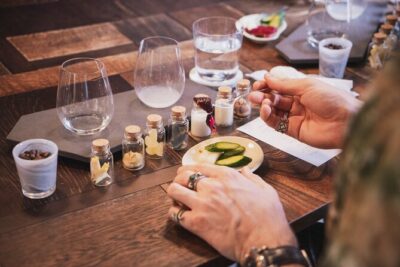
Sake Omakase in Tokyo: Guided Tasting by Certified Sommeliers
Read our review →Browse the lists this tour appears in