
REVIEW · TOKYO SAKE TOURS
Japanese Sake Tasting & Wagyu Sukiyaki Cooking Class in Tokyo
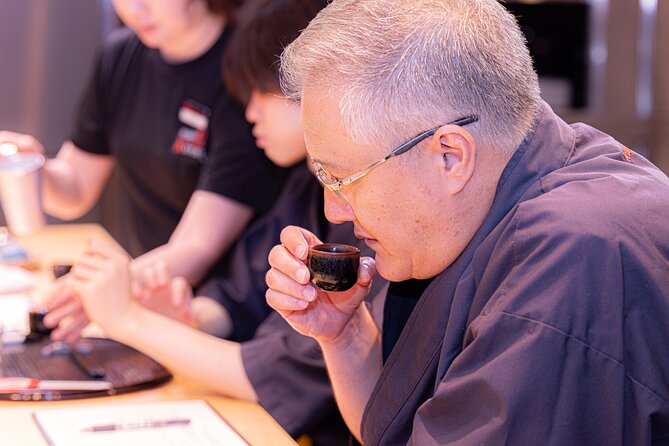
The clever part of this Tokyo class is that sake is not treated as one fixed drink. You taste it chilled, at room temperature, and warm, then see how each temperature changes the flavor before cooking Wagyu sukiyaki for lunch. I like the small group size and the practical pairing lesson, which gives you something useful to take to your next izakaya or restaurant.
I also like the mix of hands-on cooking and professional technique, especially the decorative vegetable-cutting demonstration while your hot pot simmers. The main consideration is the firm two-hour schedule and 11 a.m. start, so this suits you best if you can reach Nishiazabu on time and are comfortable with a shared class rather than a private lesson.
Key points to know before booking
- Three sake temperatures: Compare the same sake chilled, at room temperature, and warm.
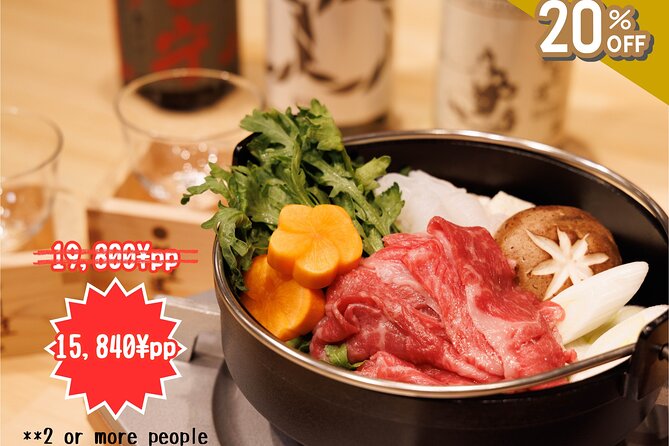
- Premium Wagyu lunch: Prepare and eat sukiyaki with sake and Japanese side dishes.
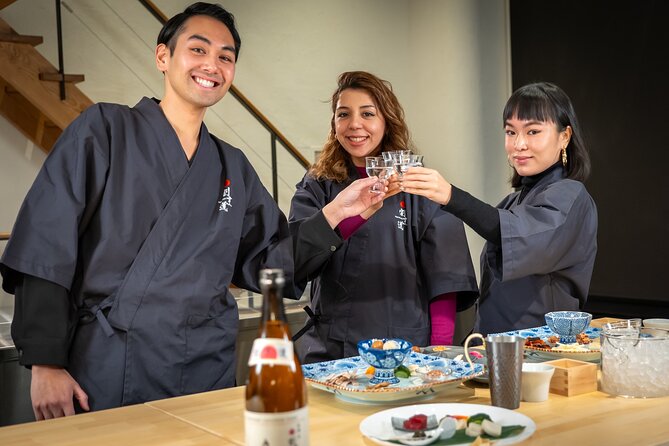
- Small class setting: The maximum is eight people, allowing room for questions and hands-on help.
- Hiromi’s sake instruction: Hiromi leads the sake portion, with staff explaining production, flavor, and pairings.
- Live knife and vegetable work: A professional chef demonstrates decorative cutting as your sukiyaki cooks.
- Useful extras: You receive a participation certificate and 10% off purchases at the first-floor shop that day.
Why the sake lesson is more useful than a standard tasting
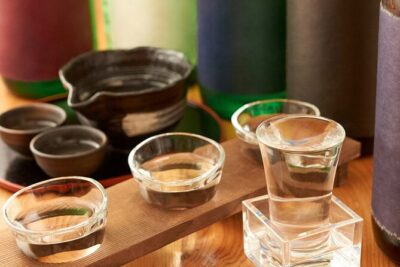
Many sake tastings ask you to sample several bottles and pick a favorite. This class takes a more revealing route: you compare sake at different temperatures. That matters because warmth can bring out softer aromas and fuller flavors, while chilling can make a drink feel cleaner and sharper.
The lesson includes sake in three temperature ranges, along with other types of sake. You also learn how the vessel can affect the way the drink feels and smells. This is the sort of small detail that helps you order with more confidence later, rather than simply remembering a brand name.
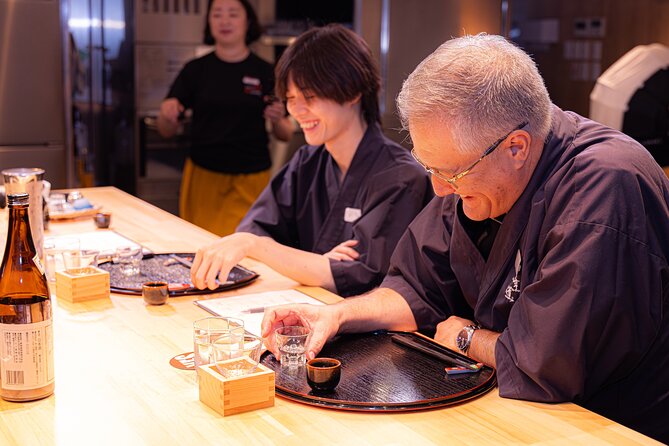
Hiromi leads the sake section and explains the subject in English. The teaching covers how sake is made, its background, and how to match it with food. The instruction is designed to be approachable, not a technical lecture, so you can ask questions and taste at your own pace within the class schedule.
The food pairings are important here. Selected Japanese snacks let you test how a sip changes beside salty, savory, or more delicate flavors. One of the most useful lessons is that your preferred sake may change once food enters the picture. That is a more realistic way to understand Japanese dining than tasting sake on its own.
You should also know that this is an alcoholic tasting. Sake is included, and the activity is built around comparing different pours. If you do not drink alcohol, the central part of the class will not be a good match.
More Sake Tastings in Tokyo:
- Best of Shinjuku: Izakaya Food Tour (4 Stops, 14+ Tastings)
★ 5.0 · 1,863 reviews - Ramen and Sushi Cooking Class with Sake Pairing Set in Tokyo
★ 5.0 · 291 reviews - Sake Tasting Masterclass in Shinjuku (8+ Varieties with a Pro)
★ 5.0 · 271 reviews
Cooking Wagyu sukiyaki in a Tokyo kitchen studio
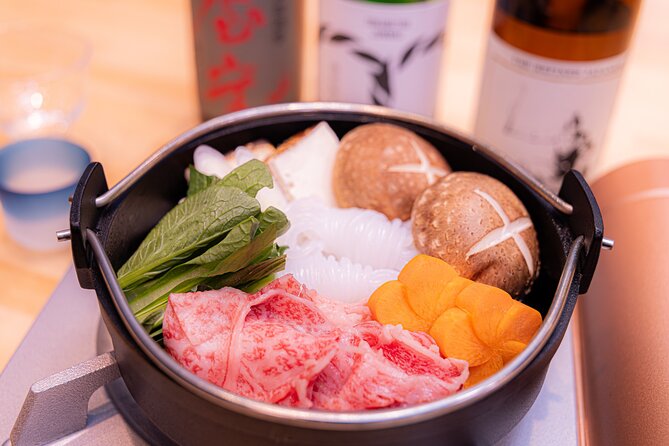
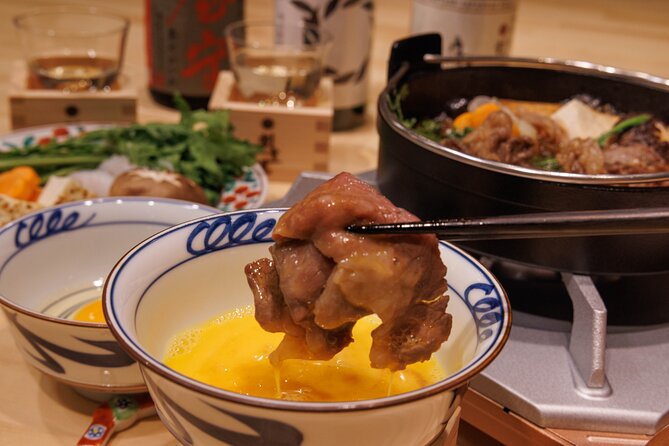
After the tasting, the class turns to sukiyaki. This is not just a demonstration where you watch a chef handle everything. You take part in preparing your own hot pot, using premium Wagyu beef and Japanese ingredients.
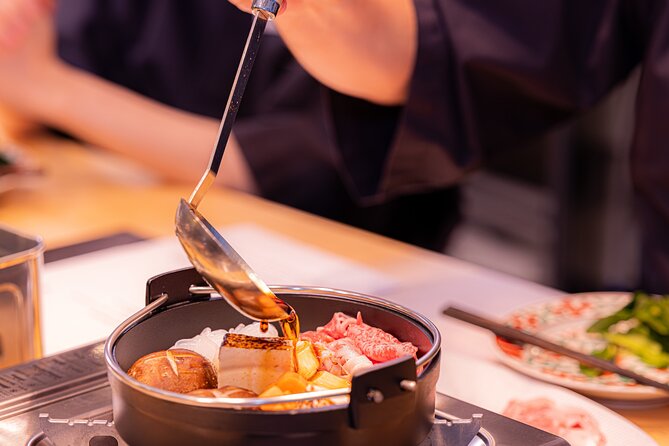
Sukiyaki is a good dish for a short cooking class because it brings several ideas together quickly. You learn how ingredients work in a shared pot, how the broth carries sweetness and savory flavor, and how thinly sliced beef cooks fast. The result is also lunch, so the lesson ends with something substantial rather than a few sample bites.
The class uses a Kano-style sukiyaki preparation, and the cooking portion is led by staff who explain the method as you work. Kimagai is named in the class feedback as the sukiyaki instructor, while Naoya is praised for his cooking. Since staff roles can vary by date, you should treat those names as possible instructors rather than a guarantee for every session.
The focus is on doing the work yourself, but you are not left to guess your way through it. Staff guide the process and help make the cooking smooth for families, groups, and people who may not have cooked Japanese food before. This makes the class a stronger choice than a simple restaurant meal if you want to understand how sukiyaki comes together.
There is a social side to the dish, too. A hot pot is naturally suited to sharing, and the small group size keeps the class from feeling like a large food demonstration. Still, you should expect a group activity. The experience is not advertised as private, and up to eight people may attend.
The vegetable-cutting demonstration adds a visual lesson
While your sukiyaki cooks, a professional chef presents a decorative vegetable-cutting demonstration. This is more than a pause between the tasting and lunch. Japanese cooking often pays close attention to shape and presentation, and the demonstration gives you a quick look at that precision.
It also breaks up the class nicely. You move from tasting, to preparation, to watching a specialist work, then back to eating. The vegetable carving does not replace the hands-on sukiyaki lesson, but it gives you a technique you would be unlikely to pick up during an ordinary meal.
The demonstration is best understood as a show-and-tell segment. The available information does not promise that you will personally carve the decorative vegetables, so do not book this expecting a second full workshop. Your hands-on work centers on the sukiyaki.
What lunch includes and how the pairing works
Lunch is your own Wagyu sukiyaki, served with sake. That pairing is the point of the whole class. You first learn how temperature changes the drink, then taste it alongside food, and finally use those ideas during a full meal.
The class also includes selected Japanese snacks during the sake portion. These smaller pairings help you notice how the drink behaves before you reach the main course. For a first visit to Japan, this creates a clear link between culinary instruction and everyday dining customs.
The quality focus is premium Wagyu beef, but the exact cut, quantity, side dishes, and sake labels are not specified. I would not book this expecting a particular bottle or a fixed menu beyond the Wagyu sukiyaki, sake, and selected snacks. Menus can depend on the day and the workshop setup.
A certificate of participation is included. It is a modest extra, but families and groups may enjoy having a physical reminder of the class. You also receive 10% off items in the first-floor shop on the same day. That discount is useful if you are already interested in Japanese kitchen goods or want to take home something connected to the lesson, though the specific products and prices are not given.
More Cooking Classes in Tokyo:
- Tokyo Washoku 4-hour Cooking Class: From Market to Table
★ 5.0 · 253 reviews - Tokyo: Sushi and Ramen Cooking Class with Sake Pairing Set
★ 5.0 · 81 reviews - Tokyo Night Cooking Class: 5 Home-Cooked Japanese Dishes
★ 5.0 · 70 reviews - Tokyo: Sushi Cooking Class with Sake Tasting
★ 4.8 · 55 reviews
A two-hour schedule that works well before an afternoon of sightseeing
The class starts at 11 a.m. and lasts about two hours. That puts lunch at roughly midday and leaves the afternoon open for exploring Tokyo. It is a practical fit for a day when you want one organized activity without giving up the rest of your plans.
The schedule is compact. You will taste sake, learn about temperature and vessels, sample pairings, prepare sukiyaki, watch the vegetable-cutting demonstration, and eat. That is a lot for two hours, so the class favors clear instruction over a slow, leisurely meal.
Arrive with enough time to find the studio. The meeting point is Kappodo H.Q, Tokyo D Kitchen Studio, at DK Building in Nishiazabu, Minato City, postal code 106-0031. The location is near public transportation, but private transportation is not included. The end point is the same meeting point.
The address includes Japanese characters and a building name, so save the full location before leaving your hotel. The activity begins at a specific time, and a late arrival could cut into a short session. This is one of those Tokyo bookings where a few extra minutes for navigation are worth it.
Who will get the most from this class
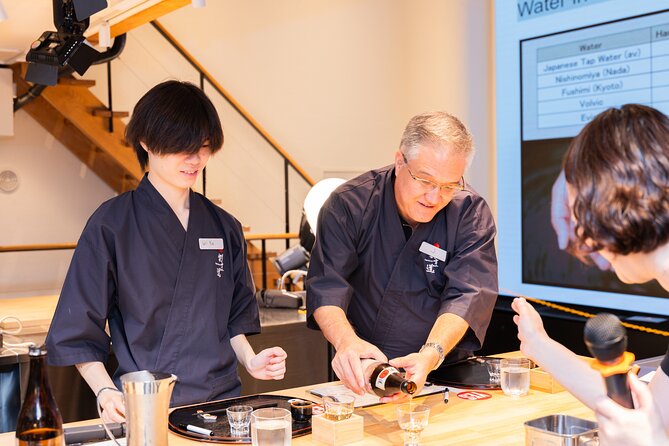
I would recommend this for adults and families who want food culture explained in plain terms and then put into practice. The format has worked well for family groups, and the staff are used to making the process friendly and easy to follow.
It also suits a group of friends looking for something more memorable than a restaurant reservation. You share the food, learn together, and have enough structure to keep the two hours moving. The maximum of eight people is particularly helpful for groups who want access to the instructor without the feel of a large tour.
This is a good pick for sake beginners. You do not need to know the difference between sake styles before arriving. The temperature comparison gives you a simple starting point, and the snack pairings show why a sake that seems ordinary by itself may work well with food.
It is less suitable if you want a long, detailed brewery visit or a large sake flight. The class uses sake as part of a broader food lesson, not as a dedicated full-day study of producers and regions. It is also not ideal for anyone avoiding alcohol, since sake tasting is central.
Is $129 a fair price?
At $129 per person, the class costs more than a basic Tokyo cooking lesson or a casual sukiyaki lunch. You are paying for several elements in one booking: an English-language sake lesson, multiple temperature comparisons, food pairings, a guided Wagyu cooking session, lunch, a chef demonstration, equipment, a certificate, and a shop discount.
The value is strongest if you would otherwise pay separately for a good meal and a sake tasting. The Wagyu is not just served to you, and the sake is not simply poured without explanation. You get instruction before eating, which makes the price easier to justify for someone who values context and participation.
The value is weaker if your priority is maximum food quantity or a quiet restaurant meal. This is a class first, lunch second. You should choose it for the combination of learning and eating, not because it is the cheapest way to have sukiyaki in Tokyo.
Group discounts are available, although the amount and conditions are not stated. If you are booking for several people, check the current price before paying. The 10% same-day shop discount may add value, but only if you actually plan to buy something.
Practical details that can affect your booking
Confirmation is provided when you book. The experience requires a minimum number of participants, so a cancellation by the provider is possible if that minimum is not reached. In that case, you are offered another date or experience, or a full refund.
You can cancel for a full refund up to 24 hours before the 11 a.m. start time. Cancellations or changes made less than 24 hours before the local start time are not refunded or accepted. Keep the cutoff in mind if your Tokyo plans are still moving around.
The class has mobile ticketing, which keeps the arrival process simple. Bring the booking details on your phone, and keep the studio address available. Since the tour begins and ends at the same place, you can plan the rest of your day from Nishiazabu rather than arranging a separate pickup.
My take: book it if you want to understand what you are eating
I would book this class if you want a compact, social introduction to two important parts of Japanese dining: sake and hot-pot cooking. The strongest feature is the temperature comparison, because it teaches you something you can use immediately. The Wagyu sukiyaki gives the lesson a satisfying finish, and the vegetable-cutting demonstration adds a glimpse of professional technique.
Book it especially if you are traveling with family or a small group, or if you want an English-language activity with a clear beginning and end. Hiromi’s sake teaching and the cooking guidance from staff such as Naoya or Kimagai give the class a personal, hands-on feel.
I would skip it if you want a private class, a full brewery tour, or a long meal with no instruction. At $129, the price makes sense when you value the teaching, tasting, and participation together. For a short Tokyo food experience that leaves you with a better sense of how sake and sukiyaki fit into Japanese dining, it is a strong choice.
FAQ
Where does the Japanese sake and Wagyu sukiyaki class begin?
The class begins at Kappodo H.Q, Tokyo D Kitchen Studio, at DK Building in Nishiazabu, Minato City, Tokyo 106-0031. It is near public transportation.
What time does the class start?
The scheduled start time is 11 a.m.
How long does the activity last?
The class lasts approximately two hours.
How many people can join the class?
The maximum group size is eight participants.
Is sake included in the price?
Yes. Sake is included, with tasting across three temperature ranges as well as other types of sake.
Is lunch included?
Yes. Lunch is Wagyu beef sukiyaki prepared during the cooking class.
What else is included?
The price includes equipment for the sake pairing lesson and a certificate of participation. You also receive 10% off items at the first-floor shop on the same day.
Can I cancel for a full refund?
Yes. You can cancel at least 24 hours before the local start time for a full refund. Cancellations or changes made less than 24 hours before the start time are not accepted or refunded.
More Sake and Food Tours in Tokyo
- Sake Omakase in Tokyo: Guided Tasting by Certified Sommeliers
★ 5.0 · 239 reviews - Tokyo: The Best of Izakaya in Shinjuku Food & Cultural Tour
★ 4.9 · 221 reviews - [1 Group Only] Tokyo Shinjuku Food Tour for Family
★ 5.0 · 147 reviews - Wagyu & Sake Pairing in Shinjuku – Steak, Shabu-Shabu & More
★ 5.0 · 112 reviews
Just added around Tokyo
- Wagyu BBQ & Sukiyaki with Sake Pairing Experience near Ginza★ 5.0 · 2 reviews
- Tokyo: Serene Sakura & Sake: An Exclusive Brewery Pairing Lunch★ 5.0 · 2 reviews
- Tokyo Sake Tasting Tour with a Sake Expert★ 5.0 · 7 reviews
- Tokyo Izakaya crawl (A tour of 2 izakayas, 1 bar, and a shrine)★ 5.0 · 8 reviews
- Private Tokyo Food Tour – Retro Akabane Izakaya Experience★ 5.0 · 14 reviews
- Tokyo: Learn the Art of Chopsticks in a Cozy Izakaya!★ 5.0 · 2 reviews
- Shinjuku Underground Nightlife Tour: Izakaya Food & Bar Hopping★ 5.0 · 11 reviews
- Osaki, Togoshi Ginza Private Walking Food , Izakaya dinner tour★ 5.0 · 5 reviews
Tokyo Sake Tours, compared.
Best of Shinjuku: Izakaya Food Tour (4 Stops, 14+ Tastings)
Read our review →
Tokyo: Shinjuku Local Bar and Izakaya Guided Walking Tour
Read our review →
Ramen and Sushi Cooking Class with Sake Pairing Set in Tokyo
Read our review →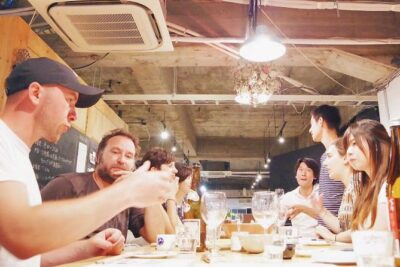
Sake Tasting Masterclass in Shinjuku (8+ Varieties with a Pro)
Read our review →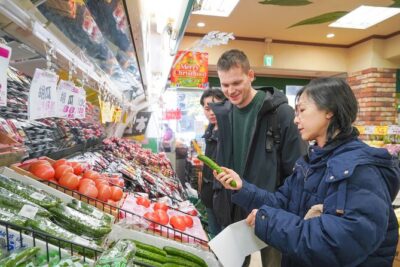
Tokyo Washoku 4-hour Cooking Class: From Market to Table
Read our review →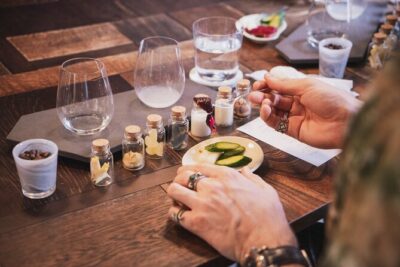
Sake Omakase in Tokyo: Guided Tasting by Certified Sommeliers
Read our review →Browse the lists this tour appears in