
REVIEW · KYOTO SAKE TOURS
Kyoto: Afternoon Japanese Izakaya Cooking Class
Kyoto’s Cooking Sun class teaches the Japanese food you are most likely to miss after your trip: simple, savory dishes served at home and in neighborhood izakaya. You cook in two rounds, sit down to eat, then return to the kitchen for more. The format keeps your hands busy and the conversation flowing.
I like the practical recipes and the warm, easygoing teaching style. I also like that the class goes beyond generic sushi, covering basics such as dashi and dishes that can be made again with ordinary home equipment. The main consideration is pace: fitting several dishes into three hours means the afternoon can move quickly.
Key points to know before booking
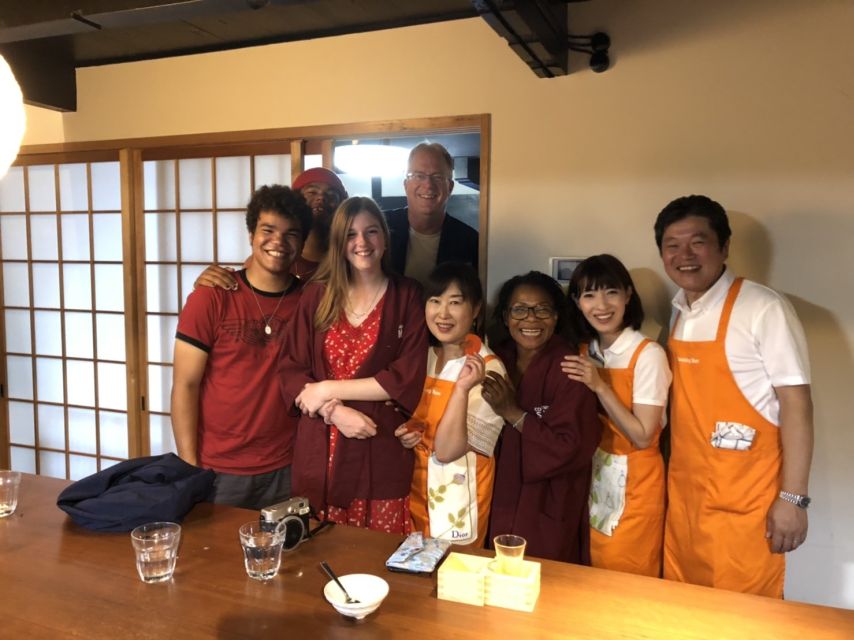
- Two cooking sessions: Prepare 2 or 3 dishes, eat them, then return to the kitchen for another 2 or 3 dishes.
- More than sushi: Menus can include okonomiyaki, dashi-based cooking, savory izakaya dishes, and dessert.
- Recipes to take home: Step-by-step instructions help you repeat the dishes after Japan.
- English-speaking instruction: Yumi, Yumiko, and other Cooking Sun instructors explain techniques and ingredients in English.
- Good for mixed ability levels: Beginners can follow along, while experienced cooks can still pick up useful Japanese methods.
- Central Kyoto meeting point: The class meets at Cooking Sun on Funayacho in Shimogyo Ward.
What the three-hour Kyoto class is really like
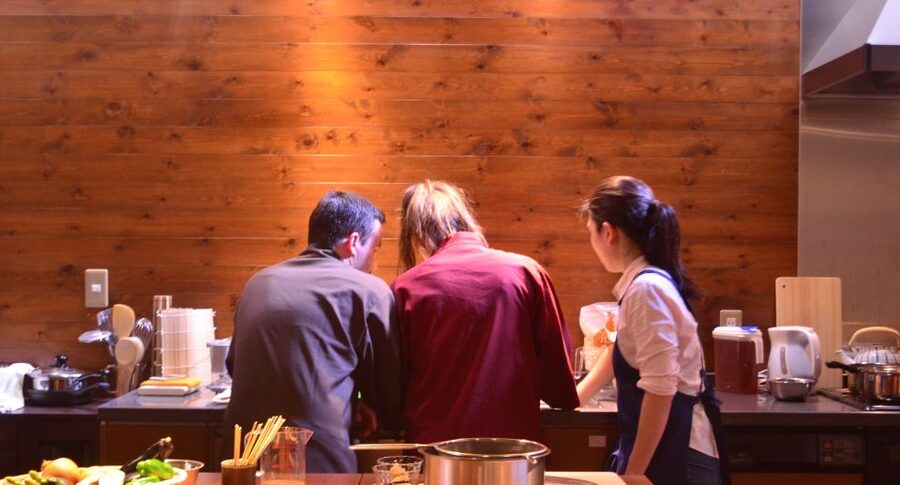
This is not a demonstration where you watch a chef work from the back of the room. You receive an apron and utensils, handle the ingredients, and cook along with the instructor. The class is designed around participation, conversation, and eating together.
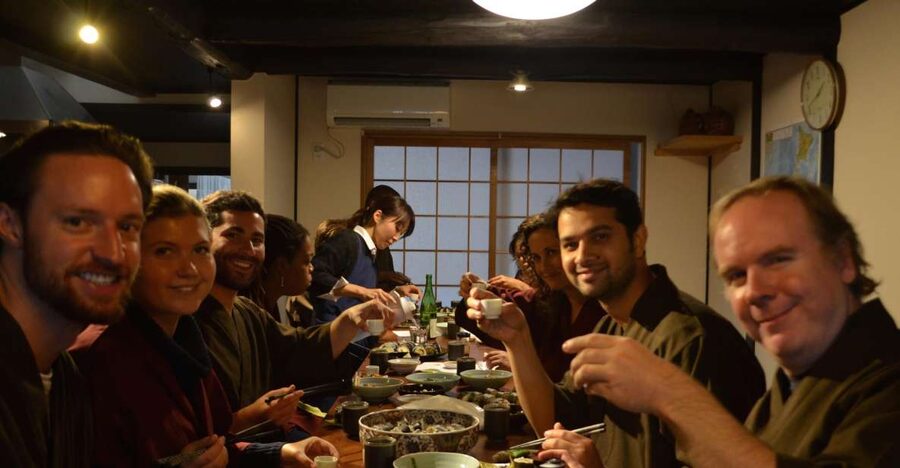
The izakaya idea matters here. An izakaya is a casual Japanese drinking and dining place, usually serving a range of small dishes rather than one large meal. At Cooking Sun, the food is treated in much the same social spirit. You cook, talk with the chefs, taste what you have made, and learn how the dishes fit into everyday Japanese eating.
The class lasts three hours in the afternoon. That makes it a useful break from temples, gardens, and long walks through Kyoto. It also gives you a proper meal, so you should avoid scheduling an early dinner immediately afterward.
More Izakaya and Bar Hopping in Kyoto:
- Kyoto: Izakaya Bars Guided Walking Tour
★ 4.9 · 815 reviews - Izakaya Style Cooking Class
★ 5.0 · 219 reviews - Kyoto Local Gourmet Night Experience: Kaiseki & Izakaya & Matcha
★ 5.0 · 22 reviews
Starting with familiar ingredients and basic Japanese technique
The first half begins in the kitchen with 2 or 3 dishes. The precise menu can vary, so you should not book expecting one fixed set of recipes. Past classes have included okonomiyaki, traditional savory dishes, dashi-based food, and other izakaya staples.
One useful feature is the attention to foundations. A class member specifically praised making dashi from the beginning, rather than treating Japanese stock as a mysterious ingredient bought in a packet. That kind of lesson gives you a better sense of why Japanese food tastes the way it does and how to build flavor without relying on heavy sauces.
You also learn how ingredients such as dashi and mirin are used. These may be familiar words from a Japanese menu, but seeing how they work in a recipe is more useful than simply hearing a definition. The class connects the ingredients to actual cooking tasks, which makes them easier to remember once you are home.
The instructions are broken into manageable steps. That matters if you do not cook often. Several people who described themselves as beginners, or who joined because a partner or family member enjoyed cooking, found the process easy to follow. The class is not aimed only at confident cooks.
Eating the first dishes before returning to the stove
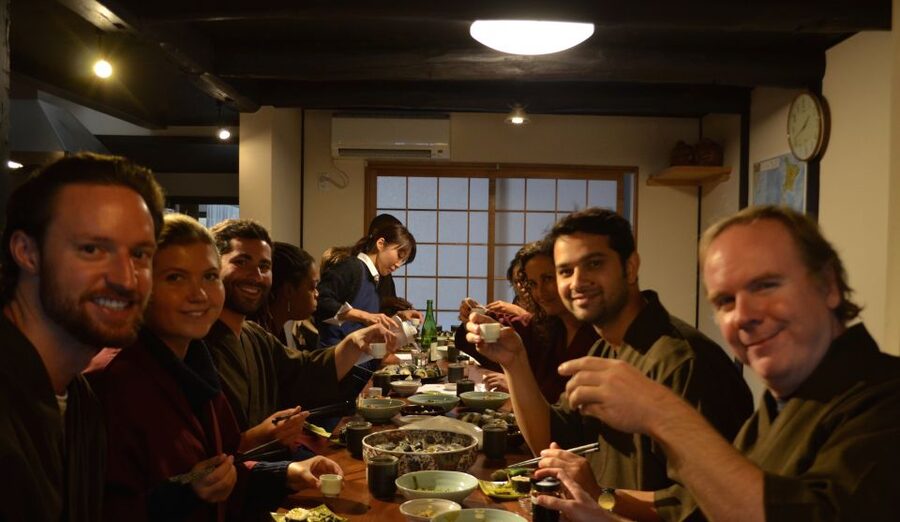
After the opening dishes are prepared, you eat them before starting the second cooking round. This is one of the best choices in the format. You are not left standing at a counter for three hours waiting for one final meal.
The first meal also gives you a chance to talk with the chef and the other people in the group. Cooking Sun’s teaching style is informal and social, much like the over-the-counter setting associated with an izakaya. You can ask about ingredients, preparation, and Japanese food customs while eating the results.
The food is intended to be eaten, not just sampled. Depending on the menu, you may prepare several smaller plates rather than one large centerpiece. That variety is part of the appeal. You get to compare different textures and seasonings and see how a Japanese meal can be built from several modest dishes.
The second round adds variety, and sometimes dessert
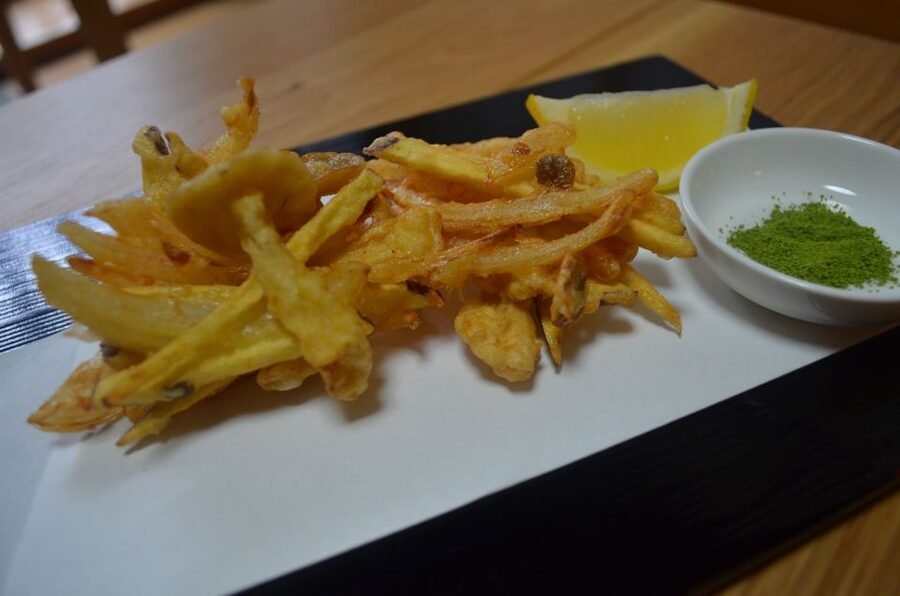
After eating, you return to the kitchen for another 2 or 3 dishes. Some sessions have produced six dishes in all, including dessert. Other descriptions refer to 2 or 3 dishes in each part, so the exact number depends on the day’s menu.
That variation is worth keeping in mind. The reliable promise is a hands-on class with two cooking periods and food to eat. The exact dishes are not guaranteed in the information provided, although okonomiyaki, dashi, savory izakaya food, and dessert have all appeared in past sessions.
The second round is also where the afternoon can feel fast. You have several recipes to complete, and the instructors need to keep everyone moving together. That is good for variety, but it leaves less time for slow, detailed practice of one difficult dish.
If you prefer to learn a single recipe in great depth, this may not be your ideal format. If you want a broad introduction to everyday Japanese cooking, the range is a strength. You leave with several ideas instead of one carefully repeated technique.
More Cooking Classes in Kyoto:
- Kyoto Udon & Tempura Cooking Class with Professional Chefs
★ 3.8 · 3 reviews - Ramen and Sushi Cooking Class with Sake Pairing Set in Tokyo
★ 5.0 · 291 reviews - Tokyo Washoku 4-hour Cooking Class: From Market to Table
★ 5.0 · 253 reviews - Osaka Sake Tasting with Takoyaki Cooking
★ 5.0 · 156 reviews
Why the recipes are more useful than a one-time meal
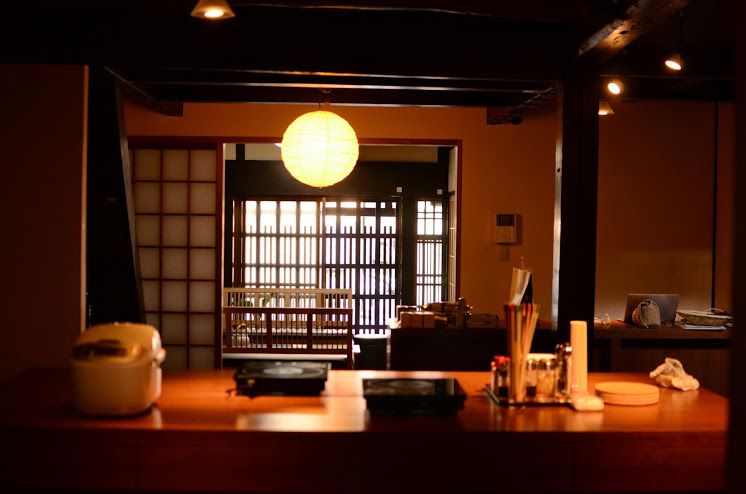
Many cooking classes are enjoyable in the moment but hard to repeat. This one puts real weight on take-home instructions. The recipes are described as clear, well documented, and broken into simple steps.
That makes the $67 price easier to assess. You are paying not only for three hours of food and instruction, but also for a set of dishes you can try again. The value is best if you plan to cook after returning home. If you only want a meal, an ordinary Kyoto restaurant will cost less.
You will still need access to Japanese ingredients for the closest result. Dashi, mirin, and other seasonings may not already be in your cupboard. That is not a flaw in the class, but it is worth remembering when you judge how easily you can recreate the food.
The recipes also help you understand which parts are essential and which can be adapted. A useful cooking lesson should send you home with enough confidence to make the dish without a chef standing nearby. This class is built for that.
The instructors and the feel of the room
The instructors are repeatedly praised for being friendly, patient, organized, and clear in English. Yumi and Yumiko are among the teachers named by class members, though your instructor may be someone else.
The tone sounds relaxed rather than formal. The chef talks with you while you cook and eat, which fits the social character of izakaya dining. You are encouraged to ask questions, and the teachers adjust their help to different levels of experience.
That flexibility is important for a mixed group. One person may have cooked Japanese food for years, while another may be holding a Japanese knife for the first time. The class has worked well for couples, families, teenagers, solo participants, and people from different cooking backgrounds.
It is also suitable for someone who does not usually cook. The repeated emphasis on simple tasks and step-by-step teaching suggests that you do not need advanced knife skills or a strong background in Japanese cuisine.
What makes this feel like Kyoto rather than a generic cooking class
The class takes place at Cooking Sun, Funayacho, in Kyoto’s Shimogyo Ward. The location gives you a central Kyoto activity tied to local food culture, rather than a broad international cooking lesson adapted for tourists.
The strongest cultural value comes from the subject matter. You are learning food eaten in Japanese homes and local restaurants, not only the dishes most familiar outside Japan. The focus on dashi, izakaya cooking, and everyday savory plates gives you a more useful picture of Japanese meals.
There is also a social side that a restaurant cannot provide. In a restaurant, you can taste the finished food but usually cannot ask why a sauce is made a certain way or how a dish fits into ordinary life. Here, the cooking itself opens that conversation.
Do not expect a guided tour of Kyoto’s food markets or a walking visit to several districts. The activity stays in the cooking venue. Its cultural value comes through the food, the ingredients, the instructors, and the shared meal.
Is $67 a fair price?
At $67 per person, this is not the cheapest way to eat lunch in Kyoto. It is a fair price if you value instruction, several dishes, ingredients, equipment, and recipes you can use later.
The class includes the cooking lesson, ingredients, an apron, and utensils. You also eat what you prepare during the two parts of the session. That combination makes the cost reasonable compared with a simple restaurant meal, especially for anyone who wants a skill rather than just a plate of food.
The price works best for:
- People who want to cook Japanese food at home
- Families looking for an indoor Kyoto activity
- Couples who prefer a shared experience to another restaurant meal
- Beginners who want patient instruction
- Experienced home cooks interested in Japanese ingredients and technique
It is less attractive if you dislike group activities, want a quiet meal, or expect a high-end chef’s tasting menu. The point is participation and practical learning, not luxury dining.
Who should book this afternoon activity?
I would choose this class for a food-focused day in Kyoto, especially if you have already spent several days visiting temples and want something hands-on. It also makes sense on a rainy afternoon because the activity is indoors and lasts long enough to feel substantial.
Families have found the format suitable for teenagers, and one useful detail is that the class can work for people with very different cooking ability. You do not need to be a serious home cook. In fact, a reluctant cook may enjoy the social setting and the quick change from one task to the next.
It is also a good match for anyone frustrated by the limited range of Japanese dishes available in cooking classes abroad. The menu is not fixed as a single sushi lesson, and past sessions have included less familiar izakaya-style food.
People with dietary requirements should tell the local supplier when booking. A vegetarian participant was accommodated in one class with separate utensils and pans, but you should still raise your needs in advance rather than assume every menu can be changed on the day.
The experience is wheelchair accessible. English is the listed teaching language, which removes one common concern for international visitors.
Timing, meeting point, and useful planning advice
The meeting point is Cooking Sun, Funayacho, Shimogyo Ward, Kyoto, Kyoto 600-8466. Check the available start times when booking, since the class is offered in the afternoon and the exact starting time can vary.
Allow the full three hours. The two cooking and eating sections are both part of the experience, and rushing away early would mean missing either instruction or the meal.
I would also leave room afterward rather than booking a tightly timed evening activity. The class includes several dishes, conversation, and two trips back to the kitchen. Even if the schedule runs on time, you will want a little breathing space before your next plan.
If you need to cancel, free cancellation is available up to 24 hours beforehand for a full refund. You can also reserve now and pay later, which helps if your Kyoto schedule is still changing.
The small drawbacks to consider
The main drawback is that the class is not built around one fixed menu. If you have your heart set on a particular dish, confirm the current offering before booking.
The pace can also be brisk. Several dishes in three hours is good value, but it means you may not repeat every technique until it feels effortless. Pay close attention and use the recipe set afterward to practice.
Finally, the class is social by design. You are expected to talk with the chef while cooking and eating, and the experience works best if you are comfortable sharing the room with others. It is not a private lesson unless your booking happens to create a small or private group, something not guaranteed here.
Should you book Cooking Sun’s izakaya class?
Yes, if you want an active, food-centered afternoon and plan to cook Japanese dishes after your trip. The class gives you more than a photo and a full stomach: you learn dashi, izakaya-style cooking, several practical recipes, and the rhythm of preparing and sharing small Japanese dishes.
I would skip it only if you want a fixed menu, a slow technical master class, or a quiet restaurant meal. For most visitors, the combination of English instruction, friendly teachers such as Yumi and Yumiko, accessible recipes, and a meal you prepare yourself makes this one of Kyoto’s better-value cultural activities.
FAQ
How long does the Kyoto izakaya cooking class last?
The class lasts three hours and takes place in the afternoon. Check availability for the exact starting time.
What dishes will I cook?
The menu can vary. Past classes have included okonomiyaki, dashi-based dishes, savory izakaya food, and dessert. The class is arranged in two rounds of 2 or 3 dishes.
Do I eat the food I prepare?
Yes. You cook the first group of dishes and eat them before returning to the kitchen for the second group. You also eat the food prepared in the second round.
Is the class taught in English?
Yes. English is the listed teaching language, and the instructors provide explanations and step-by-step guidance in English.
Do I need cooking experience?
No. The class is designed to be accessible to beginners, while still offering useful techniques and ingredients for more experienced home cooks.
Are ingredients and equipment included?
Yes. The price includes the cooking class, ingredients, an apron, and utensils.
Where does the class meet?
The meeting point is Cooking Sun, Funayacho, Shimogyo Ward, Kyoto, Kyoto 600-8466.
Can I attend if I have dietary requirements?
You should tell the local supplier about any dietary requirements when booking. The class has accommodated vegetarian needs in the past, but arrangements should be made in advance.
Just added around Kyoto
- Nishiki Market, Private Sushi class & Sake Tasting in Townhouse★ 5.0 · 6 reviews
- Hidden Bamboo gem and Japanese foods in Izakaya Private Tour★ 5.0 · 3 reviews
- Private Nishiki Market Food & Sake Tour by Young Local Guides★ 5.0 · 12 reviews
- Kyoto Food and Sake Tour Experience★ 4.0 · 5 reviews
- KYOTO Sake Tasting Tour at Local Breweries(tasting fee included)★ 5.0 · 16 reviews
- Kyoto: Sake Tasting Journey to Two Iconic Breweries★ 3.0 · 2 reviews
- Experience of pairing sake tasting with snacks in Kyoto★ 5.0 · 4 reviews
- Kyoto Luxury Sake, Whisky and Cocktail Tour★ 5.0 · 4 reviews
Kyoto Sake Tours, compared.

3-Hour Kyoto Insider Sake Brewery Tour with Tastings & Pairings
Read our review →

Kyoto: Insider Sake Brewery Tour with Sake and Food Pairing
Read our review →
1.5-Hour Kyoto Insider Sake Experience with 7 Tastings & Pairings
Read our review →
Kyoto: Insider Sake Experience with 7 Tastings and Snacks
Read our review →
Private Tea Ceremony and Sake Tasting in Kyoto Samurai House
Read our review →Browse the lists this tour appears in