
REVIEW · HIROSHIMA SAKE TOURS
Hiroshima Saijo Sake Tasting Calligraphy and Dinner Private Tour
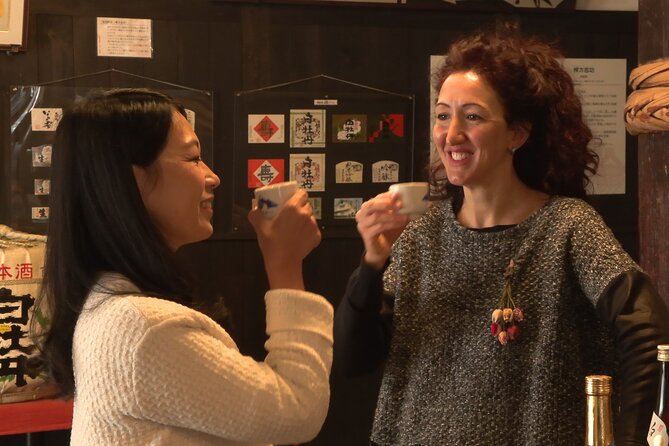
Saijo’s sake tradition becomes much easier to understand when you see its shrines, breweries, water, and food in one afternoon. This private tour takes you to three breweries, including a factory area not usually open to the public, then ends with a sake-paired dinner rather than a quick tasting at a shop.
I like the hands-on calligraphy at Sanyotsuru, where you grind sumi ink and make your own sake label on paper used for genuine labels. I also like the way the tour connects local sake to Setouchi cuisine, especially Saijo’s bishu-nabe, a hotpot cooked with sake. The main consideration is the price, $286.16 per person, which makes the most sense if you care about guided access, tastings, and a full meal rather than simply buying a bottle.
Key points at a glance
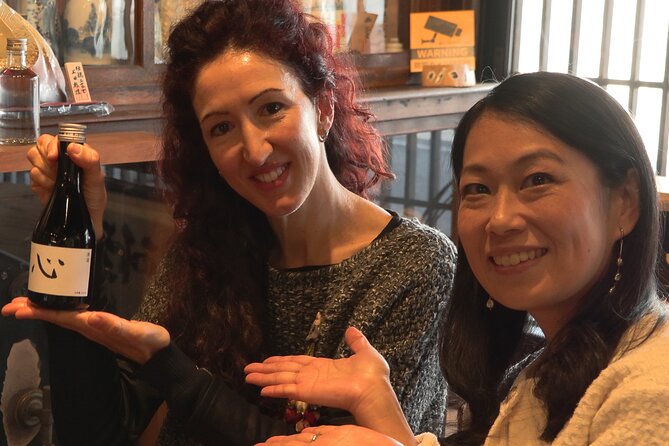
- Three brewery visits: See Kamotsuru, Hakubotan, and Sanyotsuru, each offering a different look at Saijo sake.
- A working production site: Hakubotan’s Tenpo Brewery includes a special factory visit that is not normally open to the public.
- Your own sake label: Use Mount Ryuo spring water and sumi ink at Sanyotsuru to create a personal souvenir.
- A shrine tied to brewing: Mitate Shrine is where Saijo’s seven breweries gather to pray to the deity of sake.
- A proper local dinner: France-ya serves bishu-nabe and other Setouchi dishes matched with Kamotsuru sake.
- Private format: Only your group takes part, with the afternoon running from about 2:00 to 7:00 p.m.
Why Saijo is a good place to study sake
Saijo is one of Hiroshima’s best places to learn how sake fits into daily life and local identity. The tour does not treat sake as just a drink to sample. It links the beverage to spring water, rice, shrine worship, skilled labor, neighborhood breweries, and food.
That matters because sake can seem confusing when you meet it only in a restaurant. The labels use unfamiliar terms, styles vary from brewery to brewery, and the flavor can change with serving temperature and food. Seeing how each brewery presents its work gives you a better basis for comparing what you taste.
The route is also compact. You move between sites in the Saijo area rather than spending the afternoon on a long bus ride. Transportation to the meeting point is not included, so you need to arrange your own way there, but the activity itself ends back at that same meeting point.
The private setup is useful if you want to ask questions at your own pace. You are not trying to keep up with a large group or squeeze into a short public tasting. The guides can focus on your group, though their names are not provided in the tour details.
More Sake Tastings in Japan:
- Best of Shinjuku: Izakaya Food Tour (4 Stops, 14+ Tastings)
★ 5.0 · 1,863 reviews - 3-Hour Kyoto Insider Sake Brewery Tour with Tastings & Pairings
★ 5.0 · 917 reviews - Kyoto Sake Brewery & Tasting Walking Tour
★ 5.0 · 623 reviews
Mitate Shrine and the spiritual side of brewing
The first stop is Mitate Shrine, scheduled for about 25 minutes. The shrine honors the deity of sake and has been cared for by Saijo’s brewers for generations.
This is a smart opening stop. Before you see tanks, bottles, or tasting glasses, you get a sense of the respect surrounding the craft. Representatives from Saijo’s seven breweries gather here to pray, so the shrine provides a direct link between the local brewing community and religious tradition.
You should not expect a long sightseeing visit. The stop is short, and admission is free. Its value is cultural rather than visual spectacle. Listen for the explanation of why brewers come here and how the shrine relates to the seven breweries. That background will make the later visits feel less like separate commercial stops.
If your main interest is tasting, this may feel slow at first. I think it earns its place because it gives the afternoon a clear sense of place. Saijo sake is not presented as an isolated product. It belongs to a town with shared customs and local pride.
Kamotsuru’s museum shop explains the basic process
At Kamotsuru Sake Brewing Co., Ltd., you visit the sake museum shop for roughly 30 minutes. Displays and exhibits explain how sake is made, giving you a useful foundation before the more detailed brewery visit at Hakubotan.
The shop setting means this stop is partly educational and partly commercial. You can learn about brewing through the displays and sample sake, but you may also be looking at bottles and souvenirs. That is not necessarily a drawback. If you are new to sake, the visual material can help you understand the broad sequence of production before you begin comparing different labels.
The timing is brief, so expect an introduction rather than a full technical lesson. You will likely get more from it if you ask about the parts of brewing that interest you most. The tour description specifically highlights unique displays and exhibits, but it does not promise a complete working-factory tour here.
Kamotsuru becomes important again at dinner. France-ya is operated by Kamotsuru Brewing, and the evening meal includes Kamotsuru sake. That connection gives the afternoon a useful arc: you first meet the brewery’s public presentation, then encounter sake with food later in the day.
Hakubotan offers the strongest behind-the-scenes visit
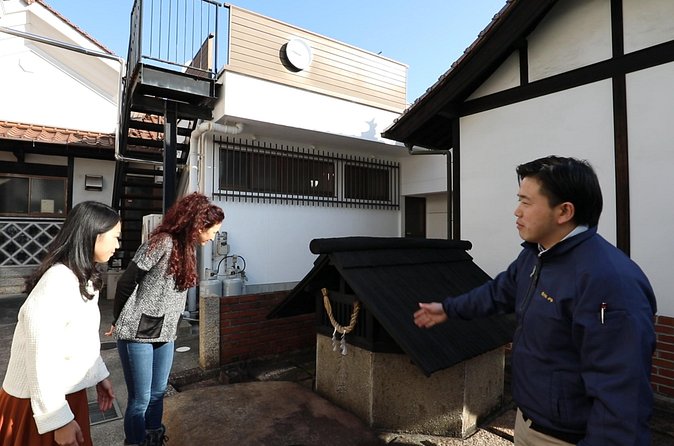
The stop at Hakubotan Brewery lasts about 50 minutes and is likely the main attraction for anyone interested in production. The brewery has more than 350 years of history, and staff provide a special tour of the Tenpo Brewery.
The key detail is access. This factory visit is usually not open to the public, so the tour gives you a chance to see an operating production area that you would not normally enter on an independent stroll through Saijo.
You should expect the brewery staff to explain how sake is made and to answer questions about the process. The exact production areas and procedures are not specified, so it is best not to arrive expecting every stage of brewing or a long technical workshop. Still, the combination of staff explanation and a real production site should make the process more concrete than museum panels alone.
This is also where tasting becomes more useful. You can connect what you hear about brewing with the flavor in your glass. The tour includes tastings from several breweries, and the local Hiroshima rice used in the sake is part of the regional story.
For a sake fan, Hakubotan may justify much of the cost. For someone who does not drink, the factory access still has interest, but the tasting-centered nature of the afternoon will be less valuable.
More Sake Tours with Dinner in Japan:
- Wagyu & Sake 8 Course Tasting Dinner in Shinjuku
★ 4.9 · 20 reviews - Kyoto Sake Brewery Tour with Lunch
★ 4.5 · 12 reviews - Mt FUJI – Panoramic Tour w/ Hoto Lunch, JP Sake & Onsen tatto OK!
★ 5.0 · 9 reviews - Sake & Seasonal Delights Sake Pairing Lunch at the Brewery
★ 5.0 · 8 reviews
Sanyotsuru turns calligraphy into a personal souvenir
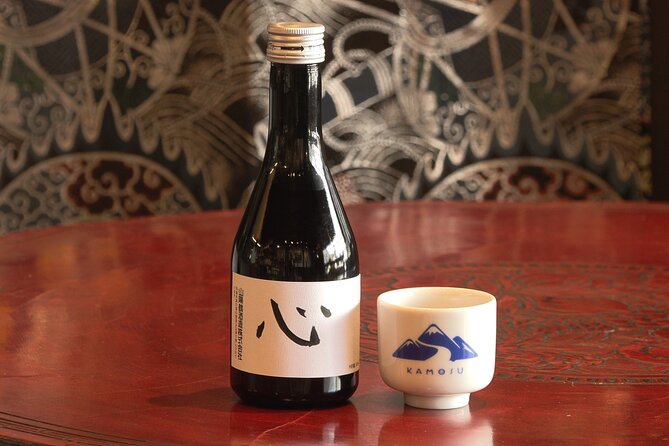
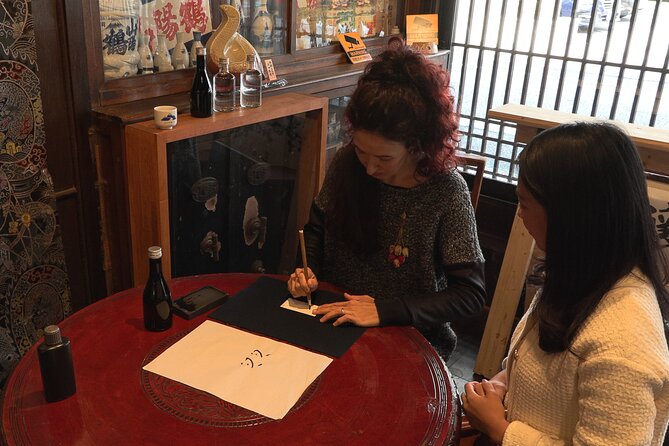
At Sanyotsuru Brewery, you spend about 45 minutes inside a traditional brewery setting. The special activity here is calligraphy, using spring water from Mount Ryuo and sumi ink.
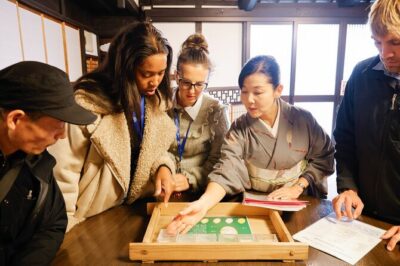
You do not simply write your name on a generic card. You grind the ink yourself and create an original sake label on special paper normally used for authentic labels. That gives the activity a stronger connection to the brewery than a standard tourist craft.
The calligraphy session is a welcome change of pace after the shrine and brewery explanations. It asks you to slow down and make something rather than only look, listen, and taste. Even if your Japanese calligraphy is not perfect, the finished label should serve as a personal reminder of Saijo.
The spring water detail also matters. Water is a major part of sake production, and using the same source associated with brewing helps connect the craft activity to the place. You are not merely decorating paper in a nearby workshop.
The tour information does not specify whether you choose Japanese characters, receive instruction in English, or take home a bottle with the label attached. Ask your guide how the activity will work when you arrive. The stated souvenir is your original label, so handle it carefully and plan space in your luggage for a flat paper keepsake.
Tastings work best when you compare breweries
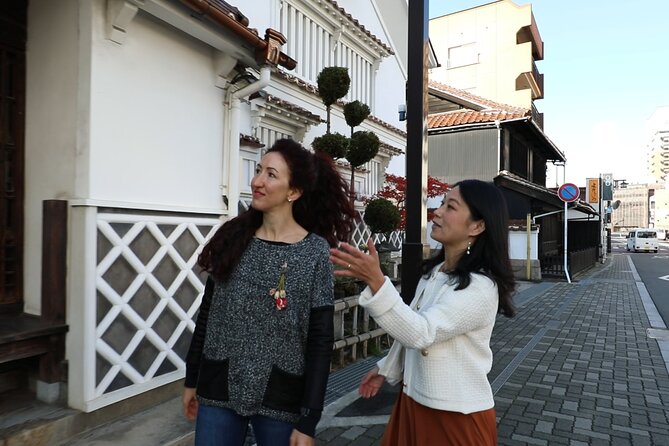
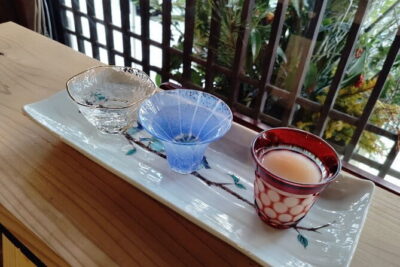
The tour includes sake tastings, though the included tasting fees are listed as partial. During dinner, you also taste and compare sake. This is more useful than trying one drink and declaring that you like or dislike sake.
Each brewery has its own approach and flavor profile. The point is not to find a single winner. It is to notice differences and learn what you prefer. You may find one sake cleaner, sweeter, drier, lighter, or more suited to food than another, but the tour details do not give fixed tasting notes, so the comparison will depend on what is being poured that day.
The tasting sessions also help you understand why sake belongs at the table. A drink that seems sharp or plain by itself may work differently with a hotpot or small appetizer. The dinner pairing gives you a second chance to taste with context.
Plan carefully if you are not able to drink alcohol. Anyone under 20 or unable to consume alcohol should tell the operator when booking. The experience includes substantial food and cultural material, but alcohol is not a minor side feature.
France-ya makes dinner part of the lesson
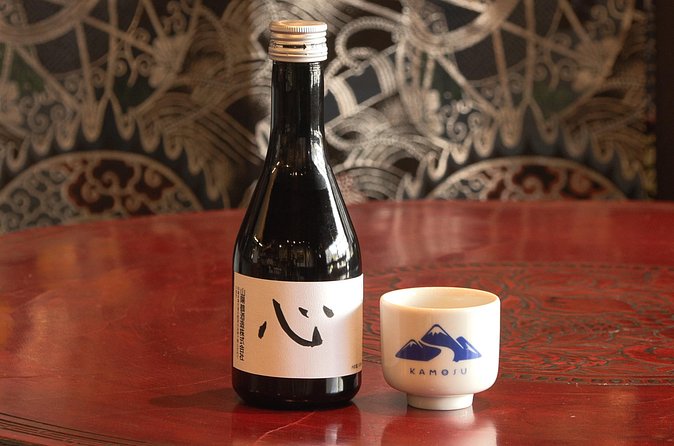
The final stop is France-ya, where you spend about two hours. This restaurant is operated by Kamotsuru Brewing and serves Setouchi cuisine with Kamotsuru sake.
The central dish is bishu-nabe, Saijo’s local hotpot made with sake. A regional dish like this gives the dinner real purpose. Instead of ending with a generic restaurant meal, you get food tied directly to the brewing culture you have been studying all afternoon.
You will also receive appetizers paired with the sake. The pairing matters because food changes how you perceive aroma, sweetness, acidity, and finish. It is one thing to taste a brewery’s sake in a museum shop. It is another to see how it works with a dish built around sake itself.
The two-hour dinner is generous by tour standards. You should have time to eat without rushing and continue comparing the drinks. It also means the afternoon is not a quick sampler. From the 2:00 p.m. start to the expected 7:00 p.m. finish, the experience fills half a day and early evening.
The details do not specify a vegetarian menu, allergy substitutions, or nonalcoholic pairings. If you have dietary needs or cannot drink, ask when booking rather than waiting until dinner. The operator specifically requests advance notice for participants who are under 20 or unable to consume alcohol.
What $286.16 per person buys you
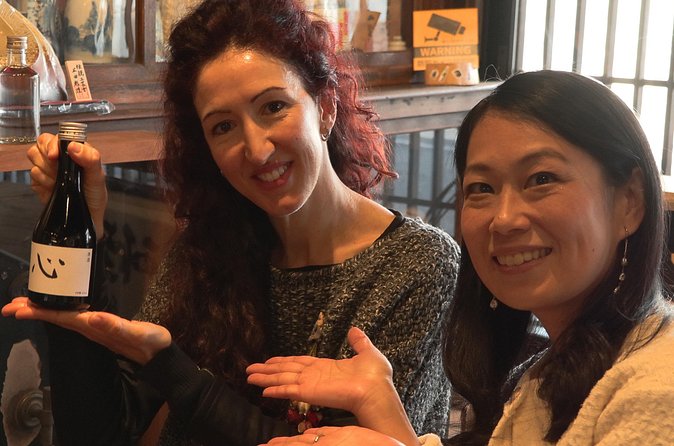
At $286.16 per person, this is a premium half-day experience. The price includes experience fees, food and beverage costs, souvenirs, insurance, and some sake tasting fees. Transportation to the meeting point is not included.
The value depends on how you would otherwise spend the afternoon. If you only want to visit a shop, buy a bottle, and try one sample, this tour is expensive. Saijo offers a more focused way to learn about sake without paying for a private guide, dinner, and special access separately.
I see the strongest value in four elements: the private format, the usually restricted Tenpo Brewery visit, the calligraphy souvenir, and the two-hour meal. The restaurant dinner alone is not the entire justification, but it gives the tour a satisfying finish and lets you taste sake with local food.
The price also covers convenience. Your guide ties the stops together and explains their connection. You do not need to work out which breweries are open, guess which areas are accessible, or decide how to compare the bottles. That convenience is less important for an experienced sake collector who enjoys independent research, but useful if you want a clear introduction.
Because the tasting fees are only described as partial, check what additional purchases or tasting charges might arise. The included food and beverage costs suggest that the planned meal is covered, but a bottle or extra drink bought at a shop would be your own expense.
Timing, meeting point, and private group details
The stated start time is 2:00 p.m., with the first scheduled shrine visit at 2:05 p.m. The meeting point is 12-3 Saijōhonmachi, Higashihiroshima, Hiroshima 739-0011, Japan.
Plan to arrive ready to begin. The tour is tightly timed, with short transfers between the stops and no listed free period for shopping. Since transportation to the meeting point is excluded, allow time to reach Saijo before the start.
The activity ends back at the meeting point after dinner. It is near public transportation, which makes the return easier, but no specific train or bus directions are supplied. Confirm the best route for your travel plans before the afternoon begins.
Only your group participates. That can make the calligraphy session and brewery questions more comfortable, especially if your group has a particular interest in brewing. It also means the cost is charged per person rather than spread across a large shared group.
The tour is described as suitable for most participants, but the alcohol component is central. The confirmation arrives when you book, and free cancellation is available if you cancel at least 24 hours before the local start time. Cancellations or changes made within 24 hours are not refunded or accepted.
Who should book this Saijo sake tour
I would choose this experience if you want more than a tasting counter. It suits a sake enthusiast who wants access to production areas, a first-time drinker who wants clear guidance, and a visitor who values local food and craft activities.
It is also a good fit for a private group with mixed interests. Someone fascinated by brewing can focus on Hakubotan’s factory, while another person may prefer the shrine, calligraphy, or dinner. The five-hour schedule gives each part enough room to matter.
I would hesitate if you do not drink and have little interest in sake culture. The shrine, factory, and calligraphy still offer variety, but tastings appear throughout the afternoon and dinner includes sake comparisons. I would also think twice if your budget is tight or if you prefer to explore independently.
Should you book it?
Book this tour if you want Saijo explained as a living brewing town, not just a place to sample bottles. The Tenpo Brewery visit and Sanyotsuru label-making session give it experiences that are hard to reproduce on your own, while the bishu-nabe dinner ties the day together.
Skip it if you mainly want a cheap tasting or need a fully alcohol-free activity. For the right audience, though, the price buys access, structure, food, and a personal souvenir, all in one private afternoon.
FAQ
How long does the Hiroshima Saijo sake tour last?
The tour lasts approximately five hours, from about 2:00 p.m. until 7:00 p.m.
Where does the tour begin?
It begins at 12-3 Saijōhonmachi, Higashihiroshima, Hiroshima 739-0011, Japan.
Where does the tour end?
The activity ends back at the meeting point after dinner.
How many breweries do you visit?
You visit three breweries: Kamotsuru Sake Brewing Co., Ltd., Hakubotan Brewery, and Sanyotsuru Brewery Inc.
Is the tour private?
Yes. Only your group participates in the activity.
Is transportation included?
No. Transportation to the meeting point is not included. The meeting area is near public transportation.
What happens during the calligraphy activity?
At Sanyotsuru Brewery, you grind sumi ink and create your own sake label on special paper used for authentic sake labels. The activity uses spring water from Mount Ryuo.
What food is served at dinner?
Dinner at France-ya includes bishu-nabe, Saijo’s local hotpot made with sake, along with other appetizers and sake pairings featuring Setouchi cuisine.
Can someone under 20 join the tour?
The tour information says that anyone under 20 or unable to consume alcohol should inform the operator when booking.
What is the cancellation policy?
You can cancel for a full refund up to 24 hours before the experience start time. Cancellations or changes made less than 24 hours before the start are not accepted or refunded.
More Dinner Experiences in Japan
- Osaki, Togoshi Ginza Private Walking Food , Izakaya dinner tour
★ 5.0 · 5 reviews
More Private Sake Tours in Japan
- Private Tea Ceremony and Sake Tasting in Kyoto Samurai House
★ 5.0 · 163 reviews - Private Nagano 1-Day Tour:Snow Monkeys,Zenko-ji,Obuse,Sake,Onsen
★ 5.0 · 71 reviews - Private Sake Brewery Visit and Tasting Tour in Hida
★ 5.0 · 65 reviews - Private Nara Tour and Sake Tasting (Departing from Kyoto/Nara)
★ 5.0 · 40 reviews
Just added around Japan
- Tokyo: Serene Sakura & Sake: An Exclusive Brewery Pairing Lunch★ 5.0 · 2 reviews
- Tokyo Sake Tasting Tour with a Sake Expert★ 5.0 · 7 reviews
- Wagyu BBQ & Sukiyaki with Sake Pairing Experience near Ginza★ 5.0 · 2 reviews
- Japanese Sake Tasting & Wagyu Sukiyaki Cooking Class in Tokyo★ 5.0 · 10 reviews
- Tokyo Izakaya crawl (A tour of 2 izakayas, 1 bar, and a shrine)★ 5.0 · 8 reviews
- Private Tokyo Food Tour – Retro Akabane Izakaya Experience★ 5.0 · 14 reviews
- Tokyo: Learn the Art of Chopsticks in a Cozy Izakaya!★ 5.0 · 2 reviews
- Shinjuku Underground Nightlife Tour: Izakaya Food & Bar Hopping★ 5.0 · 11 reviews
Hiroshima Sake Tours, compared.
Hiroshima Saijo Sake Tasting Tour with visit to 7 Breweries
Read our review →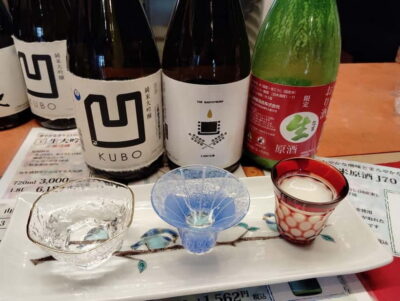
Hiroshima: Saijo Sake Tasting at 7 Breweries Guided Tour
Read our review →Hiroshima Saijo Sake Tasting Tour with visit to 3 Breweries
Read our review →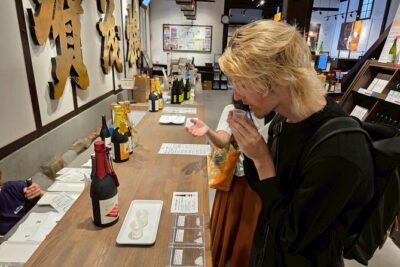
Visit behind the Scenes: Hiroshima Saijo Sake Brewery Tour
Read our review →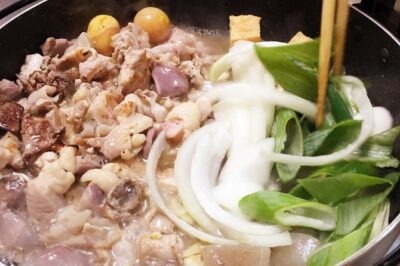
Hiroshima Saijo Sake Tasting Guided Tour – 7 Breweries in 2 Hours
Read our review →
Bouldering, Sake and Food, Local Gem Hiroshima Evening Tour
Read our review →Browse the lists this tour appears in