
REVIEW · SAKE TASTING
Make Otsumami + Sake Pairing (Includes 6-Course Meal)
Osaka’s food culture makes more sense when you work with your hands. In this small class, you prepare six Japanese courses, from wasabi garlic potato salad to fish tatsuta-age and mixed-rice onigiri, then sit down with three styles of sake. Chef Yuki leads the cooking in a relaxed setting.
I like the six-course format, which gives you more than a single recipe and shows how small Japanese dishes fit together. I also like the maximum group size of six. That is small enough for direct help, useful questions, and a calmer meal.
The main thing to consider is the meeting address in Yoshita, Higashiosaka, rather than a famous central Osaka sight. Allow time to reach it, and check the route carefully before booking. At $117.18 per person, the price is fair if you value instruction, a full meal, and sake, but high if you only want a quick cooking demonstration.
Key points
- Six dishes in about three hours: You prepare salads, fried fish, simmered yellowtail, onigiri, and sake pairings.
- Chef Yuki’s relaxed instruction: The class focuses on making the food yourself, not simply watching someone cook.
- Three sake styles: You taste two chilled sakes and one warm sake with the meal.
- A group capped at six: The small size allows for more personal help and conversation.
- A useful taste of Osaka food culture: The menu covers vinegar salads, fried fish, simmered fish, rice, and savory snacks.
- Dietary needs can be discussed in advance: Tell the provider about restrictions before the class so adjustments can be considered.
A six-course introduction to Osaka cooking
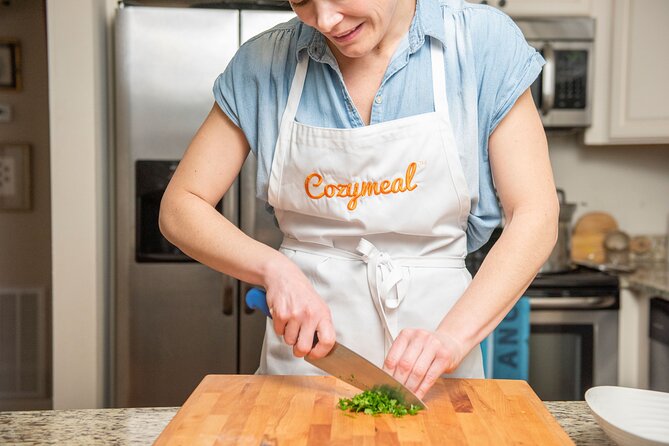
This is not a class built around one showpiece dish. It is a small Japanese meal, prepared course by course, with each recipe showing a different cooking method.
You begin with wasabi garlic potato salad. It sounds familiar at first, but the wasabi shifts it away from an ordinary Western potato salad. You can expect a mild heat and a sharper flavor from the garlic. This opening course should be approachable for most cooks, while still giving you a Japanese flavor combination to take home.
Next comes octopus and cucumber vinegar salad with seaweed. Here, the lesson moves toward the clean, tart style found in many Japanese side dishes. The cucumber brings freshness, the octopus adds chew, and the vinegar dressing keeps the dish light. It is a useful contrast to the richer courses later in the meal.
The third course is fish tatsuta-age with scallion sauce. Tatsuta-age is fish coated and fried until crisp, then served with a sauce that brings freshness and bite. This is one of the more hands-on parts of the menu, since you are working with fish, coating, frying, and sauce preparation rather than simply assembling ingredients.
The fourth course, simmered yellowtail with daikon radish, shows another side of Japanese home cooking. Instead of crisp texture and sharp dressing, the focus is on gentle simmering and the way daikon takes on the flavor of the broth. The dish also gives you a better idea of how Japanese cooking balances fish with vegetables without relying on heavy seasoning.
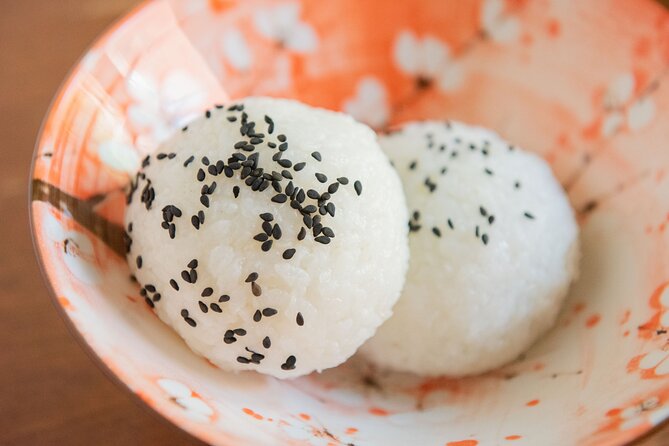
You then prepare mixed-rice onigiri with carrots and shimeji mushrooms. Onigiri is one of Japan’s most practical foods, and making it yourself helps explain why it appears in lunch boxes, picnic meals, and everyday cooking. The mixed rice gives the rice more flavor than a plain version, while the mushrooms add a savory note.
The final course is the sake pairing. You taste three types, with two served chilled and one warm. That arrangement matters because temperature changes the way sake smells, feels, and tastes. This is a tasting built into the meal, not an unrelated drink stop.
More Sake Tastings in Japan:
- Best of Shinjuku: Izakaya Food Tour (4 Stops, 14+ Tastings)
★ 5.0 · 1,863 reviews - 3-Hour Kyoto Insider Sake Brewery Tour with Tastings & Pairings
★ 5.0 · 917 reviews - Kyoto Sake Brewery & Tasting Walking Tour
★ 5.0 · 623 reviews
What Chef Yuki’s teaching adds
A cooking class succeeds or fails on the person at the counter. Here, Chef Yuki is identified as the local chef leading the experience, and the class is designed around making the food feel manageable rather than formal or intimidating.
That relaxed approach matters if you do not cook Japanese food at home. You can ask about the purpose of each ingredient while you work, rather than trying to follow a recipe from a distance. The class also gives you a chance to learn through small corrections, such as how to handle the fish, shape the rice, or balance the dressing.
One of the strongest details associated with Chef Yuki’s class is the practical help. The cooking is described as easy to follow, with useful tips woven into the work. That makes this a better choice for someone who wants techniques to remember after returning home, not just a pleasant meal during a trip.
Do keep expectations realistic. This is a three-hour class, not a professional culinary course. You will learn the featured recipes and related methods, but the supplied details do not promise a full lesson in knife skills, Japanese food history, or sake production.
The menu moves from cool salads to warm comfort food
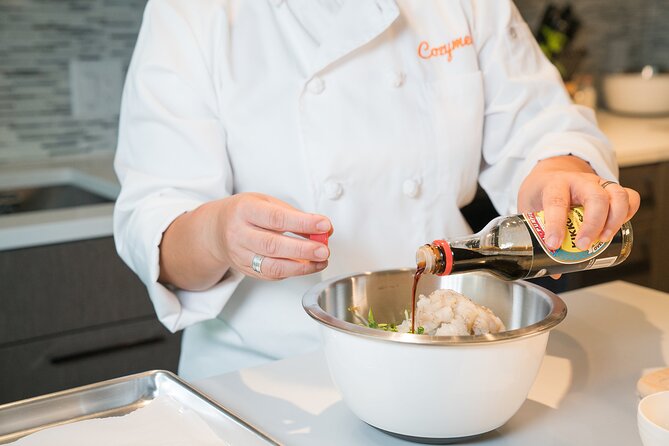
The order of the meal works well. You start with potato salad and octopus salad, both of which should be relatively light and easy to taste while you get used to the kitchen. Then the fish courses add more depth, first through frying and then through simmering.
The progression also helps you compare textures. The potato is soft and creamy. The cucumber and octopus are crisp and chewy. The tatsuta-age brings crunch, while the yellowtail and daikon are tender. Onigiri finishes the food portion with a compact, satisfying rice dish.
I like this range because it gives you a clearer sense of Japanese cooking than a class focused only on sushi or ramen. You see how vinegar, frying, simmering, rice, fish, mushrooms, and seaweed work in different combinations.
The limitation is that the published menu is fixed around six particular courses. If you hoped to learn sushi rolling, ramen broth, or a famous Osaka street food, this is not that class. Its strength is the variety of everyday-style small dishes, not a single iconic specialty.
Why the sake pairing is more than a drink add-on
The sake course gives the meal a useful final lesson. Two sakes are chilled and one is warm, so you can compare the effect of temperature without needing a large tasting flight.
Sake can seem simple when ordered as one anonymous glass with dinner. Tasting three versions side by side makes the differences easier to notice. You may find the chilled pours brighter and more direct, while the warm serving feels softer and more suited to the simmered yellowtail or rice. The exact character of each sake is not specified, so you should not expect a named brewery tour or a technical tasting lecture.
The class information also describes sake preparation and making your own sake selections. Read that as a guided introduction to pairing and serving, not as a brewing workshop. You will be preparing food and learning how to match three sake styles with it.
The experience is BYOB, too. You may bring wine or beer to enjoy during the class. That is useful for anyone in the group who does not drink sake, though the class’s featured pairing remains the central drink experience.
A few more sake tours around Japan worth a look
- Tokyo: Shinjuku Local Bar and Izakaya Guided Walking Tour
★ 4.9 · 1,794 reviews - 1-Day Snow Monkeys, Zenko-ji Temple & Sake in Nagano
★ 5.0 · 1,020 reviews - Tokyo: Shinjuku Local Bar & Izakaya Crawl Tour
★ 5.0 · 890 reviews - Nagano: Snow Monkeys, Zenkoji Temple & Sake Day Trip
★ 4.9 · 833 reviews
A small group changes the pace
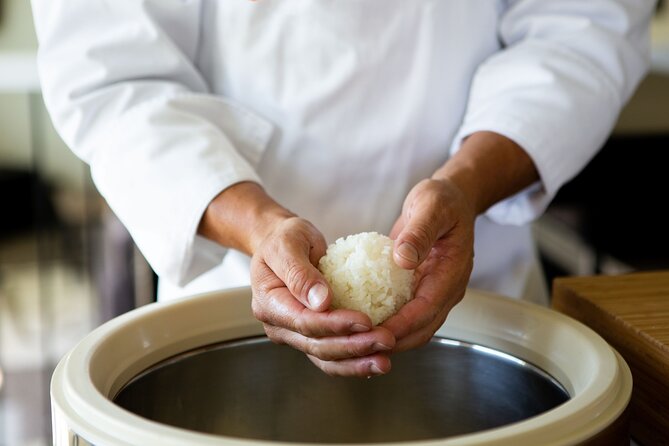
With a maximum of six people, this should feel more like a shared kitchen table than a large demonstration. You have a better chance of seeing what the chef is doing and getting help when a step feels unfamiliar.
Small groups also make it easier to talk while cooking. If you are traveling with a partner, this can be a pleasant joint activity because you work through several dishes together rather than sitting silently through a lecture. The class also suits solo visitors who want a social meal without joining a large tour.
There is one tradeoff. A six-person limit means availability may be narrower than with a big cooking school. The activity also requires a minimum number of bookings, so the provider may cancel if that number is not reached. If this class is important to your schedule, avoid placing it on the day before a flight or a fixed reservation.
The experience lasts about three hours. That is long enough for real participation and a complete meal, but short enough to fit into a day of sightseeing if you plan the timing carefully.
Reaching Yoshita, Higashiosaka
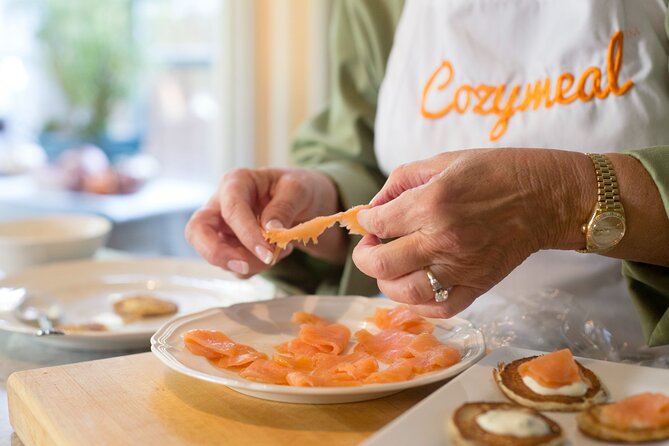
The stated meeting point is Yoshita, Higashiosaka, Osaka 578-0924, Japan, and the class ends at the same place. The activity description also presents it as being in the heart of Osaka, but the specific address is the detail I would use for planning.
That distinction matters. Osaka is a large urban area, and a class outside the central sightseeing zones can take longer to reach than the title suggests. Use the exact address when checking your route, and leave a cushion for finding the meeting point.
The return to the starting location is convenient. You do not need to arrange a second pickup point after the meal, and the mobile ticket makes it easier to keep the reservation on your phone. Confirmation is provided at booking.
Service animals are allowed. The class can also accommodate a variety of dietary needs when you provide advance notice. Do not wait until the cooking begins. Tell the provider about allergies, religious restrictions, or other needs before the date so the kitchen has a chance to plan.
Is $117.18 a fair price?
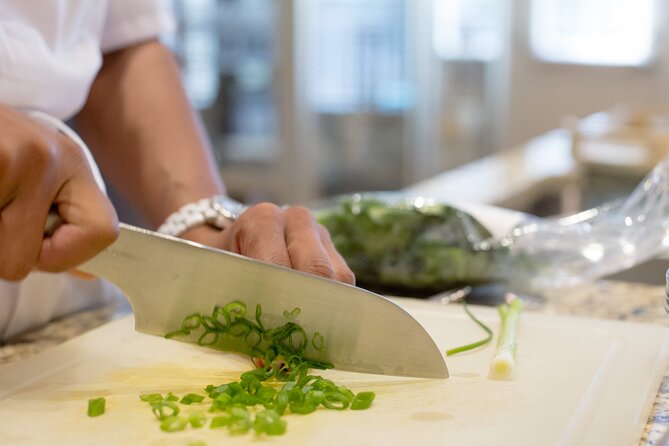
At $117.18 per person, this costs more than buying several inexpensive dishes in Osaka. That comparison is not quite fair, though. The fee includes a full six-course menu, direct instruction, a small group setting, and three sake pairings over about three hours.
I see the best value for someone who wants both lunch or dinner and a skill-based activity. You are not paying only for ingredients. You are also paying for the chef’s time, a limited class size, and the chance to ask questions while you work.
The value is weaker if you are mainly interested in eating. Osaka offers many cheaper ways to sample Japanese food, and this class requires you to spend part of the time preparing it. It is also not the right pick if your main goal is a brewery visit or a formal sake seminar.
For couples, food-focused families, and curious solo visitors, the price can make sense. The combination of meal and lesson gives you something to remember and repeat at home, especially the onigiri, vinegar salad, and fish dishes.
Who will enjoy this class most
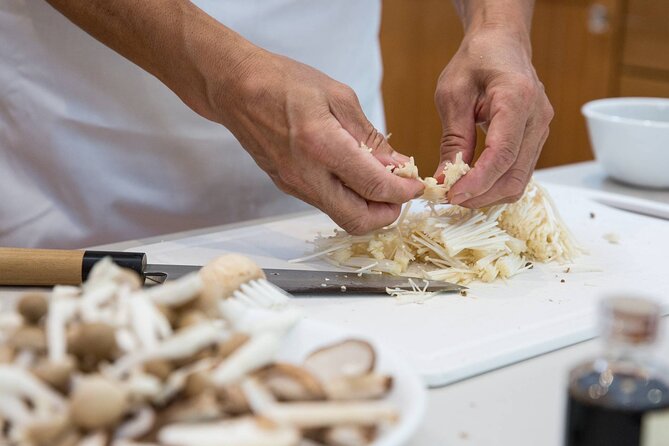
I would recommend it to you if you like learning by doing and want a meal with more range than a single recipe class. It is especially suited to:
- Couples looking for a shared food activity
- Solo visitors who enjoy small-group classes
- Home cooks interested in Japanese side dishes and fish
- Sake drinkers who want to compare chilled and warm servings
- People who prefer a local cooking setting to a large tour
You may want another experience if you need a class in central Osaka, want a child-focused activity, or hope to learn sushi, ramen, or sake brewing. Those subjects are not part of the stated six-course menu.
The class can suit different dietary needs, but you must raise the issue in advance. Since the menu includes fish, octopus, seaweed, mushrooms, and sake, ask for adjustments before confirming your plans.
Should you book this Osaka cooking class?
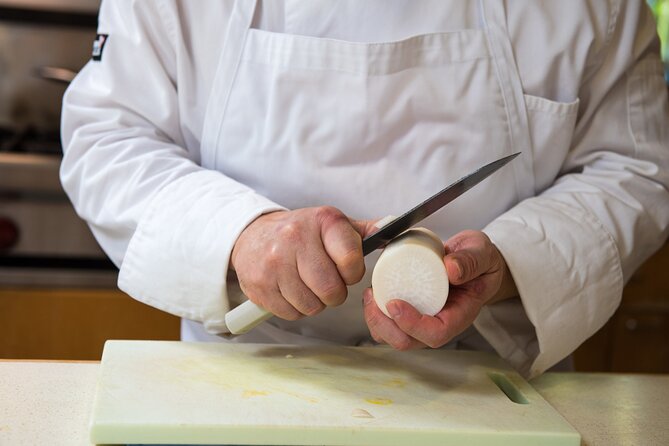
Book it if you want a small, hands-on meal with real variety. The strongest reasons are the six different preparations, Chef Yuki’s practical teaching style, and the three-part sake pairing. You leave with more than a full stomach: you also have several recipes and methods to try again.
Skip it if your schedule cannot handle the trip to Yoshita, if you do not drink and are not interested in the cooking itself, or if you want a class centered on one famous dish. For everyone else, this is a thoughtful way to spend three hours learning how salads, fish, rice, and sake fit into a Japanese meal.
Free cancellation is available up to 24 hours before the start time for a full refund. Changes or cancellations inside that window are not accepted for a refund, and cut-off times follow local time.
FAQ
How long does the cooking class last?
The class lasts approximately three hours and ends at the same meeting point where it begins.
Where does the activity start?
It starts at Yoshita, Higashiosaka, Osaka 578-0924, Japan.
What food will I prepare?
The six-course menu includes wasabi garlic potato salad, octopus and cucumber vinegar salad with seaweed, fish tatsuta-age with scallion sauce, simmered yellowtail with daikon radish, and mixed-rice onigiri with carrots and shimeji mushrooms. The sixth course is a sake pairing.
How many types of sake are included?
Three types are included: two served chilled and one served warm.
How many people can join the class?
The activity has a maximum of six participants.
Can dietary needs be accommodated?
The class is designed to accommodate a variety of dietary needs when you provide advance notice. Contact the provider before the class with your preferences or restrictions.
Just added around Japan
- Tokyo: Serene Sakura & Sake: An Exclusive Brewery Pairing Lunch★ 5.0 · 2 reviews
- Tokyo Sake Tasting Tour with a Sake Expert★ 5.0 · 7 reviews
- Wagyu BBQ & Sukiyaki with Sake Pairing Experience near Ginza★ 5.0 · 2 reviews
- Japanese Sake Tasting & Wagyu Sukiyaki Cooking Class in Tokyo★ 5.0 · 10 reviews
- Tokyo Izakaya crawl (A tour of 2 izakayas, 1 bar, and a shrine)★ 5.0 · 8 reviews
- Private Tokyo Food Tour – Retro Akabane Izakaya Experience★ 5.0 · 14 reviews
- Tokyo: Learn the Art of Chopsticks in a Cozy Izakaya!★ 5.0 · 2 reviews
- Shinjuku Underground Nightlife Tour: Izakaya Food & Bar Hopping★ 5.0 · 11 reviews
Sake Tasting, compared.
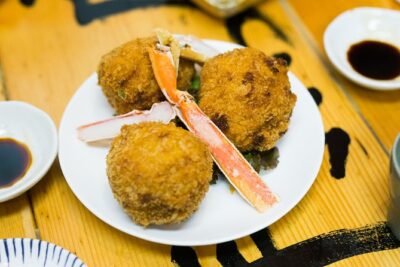
Best of Shinjuku: Izakaya Food Tour (4 Stops, 14+ Tastings)
Read our review →
3-Hour Kyoto Insider Sake Brewery Tour with Tastings & Pairings
Read our review →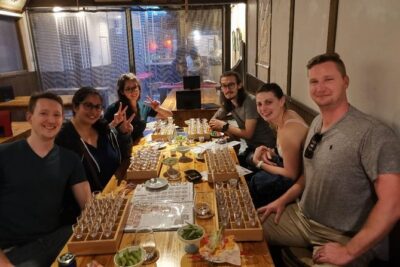
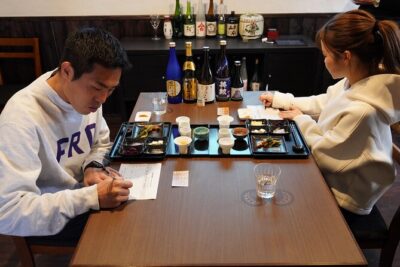
1.5-Hour Kyoto Insider Sake Experience with 7 Tastings & Pairings
Read our review →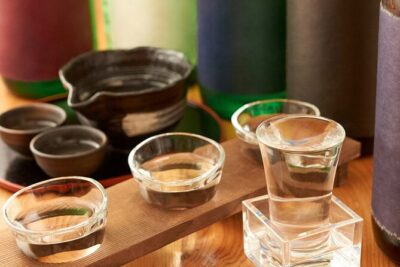
Ramen and Sushi Cooking Class with Sake Pairing Set in Tokyo
Read our review →
Sake Tasting Masterclass in Shinjuku (8+ Varieties with a Pro)
Read our review →
Kyoto: Insider Sake Experience with 7 Tastings and Snacks
Read our review →
Sake Omakase in Tokyo: Guided Tasting by Certified Sommeliers
Read our review →Browse the lists this tour appears in