
REVIEW · TOKYO SAKE TOURS
Experience a western twist on Japanese sake snacks
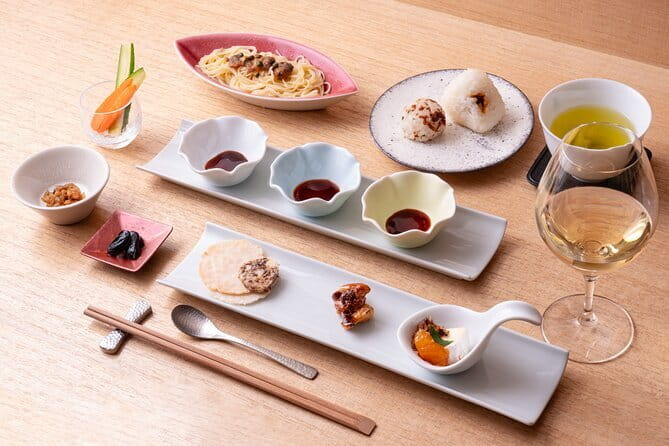
Tsukudani is Japan’s answer to the question of how to make a little seafood go a long way. At Shinbashi Tamakiya, a shop founded in 1782, you taste this soy-simmered specialty in old-fashioned forms, then see how it works with wine, pasta, and nuts. It is a small food experience with a surprisingly wide range.
I like the private format, since you can ask questions and set the pace without a large group crowding the counter. I also like the thoughtful progression from three signature tsukudani varieties to rice, furikake, and Western-style pairings. The main drawback is that 90 minutes is short, and the flavors may be intense if you prefer lightly seasoned food or do not enjoy preserved seafood.
Key points at a glance
- Taste tsukudani at an 18th-century shop: Shinbashi Tamakiya has been serving this traditional food since 1782.
- Compare old and new styles: You sample three signature preparations, then try tsukudani with rice, furikake, pasta, nuts, and other ingredients.
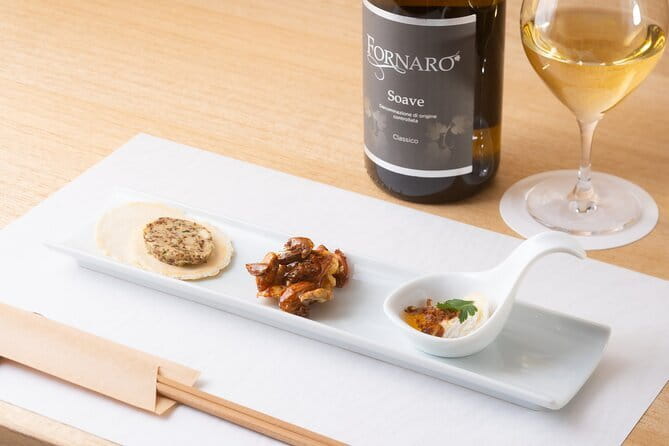
- Pair seafood with sake or wine: Alcoholic drinks are included, giving you a chance to compare different matches.
- Enjoy a private tasting: Only your group takes part, making this more personal than a standard group food tour.
- Choose morning or afternoon: The 90-minute format fits neatly into a day of sightseeing in Tokyo.
- Pay about $36.24 per person: With tastings, brunch, snacks, and drinks included, the price is reasonable for a focused food lesson.
Why tsukudani makes a good Tokyo food experience
Many first-time visitors encounter sushi, ramen, tempura, and grilled meat almost immediately in Tokyo. Tsukudani takes you somewhere less familiar. It is traditional preserved seafood cooked in a sweet-salty sauce, often eaten in small amounts with rice.
That small serving size matters. Tsukudani is not designed as a giant main course. It is a concentrated side dish, and a little can season a bowl of plain rice. The method also reflects an older Japanese approach to keeping food useful and flavorful over time.
At Shinbashi Tamakiya, you get more than a quick sample from a shop shelf. The experience explains the food’s background, introduces the shop’s long connection to tsukudani, and lets you compare several versions. I like this format because it gives you a reason to notice the differences instead of simply being told that one item is traditional and another is modern.
You should come ready for strong seasoning. The soy-based sauce, preserved seafood, and concentrated flavors are part of the point. If you enjoy salty snacks, sake accompaniments, or small savory dishes, you will probably find plenty to like. If you mainly want mild food, this may be a less comfortable choice.
More Sake and Food Tours in Tokyo:
- Best of Shinjuku: Izakaya Food Tour (4 Stops, 14+ Tastings)
★ 5.0 · 1,863 reviews - Ramen and Sushi Cooking Class with Sake Pairing Set in Tokyo
★ 5.0 · 291 reviews - Sake Omakase in Tokyo: Guided Tasting by Certified Sommeliers
★ 5.0 · 239 reviews
Starting at Shinbashi Tamakiya
The tasting begins at Shinbashi Tamakiya in Tokyo’s Minato City, at 4-chōme 25 in Shinbashi. The listed meeting address is Japan, 105-0004 Tokyo, Minato City, Shinbashi, 4-chōme25, Ishida Building 1F.
The shop’s founding date, 1782, gives the opening talk real weight. You are not tasting a modern product dressed up as an old tradition. You are learning about a specialty that has been part of the shop’s identity for centuries, while also seeing how it can fit present-day eating habits.
The experience is private, so your group is the only group taking part. That is useful in a food setting. You can ask what a particular preparation contains, pause to compare flavors, or request another explanation without worrying about holding up a busload of people.
No guide names are provided, so you should not book this expecting a particular named host. The activity is operated by Shinbashi Tamakiya itself, and the focus is the shop, its food, and its method.
The secret sauce and three signature tsukudani
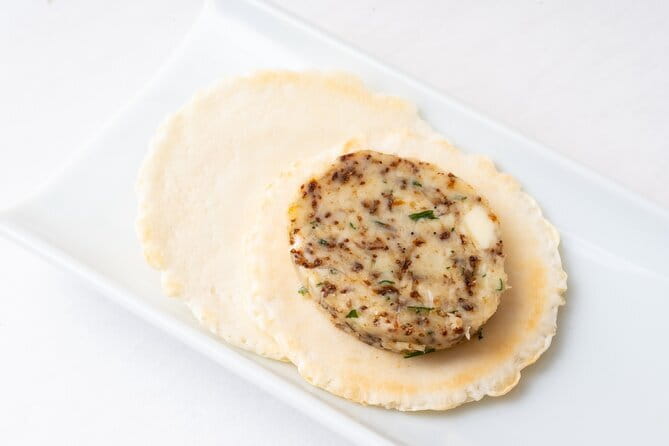
The first tasting section centers on the shop’s secret sauce and three signature tsukudani preparations. The supplied details do not identify the exact seafood varieties, so you should expect the tasting to be guided by the shop’s own selection rather than a fixed list you can choose in advance.
This is likely the most traditional part of the experience. You get to taste the food in the form closest to its usual role, with the sauce doing much of the work. Pay attention to texture as well as flavor. Preserved seafood can vary widely in firmness, chewiness, saltiness, and sweetness, and comparing several samples is more useful than trying just one.
I appreciate that the tasting does not stop at a single signature bite. Three preparations give you a basic point of comparison. One may seem more familiar, while another may have a stronger seafood taste or a different texture. The value here is not quantity. It is the chance to understand why tsukudani has lasted as a food tradition.
You also taste the secret sauce itself. That makes the flavor easier to analyze. Instead of treating the seafood as a mystery snack, you can think about how the sauce seasons and preserves it, then decide which version works best for you.
Rice, furikake, pasta, and nuts
After the traditional samples, the tasting shifts toward everyday and Western-style combinations. You try rice with tsukudani and furikake seasonings, then sample tsukudani with ingredients such as pasta and nuts.
This part gives the experience its western twist. The point is not to replace Japanese food with Western food. It is to show how a strong, salty seafood preparation can be used as a seasoning or accent in dishes you may already understand.
Rice is the natural comparison. It softens the intensity of the tsukudani and shows why the dish has long been eaten in small amounts alongside a staple. Furikake adds another layer of seasoning, so you can consider how different toppings affect the balance of the meal.
Pasta and nuts take the food in a different direction. Pasta offers a Western base with a familiar texture, while nuts add crunch and richness. These combinations may not appeal to everyone, but they are useful because they ask you to think beyond the usual serving method.
I like this portion for practical reasons. If you buy tsukudani after the tasting, you will have ideas for using it beyond a simple rice topping. You might find that the product works better as a small flavor boost than as something to eat by itself.
A few more sake tours around Tokyo worth a look
- Tokyo: Shinjuku Local Bar and Izakaya Guided Walking Tour
★ 4.9 · 1,794 reviews - Tokyo: Shinjuku Local Bar & Izakaya Crawl Tour
★ 5.0 · 890 reviews - Shibuya: Local Bar & Izakaya Crawl
★ 4.9 · 354 reviews - Sake Tasting Masterclass in Shinjuku (8+ Varieties with a Pro)
★ 5.0 · 271 reviews
Sake or wine with a concentrated seafood flavor
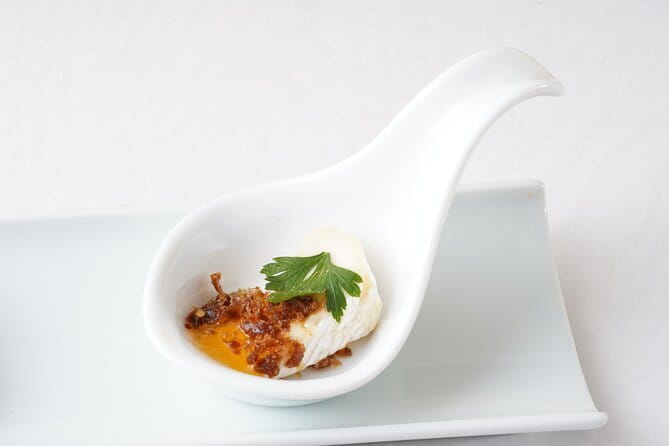
Alcoholic beverages are included, with sake or wine available as the pairing. The choice gives you a chance to compare how different drinks handle salty, sweet, and seafood-heavy flavors.
Sake is the more expected match. It keeps the tasting close to a traditional Japanese drinking-and-snacking pattern. Wine creates the cross-cultural angle promised by the experience and may offer a useful contrast with the sauce and seafood.
The supplied details do not specify the exact bottles, pours, or number of drinks. Treat the pairing as part of the tasting rather than a full drinking session. The activity lasts about 90 minutes, and its main purpose is to understand tsukudani.
If you do not drink alcohol, confirm the available arrangements before booking. The experience includes alcoholic beverages, but no nonalcoholic substitute is specified. That is one of the few practical points I would check in advance, especially if your group has mixed preferences.
A 90-minute format that fits a Tokyo day
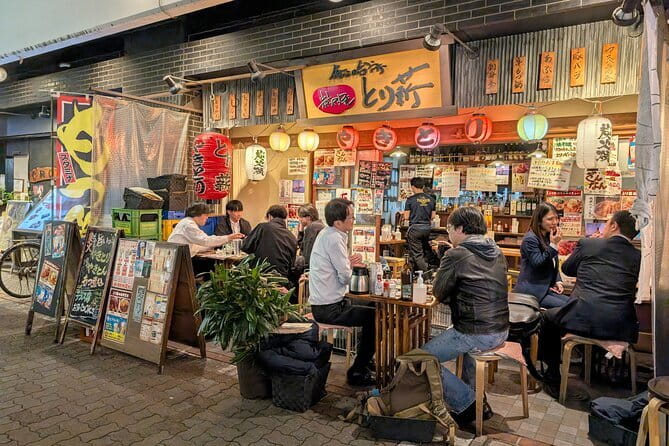
The experience lasts approximately one hour and 30 minutes. That is long enough for an explanation, several tastings, and the rice and modern pairings, but short enough to fit around other plans.
Morning and afternoon tasting times are available. A morning booking can work as a savory brunch, since brunch is included. An afternoon time may fit better between sightseeing stops, especially if you want a snack rather than a full meal.
The fixed length also keeps the experience focused. You are not committing half a day to one specialty food. At the same time, do not expect a sprawling neighborhood tour or a full restaurant meal. This is a seated or shop-based tasting centered on one ingredient family and one historic business.
The activity ends back at the meeting point. That makes onward planning simple, but you should allow extra time to find Shinbashi Tamakiya if you are unfamiliar with the area. The location is near public transportation, though no specific station or route is provided.
Is $36.24 a fair price?
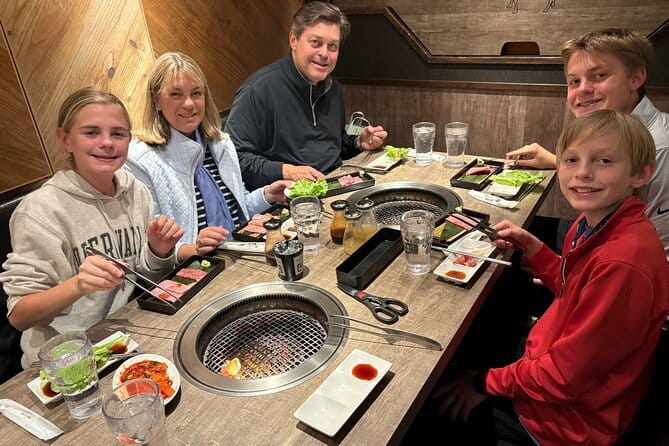
At about $36.24 per person, this is a fair price if you want a guided tasting rather than a quick purchase from a shop. The cost includes all tsukudani samples, brunch, snacks, and sake or wine, so you are not paying only for three small bites.
The private format is the main reason the price can make sense. A lower-cost group tasting might give you similar food, but it would not offer the same control over questions and pace. For a couple, family, or small group with a real interest in Japanese food, that personal attention adds value.
The price is less attractive if you simply want to try tsukudani once and move on. You can find many Japanese snacks at far lower prices, and this is not a full lunch. You are paying for context, comparison, and a guided look at a traditional specialty.
I would also factor in the alcohol pairing. If you enjoy sake or wine, the included drink helps the value. If you will not drink, part of the package may be less useful to you.
Who will enjoy this tasting most?
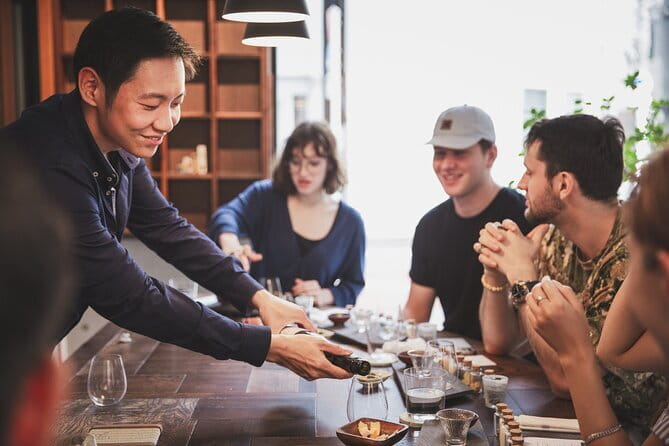
I would recommend this experience to food-focused visitors who have already tried the obvious Japanese specialties and want something more specific. It also suits repeat visitors to Tokyo, since tsukudani is less likely to appear on a standard first-day food plan.
The tasting works well for curious couples and small private groups. You can discuss which preparation you prefer without being separated from the host’s explanation or rushed through a crowded line.
It may also suit people interested in food preservation, Japanese home cooking, or the way traditional ingredients adapt to modern meals. The pasta and nut pairings are especially useful if you want ideas for using Japanese pantry foods outside their usual setting.
I would be more cautious about booking if you dislike seafood, strong salty flavors, or alcohol-centered tastings. The experience includes other ingredients and pairings, but tsukudani remains the main subject. It is not designed as a broad introduction to all Japanese cuisine.
Practical details before you book
Confirmation is sent within 48 hours of booking, subject to availability. The activity is offered as a private tour, and only your group participates.
You can use a mobile ticket. Service animals are allowed, and the experience is near public transportation. The information states that most people can participate, but it does not provide detailed guidance about seating, stairs, or specific mobility needs. If you have access concerns, contact the provider before reserving.
Free cancellation is available if you cancel at least 24 hours before the local start time. Cancellations made inside that window are not refunded, and changes made inside 24 hours are not accepted.
Because the experience is booked an average of 59 days ahead, I would reserve early if your Tokyo dates are fixed. That advance-booking figure does not guarantee that every date fills, but it is a useful sign that this is not always a last-minute activity.
Should you book Shinbashi Tamakiya?
Book it if you want a private, compact food lesson built around a genuine Japanese specialty. The 1782 shop, three signature tsukudani tastings, secret sauce, rice and furikake, plus pasta and nut pairings give you a clear sense of both tradition and adaptation.
At $36.24, the experience offers solid value for a small group that wants explanation and comparison along with food and drinks. I would skip it if you want a substantial lunch, dislike preserved seafood, or need a fully nonalcoholic experience that has already been confirmed.
For the right eater, this is a smart way to spend 90 minutes in Tokyo. You leave with a better understanding of a less familiar food and practical ideas for eating it beyond the shop.
FAQ
Where does the tsukudani tasting take place?
It takes place at Shinbashi Tamakiya, Japan, 105-0004 Tokyo, Minato City, Shinbashi, 4-chōme25, Ishida Building 1F.
How long does the experience last?
The tasting lasts approximately one hour and 30 minutes.
How much does the experience cost?
The listed price is $36.24 per person.
What food and drinks are included?
The experience includes all tsukudani tastings, brunch, snacks, and alcoholic beverages. The drinks are described as sake or wine.
What types of tsukudani will I try?
You will taste three signature tsukudani preparations, along with the shop’s secret sauce. The exact seafood varieties are not specified.
Are modern food pairings included?
Yes. You will try tsukudani with rice and furikake seasonings, as well as with ingredients such as pasta and nuts.
Is this a private activity?
Yes. Only your group participates in the private tasting.
Can I choose a morning or afternoon time?
Yes. Morning and afternoon tasting options are available.
What is the cancellation policy?
You can cancel at least 24 hours before the local start time for a full refund. Cancellations or changes made less than 24 hours before the start time are not accepted.
Just added around Tokyo
- Tokyo: Serene Sakura & Sake: An Exclusive Brewery Pairing Lunch★ 5.0 · 2 reviews
- Tokyo Sake Tasting Tour with a Sake Expert★ 5.0 · 7 reviews
- Wagyu BBQ & Sukiyaki with Sake Pairing Experience near Ginza★ 5.0 · 2 reviews
- Japanese Sake Tasting & Wagyu Sukiyaki Cooking Class in Tokyo★ 5.0 · 10 reviews
- Tokyo Izakaya crawl (A tour of 2 izakayas, 1 bar, and a shrine)★ 5.0 · 8 reviews
- Private Tokyo Food Tour – Retro Akabane Izakaya Experience★ 5.0 · 14 reviews
- Tokyo: Learn the Art of Chopsticks in a Cozy Izakaya!★ 5.0 · 2 reviews
- Shinjuku Underground Nightlife Tour: Izakaya Food & Bar Hopping★ 5.0 · 11 reviews
Tokyo Sake Tours, compared.
Best of Shinjuku: Izakaya Food Tour (4 Stops, 14+ Tastings)
Read our review →
Tokyo: Shinjuku Local Bar and Izakaya Guided Walking Tour
Read our review →

Ramen and Sushi Cooking Class with Sake Pairing Set in Tokyo
Read our review →
Sake Tasting Masterclass in Shinjuku (8+ Varieties with a Pro)
Read our review →
Tokyo Washoku 4-hour Cooking Class: From Market to Table
Read our review →
Sake Omakase in Tokyo: Guided Tasting by Certified Sommeliers
Read our review →Browse the lists this tour appears in