
REVIEW · TOKYO SAKE TOURS
Tokyo: Private Tsukiji Street Food & Sake with Local Guide
Tsukiji is best understood one bite at a time, and this two-hour tour starts with an unexpected bonus: the striking Tsukiji Hongwanji Temple. You get charcoal-grilled wagyu and fluffy tamagoyaki, then move from market stalls to a calm, century-old specialty shop before finishing with sake and scallops.
I especially like the way the guide handles the market crowds and language gap, and I like that the main tastings are included in the $99 price. You are not left guessing which stall is worth your time or reaching for coins at every stop.
The main limitation is time. Two hours passes quickly, and the included food is a tasting rather than a full lunch. You will have room for extra snacks and shopping, but those purchases cost more.
Five things to know before you book
- The temple is part of the experience: Begin at Tsukiji Hongwanji, a memorable stop with Indian stone details, animal carvings, stained glass, and Buddhist meaning.
- Your guide chooses the route: You will sample wagyu, tamagoyaki, tea, beans, peanuts, dashi, sake, and scallops without having to sort through the market alone.
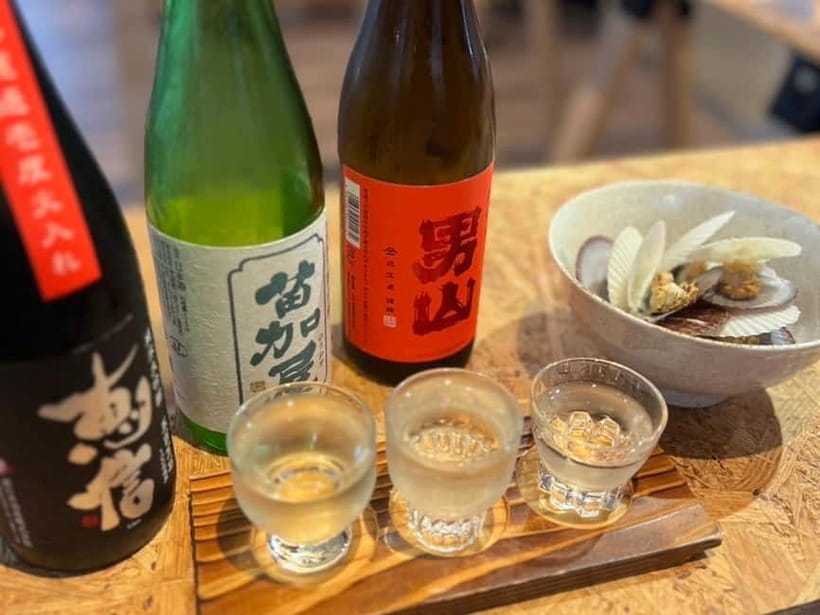
- The sake tasting is substantial: Compare three types plus a special selection, paired with sake-steamed baby scallops.
- The $99 price covers the core bites: Wagyu, tamagoyaki, tea and bean samples, dashi, and the full sake flight are included.
- Plan for walking and legal drinking rules: Wear comfortable shoes, bring identification for sake, and remember that Japan’s legal drinking age is 20.
Start at Tsukiji Hongwanji Temple
Meet your guide in front of the main gate of Tsukiji Hongwanji Temple. Look for someone holding a smartphone that displays AlvaJapan. This simple meeting point is useful in a dense part of Tokyo, though you should allow enough time to reach it before the tour starts.
The first 20 minutes focus on the temple. It is not the usual Kyoto-style wooden Buddhist building. Instead, it combines Indian stone architecture with Japanese Buddhist spirit, creating an unusual first stop before the food begins.
Look for the carved animals, detailed stonework, and stained glass. The building gives you something to consider beyond market prices and photo stops: Tokyo’s religious architecture does not always fit the image many people bring from Japan.
Your guide also explains the temple’s reconstruction after a major Meiji-era fire. That short history lesson gives the building more weight. You are not simply admiring an odd facade. You are seeing a place shaped by disaster, rebuilding, and changing architectural taste.
I like beginning here because it gives the tour a clear rhythm. You start with architecture and context, then move into the sensory rush of Tsukiji. The temple visit is also a useful breather before the market walk.
More Sake and Food Tours in Tokyo:
- Best of Shinjuku: Izakaya Food Tour (4 Stops, 14+ Tastings)
★ 5.0 · 1,863 reviews - Ramen and Sushi Cooking Class with Sake Pairing Set in Tokyo
★ 5.0 · 291 reviews - Sake Omakase in Tokyo: Guided Tasting by Certified Sommeliers
★ 5.0 · 239 reviews
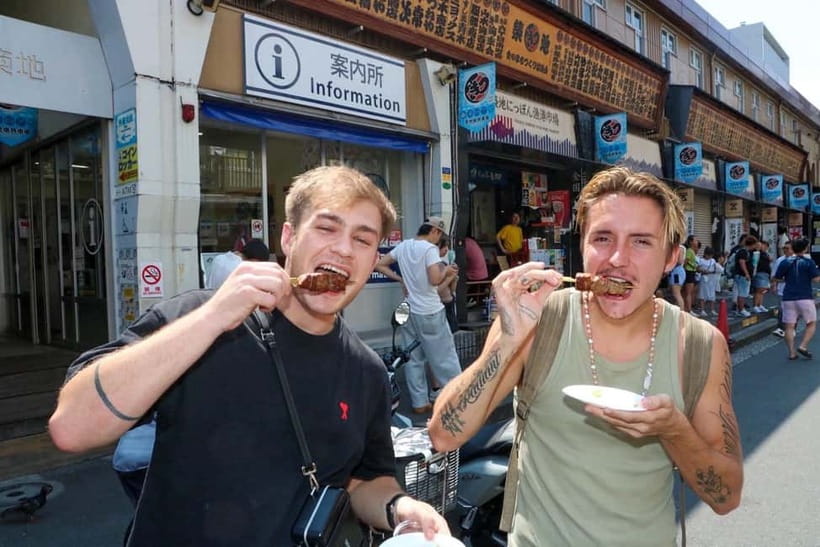
Wagyu and tamagoyaki in the Outer Market
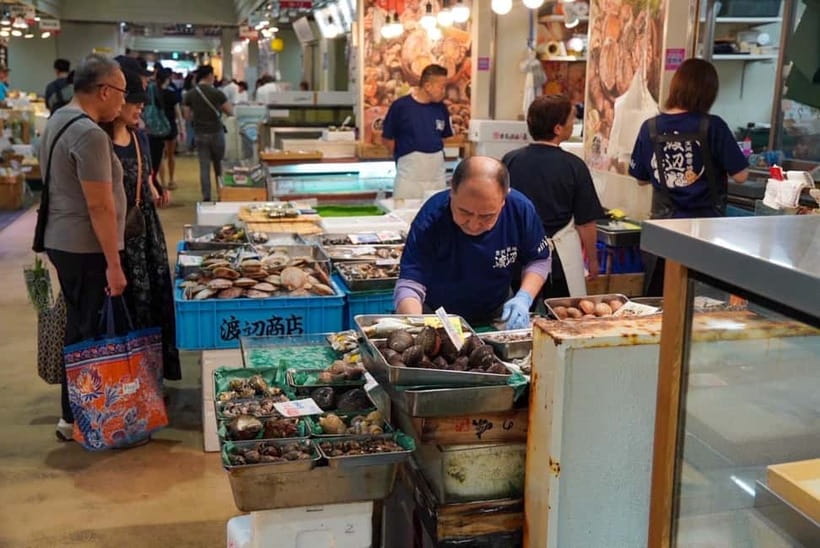
The main food portion takes about 45 minutes, with the wider Tsukiji Outer Market visit lasting around 100 minutes in total. Your guide leads you through an area filled with seafood aromas, food counters, specialty shops, and stalls preparing items as you wait.
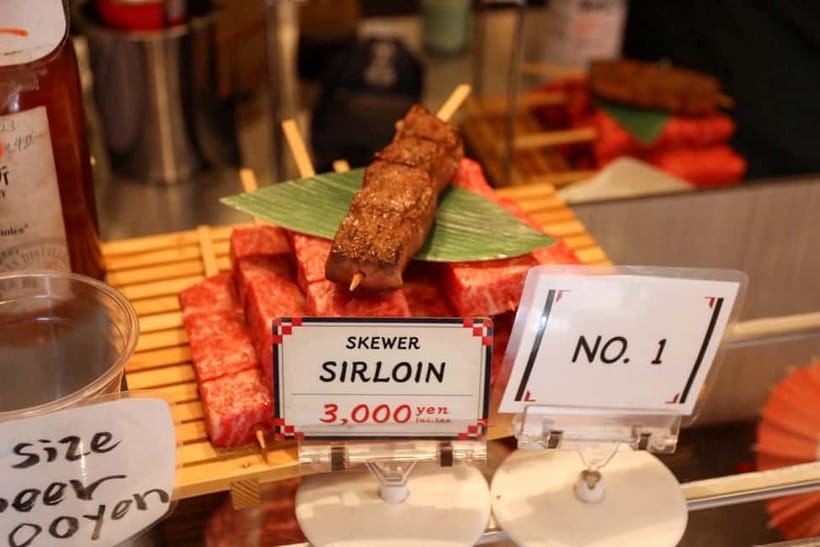
The first included bite is a charcoal-grilled wagyu beef skewer. Expect a small portion, not a steak dinner, but it is a smart format for a walking tour. You get to taste the beef without committing to a long restaurant meal, and the charcoal preparation gives the sample a clear smoky character.
Next comes tamagoyaki, the Japanese rolled omelet. This version is described as fluffy and full of dashi flavor. It is a good contrast to the grilled beef: soft instead of smoky, sweet-savory rather than deeply meaty.
These two bites also show why a guide helps. Tsukiji can tempt you with many stalls, but a short visit cannot cover everything. A guide keeps the route moving and points you toward specific foods instead of leaving you to make hurried choices in a crowd.
You should also understand what the tour does not include. The wagyu skewer and tamagoyaki portion are covered, but any extra food or drink is your responsibility. The market makes it easy to spend more, so carry cash if you plan to add snacks or buy ingredients and souvenirs.
One small point needs clearer handling: make sure you know which foods are included before ordering anything extra. The main covered tastings are listed clearly, but the market has many tempting counters, and a quick question to your guide can prevent confusion.
A quiet tea and dashi stop after the market
After the market’s movement, the tour pauses at a traditional specialty shop that has served customers for more than 100 years. This portion lasts about 20 minutes and changes the mood from open-air food stalls to a more settled taste of old Edo cooking.
You sample chilled Japanese teas, black beans, peanuts, and dashi broth. The tea acts as a palate cleanser, while the beans and peanuts show how much Japanese food culture depends on small, carefully prepared tastes rather than one oversized dish.
Dashi is especially useful to try in this setting. It is a basic savory broth that gives many Japanese dishes their depth, including the tamagoyaki you tasted earlier. Sampling it on its own helps you notice an ingredient that can otherwise disappear inside a finished dish.
This stop is one of the better reasons to take the tour with a guide. A market walk can easily become a string of quick bites. Here, you get a short explanation of ingredients and food traditions, along with a pause to absorb what you have already eaten.
The tea and sample portions are included. If you have food restrictions, tell the guide before or at the start. The guide team has shown care in asking about restrictions and adjusting the experience around personal preferences when possible. Do not assume every item can be changed, but raising the issue early is sensible.
Four sakes and baby scallops to finish
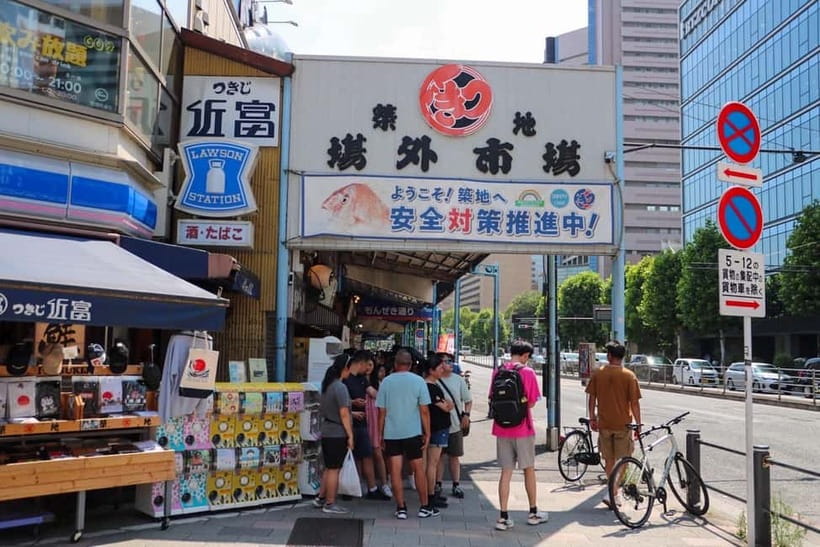
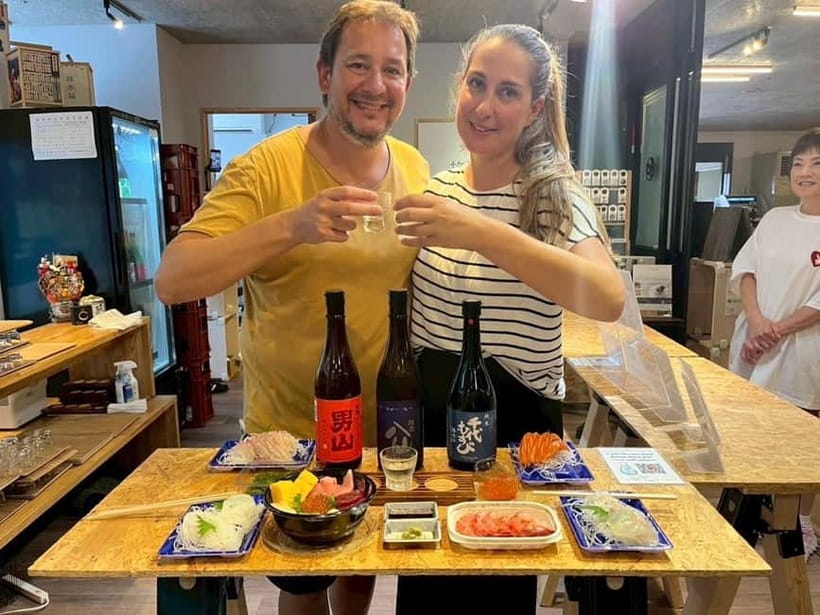
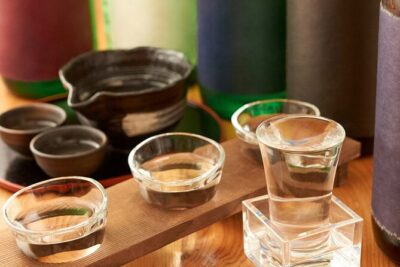
The final 40 minutes are given to a guided sake tasting. You compare three types of sake and one special selection, served with sake-steamed baby scallops.
This is more useful than simply being handed a drink. Comparing several types side by side lets you notice differences in taste and style, even if you know little about sake at the start. The guide explains what you are drinking and helps keep the tasting approachable rather than overly formal.
The scallops make the pairing feel like a small meal instead of a drink-only finish. They also suit the market setting, where seafood is central to Tsukiji’s identity. The combination of sake and scallops gives the last part of the tour a clear purpose.
You must bring identification for the alcohol tasting. Japan’s legal drinking age is 20. If you do not drink, the supplied details do not specify an alternative tasting arrangement, so ask before booking if that matters to you.
The sake portion has been especially well received for its range and relaxed style. The guides are described as friendly, attentive, and easy to talk with, which matters here. A sake tasting can feel intimidating if the explanations are too technical. This one is presented as a guided comparison, not a test.
More Sake Tours with a Local Guide in Tokyo:
- Tokyo: Shinjuku Local Bar and Izakaya Guided Walking Tour
★ 4.9 · 1,794 reviews - Tokyo: Shinjuku Local Bar & Izakaya Crawl Tour
★ 5.0 · 890 reviews - Shibuya: Local Bar & Izakaya Crawl
★ 4.9 · 354 reviews - Tokyo: Shibuya Local Bar & Izakaya Crawl Tour
★ 5.0 · 218 reviews
Why Tsukiji still matters after the move to Toyosu
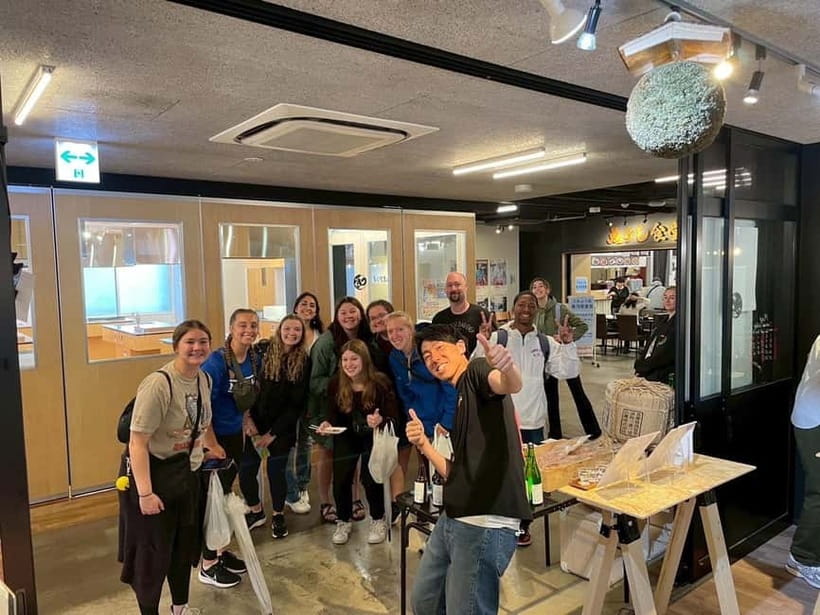
A useful part of the walk is the explanation of Tsukiji’s role in Tokyo and the move of the wholesale fish market to Toyosu. The Outer Market continues as a place for food shops, prepared dishes, ingredients, and local food culture, even though the main wholesale operation moved.
That distinction is important. You are not visiting the old wholesale market itself, and you should not expect the same kind of auction experience associated with Toyosu. Instead, this tour focuses on Tsukiji’s public-facing food streets and the shops that make the area worth visiting.
The guide helps connect the market’s past with what you see now. You learn why the neighborhood remains a major food stop, then taste several examples of its cooking traditions. That context makes the walk more than a hunt for popular snacks.
The market can be crowded, and some paths may feel tight. Comfortable shoes are a must. The tour runs rain or shine, although most stops are covered or indoors, which gives you some protection in poor weather without removing the need for a jacket or umbrella.
Is $99 good value for two hours?
At $99 per person, this is not the cheapest way to buy food in Tsukiji. If your only goal is to eat one skewer and one omelet, you can spend less by exploring alone.
The value comes from the combination. Your fee includes the wagyu skewer, tamagoyaki, tea tasting, black beans, peanuts, dashi broth, three sakes, a special sake, and baby scallops. It also covers a bilingual guide, the temple visit, market orientation, and explanations about Tsukiji and Toyosu.
The sake flight is the biggest factor in the price. Four pours with a seafood pairing would make the final section more than a quick sample, especially for someone who wants an introduction to sake without arranging several stops independently.
You also save time. A first visit to Tsukiji can involve uncertainty about where to go, what to order, and which foods are included. The guide handles that basic planning, then offers lunch suggestions and ideas for the rest of your Tokyo trip before you part ways.
I would call the price fair for a first-time food visitor who wants structure and several tastings. It is less compelling for an experienced Tokyo eater who prefers to wander alone, order freely, and spend the same money on a larger meal.
Who will get the most from this food walk?
This tour suits you if you are visiting Tsukiji for the first time and want a clear introduction without spending half a day planning a route. It also works well for solo visitors, couples, and small groups who enjoy conversation with a local guide.
Food lovers will appreciate the range. You move from beef to omelet, tea, beans, dashi, sake, and scallops, so the experience is not built around one type of dish. The temple adds variety for anyone who wants a little culture with breakfast or lunch.
The pace may suit people who prefer small portions and explanations rather than a large sit-down meal. You should not book it expecting to leave completely full. Think of the included food as a guided tasting, with the option to buy more afterward.
It may not suit you if you want a long market-shopping session. The route includes sightseeing and food stops, but the guide keeps the group moving. Likewise, anyone uncomfortable with walking, crowds, or alcohol should check the details carefully before booking.
The small review sample gave the tour a perfect five-star rating, with particular praise for the friendly guides, personal attention, food choices, and sake tasting. One guest had two guides for a private experience, but the available details do not promise two guides for every booking, so treat that as a pleasant possibility rather than a standard feature.
Practical details that make the morning easier
The tour lasts about two hours. The stated route includes a 20-minute temple visit and roughly 100 minutes around Tsukiji Outer Market, including the tastings.
Transportation to the meeting point is not included. You make your own way to Tsukiji Hongwanji Temple, then meet at the main gate. The guide is identified by the AlvaJapan phone display.
Bring comfortable shoes and some cash. Cash is recommended for extra snacks and market shopping, and those purchases are separate from the included food.
The tour is conducted in English and Japanese, with a live English-speaking guide available. Availability depends on the starting time you select, so check the schedule that fits your day.
Free cancellation is available up to 24 hours in advance, and you can reserve now and pay later. That flexibility is useful when your Tokyo plans are still shifting.
Should you book this Tsukiji tour?
Book it if you want a compact, well-guided introduction to Tsukiji that mixes architecture, food, market history, tea, and sake. The strongest reasons are the included tasting list, the guide’s help with crowded stalls, and the final sake pairing with baby scallops.
Skip it if you want a full meal, a long shopping session, or complete freedom to choose every stall yourself. For most first-time visitors, though, the $99 fee buys more than a few bites. It buys a sensible route through a confusing market and a better understanding of what you are tasting.
FAQ
Where does the tour meet?
Meet in front of the main gate of Tsukiji Hongwanji Temple. Your guide will hold a smartphone displaying AlvaJapan.
How long does the experience last?
The tour lasts about two hours.
What food is included?
The price includes one wagyu beef skewer, one tamagoyaki portion, tea tasting, samples of black beans, peanuts, and dashi broth, plus a sake tasting with baby scallops.
How many sakes are included?
The tasting includes three types of sake and one special selection.
Is the sake tasting included in the price?
Yes. The full sake tasting flight with scallops is included.
Is transportation included?
No. Transportation to and from the meeting point is not included.
Do I need identification?
Yes. Identification is required for the sake tasting, and the legal drinking age in Japan is 20.
Is the tour conducted in English?
Yes. The experience has a live English-speaking guide and is conducted in English and Japanese.
What should I wear and bring?
Wear comfortable shoes because the tour involves walking. Cash is recommended for any extra food, drinks, or shopping beyond the included tastings.
More Food Tours in Tokyo
- Tokyo: The Best of Izakaya in Shinjuku Food & Cultural Tour
★ 4.9 · 221 reviews - [1 Group Only] Tokyo Shinjuku Food Tour for Family
★ 5.0 · 147 reviews - Wagyu Beef and Sake Pairing Foodie Tour in Tokyo
★ 5.0 · 71 reviews - Tokyo: 7 Kinds of Sake Tasting with Japanese Food Pairings
★ 4.9 · 37 reviews
More Private Sake Tours in Tokyo
- Private Tour: Tokyo’s Oldest Sake Brewery and Riverside Walk
★ 5.0 · 25 reviews - Private Tokyo Food Tour – Retro Akabane Izakaya Experience
★ 5.0 · 14 reviews - Tokyo Sake Tour with a Local Guide, Private & Tailored to Your Taste
★ 4.0 · 12 reviews - Private Bar Hopping Tour in Shinjuku, Tokyo
★ 4.5 · 10 reviews
Just added around Tokyo
- Wagyu BBQ & Sukiyaki with Sake Pairing Experience near Ginza★ 5.0 · 2 reviews
- Tokyo: Serene Sakura & Sake: An Exclusive Brewery Pairing Lunch★ 5.0 · 2 reviews
- Tokyo Sake Tasting Tour with a Sake Expert★ 5.0 · 7 reviews
- Japanese Sake Tasting & Wagyu Sukiyaki Cooking Class in Tokyo★ 5.0 · 10 reviews
- Tokyo Izakaya crawl (A tour of 2 izakayas, 1 bar, and a shrine)★ 5.0 · 8 reviews
- Private Tokyo Food Tour – Retro Akabane Izakaya Experience★ 5.0 · 14 reviews
- Tokyo: Learn the Art of Chopsticks in a Cozy Izakaya!★ 5.0 · 2 reviews
- Shinjuku Underground Nightlife Tour: Izakaya Food & Bar Hopping★ 5.0 · 11 reviews
Tokyo Sake Tours, compared.
Best of Shinjuku: Izakaya Food Tour (4 Stops, 14+ Tastings)
Read our review →
Tokyo: Shinjuku Local Bar and Izakaya Guided Walking Tour
Read our review →
Ramen and Sushi Cooking Class with Sake Pairing Set in Tokyo
Read our review →
Sake Tasting Masterclass in Shinjuku (8+ Varieties with a Pro)
Read our review →
Tokyo Washoku 4-hour Cooking Class: From Market to Table
Read our review →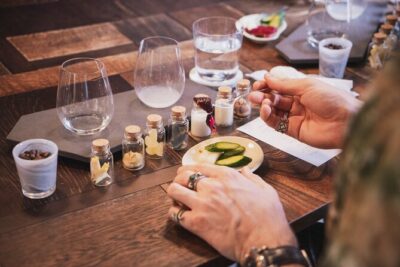
Sake Omakase in Tokyo: Guided Tasting by Certified Sommeliers
Read our review →Browse the lists this tour appears in