
REVIEW · SAKE TASTING
Experience Tasting Fukui’s Local Sake in Lacquered Glasses
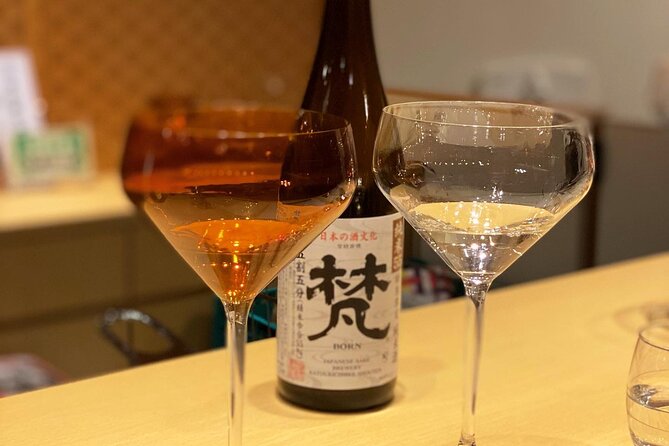
Fukui sake tastes best when you pay attention to the glass as well as the drink. At Kubota Liquor Store, a Sabae shop founded in 1914, you sample local sake from lacquered glasses designed for different styles. The wide-rimmed junmai glass lets flavor spread, while the narrower daiginjo glass holds in aroma.
I like two things right away: the tasting stays focused on Fukui rather than offering a generic lineup, and the three plans let you match the experience to your appetite. The hybrid option gives you four glasses and two snacks, which is a good way to compare styles without committing to a longer tour.
The main consideration is its short length. At about one hour, this is a compact tasting, not a full brewery visit or a broad lesson in Japanese sake. English guiding is available for an additional ¥20,000 per booking, so you should check the language support you need before paying.
Key points at a glance
- A 1914 Sabae liquor store: Kubota Liquor Store gives the tasting a real local setting rather than a temporary bar counter.
- Three tasting plans: Choose two junmai glasses, two daiginjo glasses, or four glasses covering both styles.
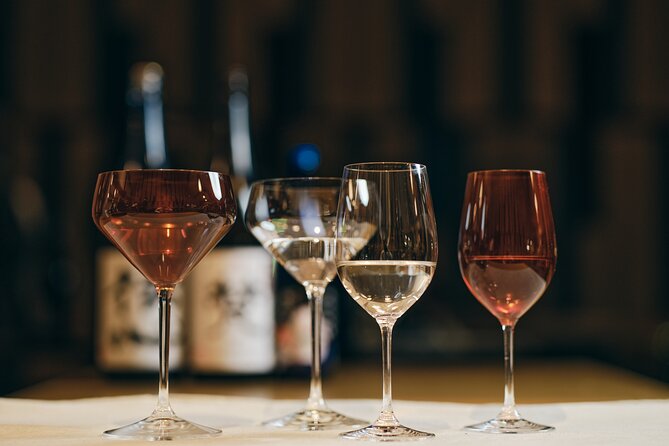
- Purpose-made lacquerware: The glass shape changes with the sake, helping you notice aroma, texture, and flavor.
- Snacks are included: The two single-style plans include one snack, while the hybrid plan includes two.
- Private, one-hour format: Only your group participates, and the activity returns to the starting point.
- A useful small-group price: At $19.51 per person, it is a modest way to sample Fukui sake, though English guiding costs extra.
Why this Sabae sake tasting is different
Many sake tastings focus on the liquid alone. This one gives equal attention to the vessel. That matters because the shape of a glass can affect how aroma reaches your nose and how the drink feels as you sip.
Junmai sake is served in a glass with a wide opening. That broad rim is meant to let you enjoy the full flavor of the sake. Daiginjo is served in a glass with a slightly narrower opening, which helps trap aroma, and its deeper shape is part of the design.
You do not need to be a sake expert to notice the contrast. The experience gives you a simple point of comparison: one glass opens the drink outward, while the other gathers its fragrance. I like this approach because it turns a small tasting into something you can observe, not just consume.
The setting also adds weight. Kubota Liquor Store has served the area since 1914, so you are tasting in a place with a long connection to local alcohol sales. The activity does not promise a brewery tour, production demonstration, or formal history lesson. Instead, its appeal is direct and modest: go to an established local shop, taste Fukui sake, and pay attention to the way it is presented.
More Sake Tastings in Japan:
- Best of Shinjuku: Izakaya Food Tour (4 Stops, 14+ Tastings)
★ 5.0 · 1,863 reviews - 3-Hour Kyoto Insider Sake Brewery Tour with Tastings & Pairings
★ 5.0 · 917 reviews - Kyoto Sake Brewery & Tasting Walking Tour
★ 5.0 · 623 reviews
Arriving at Kubota Liquor Store in Sabae
The meeting point is 1-chōme-1-4 Asahimachi, Sabae, Fukui 916-0025, Japan. The shop is near public transportation, which makes this practical if you are already moving around Sabae without a car.
The activity begins and ends at the same place. That simple arrangement helps you plan the rest of your day, especially if you are fitting the tasting between other stops. You will not need to arrange a separate pickup or figure out where the experience finishes.
This is a private activity, so only your group participates. That is useful if you want to ask basic questions, compare the glasses at your own pace, or avoid tasting in front of a large crowd. It also means the atmosphere may depend on the size and energy of your own group. The experience is not described as a large social tasting where you meet other sake drinkers.
Confirmation is sent within 48 hours of booking, subject to availability. Since the activity is often booked about 32 days ahead, I would not leave it until the last minute if your dates in Fukui are fixed.
The junmai plan: two glasses and a wider opening
The junmai plan includes two glasses of sake and one snack. It is the most focused choice if you want to spend the hour looking at one broad sake style rather than comparing junmai with daiginjo.
Junmai is made without added distilled alcohol, though the supplied details do not identify the exact bottles or flavor profiles served. That means you should not expect a guaranteed list of brands or a fixed tasting menu unless the provider confirms it after booking.
The special glass is the key feature. Its wide opening is designed to let the sake’s full flavor come forward. For you, that creates a clear reason to choose this plan: it is not simply two pours in ordinary stemware. The vessel is part of the tasting.
The included snack gives you something to eat alongside the sake. Only one snack is included with this plan, so it is best viewed as a small pairing rather than a meal. If you want more variety or a larger amount to taste, the hybrid plan makes more sense.
The daiginjo plan: aroma in a narrower glass
The daiginjo plan also includes two glasses and one snack. Its focus is on a style often associated with a more aromatic, refined drinking experience, though the supplied details do not specify the particular daiginjo sake or how it was brewed.
Here, the glass has a slightly narrower opening and a deeper shape. The narrower rim helps hold in aroma, giving you a reason to pause before drinking. You can compare how the scent collects in the glass and how that changes your first impression.
I would choose this plan if aroma is the part of sake you care about most, or if you already know you prefer daiginjo. It is also a sensible choice for a first tasting when you want a simple introduction without comparing too many elements at once.
The drawback is the same as with the junmai plan: two glasses can go quickly. Since the whole activity lasts about an hour, the short format may feel just right for a casual stop, but limited if you want a broad education in sake.
More Sake Tours with a Local Guide in Japan:
- Tokyo: Shinjuku Local Bar and Izakaya Guided Walking Tour
★ 4.9 · 1,794 reviews - Tokyo: Shinjuku Local Bar & Izakaya Crawl Tour
★ 5.0 · 890 reviews - Kyoto: Insider Sake Brewery Tour with Sake and Food Pairing
★ 5.0 · 704 reviews - Shibuya: Local Bar & Izakaya Crawl
★ 4.9 · 354 reviews
The hybrid plan: four glasses for the clearest comparison
The hybrid plan includes four glasses of sake and two snack items. It gives you both junmai and daiginjo, making it the strongest option for anyone curious about the difference between the two styles and the two glass shapes.
This plan has the best built-in logic. You can taste junmai from the wide-opening glass, then daiginjo from the narrower, deeper glass. With four glasses, you may have more than one pour from each style, although the exact sake selection is not stated.
At $19.51 per person for the experience, the hybrid plan may offer the most tasting for the money, but the supplied price does not break down the cost by plan. Check the price shown for your chosen option before booking. The important point is that you get twice the listed number of glasses and snacks compared with either single-style plan.
I would pick hybrid for couples, small groups, or anyone who wants a comparison rather than a quick sample. It also gives you more material to discuss with your companions. Just remember that more sake does not turn this into a long tour. The stated duration remains about one hour.
What the lacquered glasses add to the experience
The lacquerware is not a decorative extra with no practical role. Each glass is shaped for the sake placed in it. The junmai glass has a wide opening for full flavor, while the daiginjo glass narrows slightly and has more depth to retain aroma.
That difference gives you a useful way to slow down. Look at the glass, bring it toward your nose, take a small sip, and notice whether the opening changes how the drink reaches you. You can do this without technical sake knowledge. The design gives you a simple question to consider: how does the vessel affect what I notice?
The details also make the tasting feel tied to the area. You are not just ordering sake from a menu. You are trying Fukui-made sake in glasses created specifically for the purpose. That local connection is one of the strongest reasons to choose this activity over a standard drink at a restaurant.
Still, keep your expectations measured. The available information does not promise a craft demonstration, a lesson in lacquer production, or a chance to buy the exact glasses. Treat the glassware as part of the tasting, not as a separate workshop.
Snacks, pacing, and what you actually receive
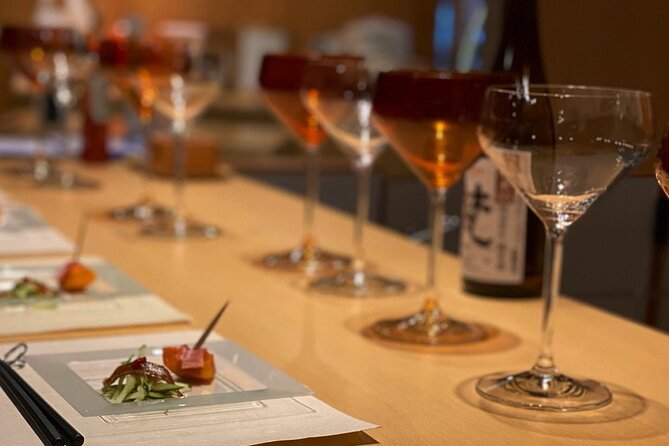
Food is included in every plan. The junmai and daiginjo options each come with one snack, while the hybrid option comes with two snack items.
The snack portion is helpful because even a short alcohol tasting is easier when you have something to eat. It can also give you another point of comparison, though the snack type and pairing details are not provided. You should not book this expecting lunch, dinner, or a full food tour.
The compact format should suit you if you want a gentle introduction before continuing around Sabae. You can taste, compare, and leave without giving up half a day. If you prefer long explanations, several food pairings, or a full production story, you may find the hour too brief.
Because the activity includes alcoholic beverages, plan your pace sensibly. The listed plans provide either two or four glasses, but the supplied details do not state the pour size. You should follow the shop’s serving guidance and avoid treating the tasting as a race.
Price, private format, and overall value
The listed price is $19.51 per person. For a one-hour private tasting with alcoholic beverages and snacks, that is a reasonable entry cost, especially if you want to try local Fukui sake without paying for a full-day excursion.
Value depends on the plan. The single-style options are best for keeping the visit simple and focused. The hybrid option gives you four glasses and two snacks, so it likely makes the most sense if the price difference is modest. Since the exact plan pricing is not provided here, compare the options carefully before checkout.
The private format adds value for some people and less for others. If you want a quiet tasting for your own group, it is a plus. If you hoped to meet other sake drinkers or join a larger guided class, the private setup may feel less social.
English guiding costs ¥20,000 per booking and is not included. That extra fee is significant compared with the base price, particularly for a one-hour activity. If you need a dedicated English guide, include that in your budget from the start. If you are comfortable tasting with the shop’s available communication, the basic activity is far less expensive.
Who should book this experience
I would recommend it most strongly to:
- Sake drinkers who want to focus on Fukui-made bottles.
- First-time tasters who like a clear comparison between junmai and daiginjo.
- Couples and small groups who prefer a private setting.
- Visitors already in Sabae who want a short local activity near public transportation.
- Anyone interested in Japanese tableware and how glass shape affects aroma and flavor.
It is less suitable if you want a brewery tour, a long cultural lecture, a full meal, or a large group event. The experience is also not the right choice if you need extensive English instruction but do not want to pay the additional guide fee.
Most people can participate, according to the activity information. It is also subject to availability, and a minimum number of participants is required. Poor weather can also cause cancellation, with a different date or a full refund offered in that case.
The cancellation terms are friendly if your plans change early. You can cancel up to 24 hours before the start time for a full refund. Changes or cancellations inside that 24-hour window are not accepted for a refund.
My recommendation for choosing a plan
Choose junmai if you want two glasses centered on full flavor and a wide-opening lacquered glass. Choose daiginjo if aroma and the narrower, deeper glass interest you most.
Choose hybrid if you want the experience to teach you something through comparison. Four glasses, two snack items, and both styles give you the clearest sense of why the glassware was designed differently.
The experience has a current 5/5 rating from three published ratings, and the praise centers on how much people enjoyed the sake experience and the willingness to recommend it. That is a small sample, so I would not treat it as proof that every visit will be identical. Still, it fits the activity’s strongest qualities: a clear idea, a local setting, and an easy one-hour format.
Should you book this Fukui sake tasting?
Book it if you want a short, focused taste of Fukui in an established Sabae liquor store. The lacquered glasses give the visit a real point of interest, and the hybrid plan offers a useful side-by-side comparison of junmai and daiginjo.
Skip it if you want a full brewery visit, a substantial meal, or a long English-language class. For most sake fans already passing through Sabae, though, the price, private format, included snacks, and one-hour schedule make this an appealing small stop. Pick your plan based on curiosity: one style for focus, both styles for comparison.
FAQ
Where does the sake tasting take place?
It takes place at Kubota Liquor Store, 1-chōme-1-4 Asahimachi, Sabae, Fukui 916-0025, Japan.
How long does the experience last?
The tasting lasts approximately one hour.
What is the price?
The listed price is $19.51 per person.
What sake plans are available?
You can choose a junmai plan, a daiginjo plan, or a hybrid plan featuring both styles.
How many glasses are included?
The junmai and daiginjo plans each include two glasses of sake. The hybrid plan includes four glasses.
Are snacks included?
Yes. The junmai and daiginjo plans each include one snack, while the hybrid plan includes two snack items.
What is special about the glasses?
The junmai glass has a wide opening to help you enjoy the full flavor. The daiginjo glass has a slightly narrower opening and a deeper shape to help retain aroma.
Is the activity private?
Yes. Only your group participates in this private activity.
Is an English guide included?
No. An English guide costs an additional ¥20,000 per booking.
Can I cancel for a full refund?
Yes, if you cancel at least 24 hours before the experience start time. Cancellations or changes made less than 24 hours before the start time are not refunded or accepted.
Just added around Japan
- Tokyo: Serene Sakura & Sake: An Exclusive Brewery Pairing Lunch★ 5.0 · 2 reviews
- Tokyo Sake Tasting Tour with a Sake Expert★ 5.0 · 7 reviews
- Wagyu BBQ & Sukiyaki with Sake Pairing Experience near Ginza★ 5.0 · 2 reviews
- Japanese Sake Tasting & Wagyu Sukiyaki Cooking Class in Tokyo★ 5.0 · 10 reviews
- Tokyo Izakaya crawl (A tour of 2 izakayas, 1 bar, and a shrine)★ 5.0 · 8 reviews
- Shinjuku Underground Nightlife Tour: Izakaya Food & Bar Hopping★ 5.0 · 11 reviews
- Private Tokyo Food Tour – Retro Akabane Izakaya Experience★ 5.0 · 14 reviews
- Tokyo: Learn the Art of Chopsticks in a Cozy Izakaya!★ 5.0 · 2 reviews
Sake Tasting, compared.
Best of Shinjuku: Izakaya Food Tour (4 Stops, 14+ Tastings)
Read our review →
3-Hour Kyoto Insider Sake Brewery Tour with Tastings & Pairings
Read our review →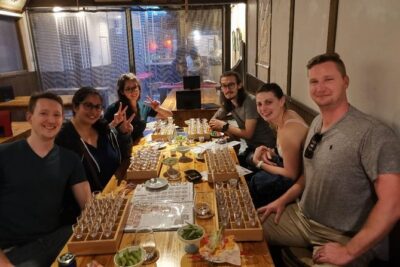
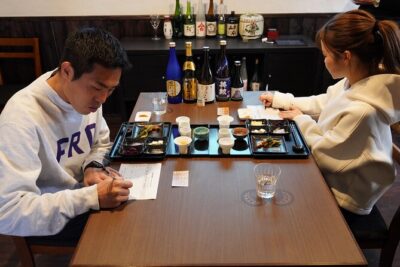
1.5-Hour Kyoto Insider Sake Experience with 7 Tastings & Pairings
Read our review →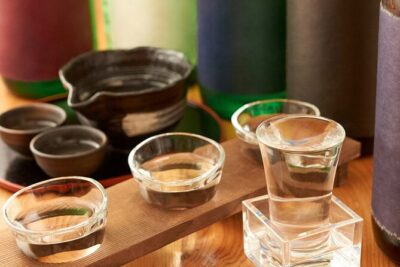
Ramen and Sushi Cooking Class with Sake Pairing Set in Tokyo
Read our review →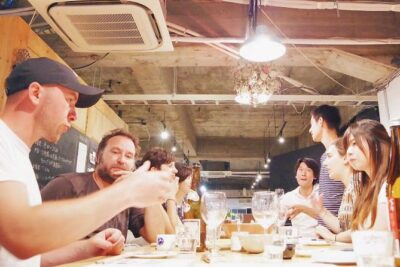
Sake Tasting Masterclass in Shinjuku (8+ Varieties with a Pro)
Read our review →
Kyoto: Insider Sake Experience with 7 Tastings and Snacks
Read our review →
Sake Omakase in Tokyo: Guided Tasting by Certified Sommeliers
Read our review →Browse the lists this tour appears in