
REVIEW · IZAKAYA & BAR HOPPING
EXCLUSIVE Tokyo Secret: Kichijoji Small-Group Food & Bar Hopping
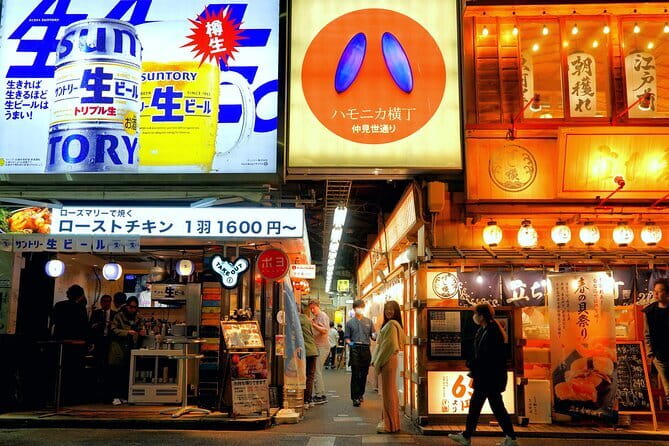
Kichijoji’s Harmonica Yokocho is the kind of Tokyo place you can walk past without realizing what is inside. Behind its narrow entrances are tiny standing bars, family-run izakayas, and food counters where space is tight and the evening moves at a friendly local pace. Hibi guides you through four or five of these spots, including places you would be unlikely to choose on your own.
I especially like the small maximum of seven people, which matters in bars built for only a handful of customers. I also like that six or seven plates of food are included, so you can sample local dishes without guessing at every menu. The main consideration is that drinks are not included, and strict vegans, vegetarians, and people with severe gluten allergies may not be well served by the traditional kitchens.
Key points to know
- Harmonica Yokocho after dark: Walk through Kichijoji’s narrow bar lanes far from the usual Shibuya and Shinjuku circuit.
- Four or five tiny venues: The small group can fit into places that larger outings would have to skip.
- Six to seven food plates included: Dinner covers a range of izakaya dishes and street food.
- Hibi leads the evening: Your guide explains local customs and recommends drinks at each stop.
- Drinks cost extra: Most alcoholic drinks run about 400 to 700 yen each.
- Ages 20 and up: Public tours are for adults, with private tours open to all ages.
Why Kichijoji makes a better bar crawl than central Tokyo
Kichijoji, in Musashino, gives you a different side of Tokyo. It has the old and new character of the city in the same neighborhood, with ordinary residential life, popular shopping streets, and the compact drinking lanes of Harmonica Yokocho.
The area is famous as a desirable place to live, but you do not need to be house hunting to appreciate it. For an evening outing, Kichijoji offers something central tourist districts often lack: a chance to see where Tokyo residents eat and drink when they are not visiting a major sightseeing district.
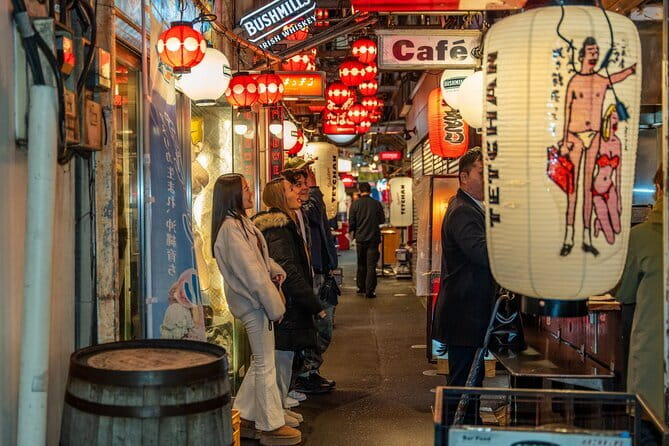
The appeal is not grand scenery or famous monuments. It is the feel of the place. Narrow alleys lead to small counters and standing bars, with each doorway offering a different mood. Some venues may be lively and social, while others may feel more like a family kitchen with a few stools.
I like this setting for a food tour because the neighborhood itself becomes part of dinner. You are not simply moving between restaurants on a broad commercial street. You are learning how a particular part of Tokyo works after sunset.
More Izakaya and Bar Hopping in Japan:
- Best of Shinjuku: Izakaya Food Tour (4 Stops, 14+ Tastings)
★ 5.0 · 1,863 reviews - Tokyo: Shinjuku Local Bar and Izakaya Guided Walking Tour
★ 4.9 · 1,794 reviews - Tokyo: Shinjuku Local Bar & Izakaya Crawl Tour
★ 5.0 · 890 reviews
Meeting Hibi at 6 p.m.
The meeting point is the Baskin Robbins at 1-chōme-4-18 Kichijōji Honchō, Musashino, Tokyo 180-0004. The start time is 6 p.m., and the activity returns to this same meeting point at the end.
Give yourself enough time to find the meeting spot. Kichijoji is served by public transportation, but the first meeting is the one moment when you do not want to be wandering the station area with your phone in hand. Your mobile ticket makes the booking easy to carry, and confirmation is provided at booking.
Hibi is the named provider and guide contact for the experience. The evening depends heavily on the guide because the main value is not a fixed set of famous restaurants. It is knowing which small doors to open, how to order, and how to help you feel comfortable in places that may have little English.
A guide also helps with the social side of Japanese drinking culture. At a tiny izakaya, ordering can feel less obvious than it does at a large restaurant. Hibi explains the customs and the stories behind the food, giving you context instead of leaving you to decode every dish alone.
Harmonica Yokocho, where the evening begins
The first stop is Harmonica Yokocho, a labyrinth of narrow lanes close to Kichijoji Station. The name refers to the way the closely packed alleys and shopfronts resemble the rows of a harmonica.
This is not a polished restaurant district designed for visitors. The small scale is the point. You may pass standing bars and compact izakayas with only a few seats, then pause at a food stall or counter for a dish that is hard to identify from the outside.
The experience is designed around hashigo-zake, the Japanese habit of moving from one drinking spot to another. Instead of ordering a full meal in one place, you have small portions across several stops. That format lets you try more foods and compare the mood of different bars.
The tradeoff is comfort. A narrow local bar may not offer much room, a large table, or a long menu in English. If you prefer a quiet dinner with plenty of personal space, this may feel cramped. If you like food served with a little uncertainty and discovery, the setting is the reason to book.
Four or five small bars, not one large restaurant
The route visits four or five local spots. Exact venues are not specified, which is sensible for a tour built around small businesses and changing local conditions. The selection is presented as a mix of family-run places, standing bars, and intimate izakayas that do not usually appear in English guidebooks.
That variety gives the evening its shape. One stop may focus on a particular dish, another on drinks, and another on the atmosphere of sitting among local regulars. You are not signing up for a formal tasting menu. You are moving through a neighborhood and trying the places that fit the group that night.
The group limit of seven is important here. Many Tokyo food tours can accept large numbers, but a group of 15 or 20 would be awkward in these venues. With fewer people, you have a better chance of sitting or standing together, hearing Hibi clearly, and interacting with people at the bar.
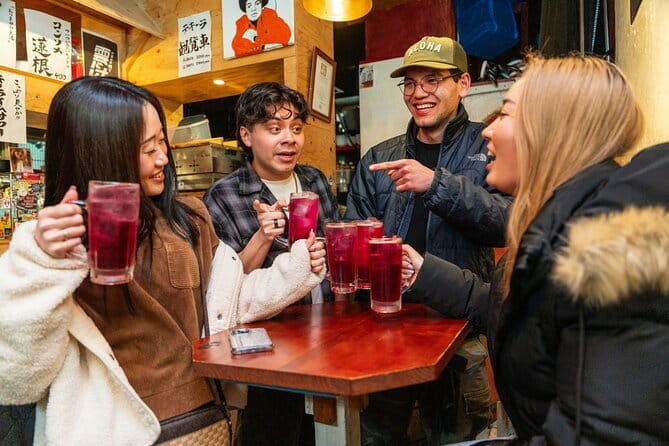
There is also a social side that you should understand before booking. The small bars may encourage conversation with local customers, and the evening can include spontaneous moments such as singing. That possibility adds warmth, but it also means this is not a tightly controlled restaurant itinerary.
More Sake and Food Tours in Japan:
- Kyoto: Insider Sake Brewery Tour with Sake and Food Pairing
★ 5.0 · 704 reviews - Ramen and Sushi Cooking Class with Sake Pairing Set in Tokyo
★ 5.0 · 291 reviews - Kyoto: Insider Sake Experience with 7 Tastings and Snacks
★ 5.0 · 266 reviews - Sake Omakase in Tokyo: Guided Tasting by Certified Sommeliers
★ 5.0 · 239 reviews
Six or seven plates form the dinner
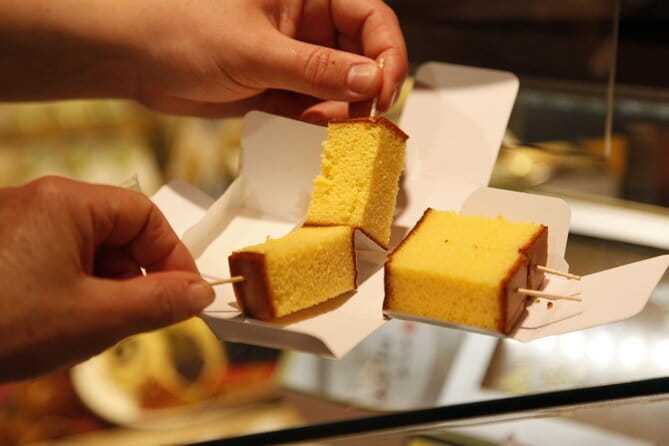
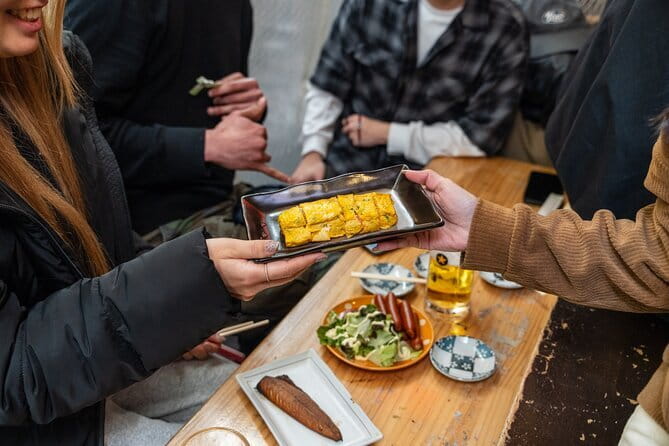
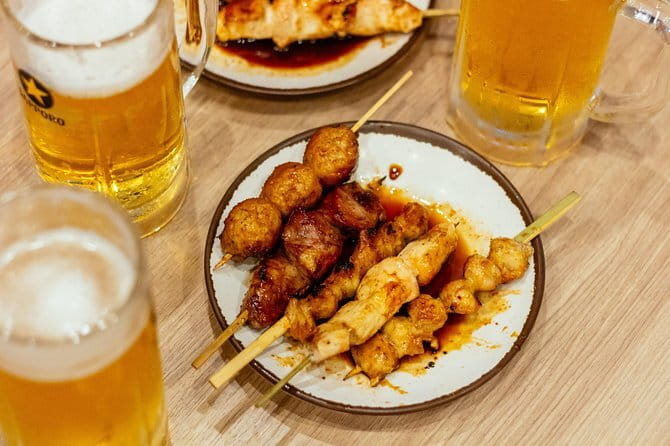
The food portion includes six or seven plates of traditional izakaya dishes and street food from stalls. All food is included in the tour price, which makes the cost easier to judge.
You should expect variety rather than a single large entrée. Izakaya food is made for sharing and sampling, so several small plates can give you a better sense of Japanese drinking-table customs than one substantial meal would. Seasonal offerings and local specialties may appear along the way.
The available information does not promise a fixed menu, and that is worth noting. Dishes can depend on the season, the venues visited, and what each kitchen is serving. Ask Hibi about ingredients as you go, especially if you have food restrictions.
The food inclusion is one of the strongest practical features. You can focus on tasting instead of worrying that every stop will add another full restaurant bill. Still, food included does not mean every possible dietary need can be met. Strict vegan and vegetarian diets, as well as severe gluten allergies or Celiac disease, cannot be accommodated because of traditional kitchen methods.
Flexible dietary needs should be reported at booking. The provider may be able to discuss options, but you should not assume substitutions will be available at every stop.
Drinks cost extra, and that changes the price
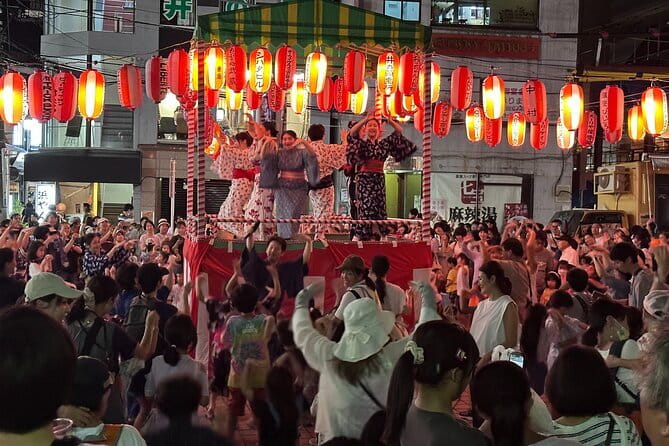
The listed price is $105.42 per person. That covers the guided outing and the food, but not alcoholic drinks or private transportation.
Drinks generally cost 400 to 700 yen each, or about $2.50 to $5. If you have one drink at several stops, the extra cost remains fairly modest. If you order freely at all four or five venues, your final bill will rise beyond the advertised price.
I see the separate drink charge as reasonable for this type of tour. People drink at different speeds, and including alcohol in a fixed price can force nondrinkers to subsidize heavier drinkers. Here, you choose what to order, while Hibi offers recommendations at each bar.
Remember that the tour begins at 6 p.m., so you may not need another full dinner afterward. Six or seven plates should provide a substantial evening of tasting, though how filling it feels will depend on the dishes and your appetite.
Private transportation is not included. You are responsible for reaching the meeting point and returning from it after the activity ends, although the tour itself finishes back at the starting location.
What the guide adds beyond food
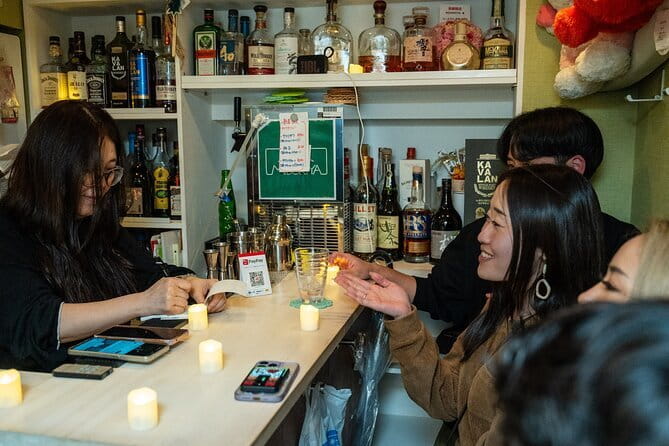
The guide is not simply there to lead you from one address to the next. Hibi explains the background of the neighborhood and the customs of the Japanese drinking table.
That context helps you notice details you might otherwise miss. You learn why people move between bars, how small plates fit into an evening, and how local drinking spaces function. Even a familiar dish becomes more interesting when you understand its place in the meal.
The guide also reduces the stress of entering an unfamiliar bar. You do not have to decide which doorway is welcoming, determine how to order from a short Japanese menu, or work out the etiquette alone. Hibi handles the route and gives recommendations while leaving room for the evening to feel spontaneous.
The social connection is another major strength. The small venues make it possible to meet local customers, and the atmosphere can become surprisingly informal. An impromptu song is not guaranteed, but the experience has enough room for that sort of unplanned moment.
Who will enjoy this Tokyo evening most
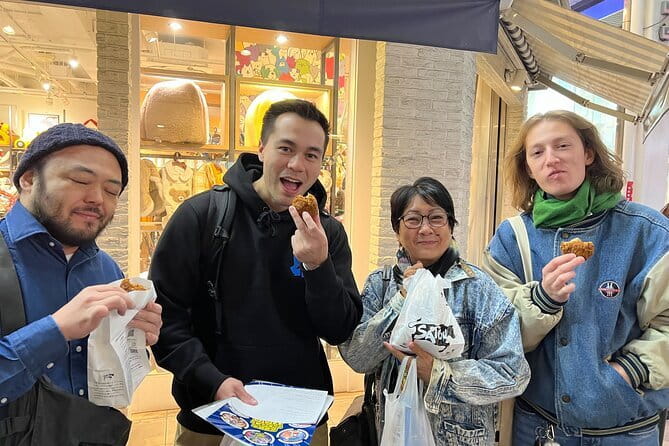
I would choose this outing if you have already seen the major central districts and want a neighborhood night with more local texture. It also suits first-time visitors who want a guide to handle the hard part of small Japanese bars.
Food-focused couples and small groups of friends are a natural fit. The evening gives you something to talk about as you try unfamiliar dishes, compare venues, and decide which drink recommendation you like best.
It is also a good choice for people who enjoy meeting others. The group is small, but the bars themselves can encourage conversation with local customers. The mood may be relaxed and social rather than quiet or formal.
You may want a different experience if you need a guaranteed menu, a spacious dining room, or a fully private setting. The public tour is limited to people age 20 and up, while private tours welcome all ages. Strict dietary restrictions are another reason to ask questions before booking.
Timing, cancellation, and practical planning
The experience is described as approximately three hours, starting at 6 p.m. The route description also refers to a four-hour guided outing, so confirm the expected finish time if you have a late train, another reservation, or a fixed evening plan.
The group maximum is seven people. That is small enough to suit compact venues, but it does not mean you will have every bar to yourself. The format is public unless you arrange a private tour.
The activity is near public transportation, and most people can participate. Service animals are allowed. Wear something comfortable for walking through narrow streets and moving between venues, though no special equipment is required.
Free cancellation is available when you cancel at least 24 hours before the local start time. Cancellations or changes made inside that window are not accepted for a refund.
The tour is booked an average of 34 days ahead, so reserve early if your dates are fixed. That lead time also makes sense for a seven-person outing, since a small group can fill quickly.
Is the $105.42 price worth it?
The value comes from access, food, and guidance rather than transportation or luxury. You receive six or seven food plates, a route through four or five very small venues, and Hibi’s help with ordering and local customs. Drinks are extra, but their typical price is moderate.
If you tried to recreate the evening alone, you could spend less on food and drinks. The harder part would be finding the right places, getting into bars with limited space, and knowing how to order. The tour fee pays for that local access and for an evening that has been shaped around the neighborhood rather than around obvious tourist stops.
I consider the price fair for someone who values small venues and a guide-led introduction to Kichijoji. It is less compelling if your main goal is a cheap dinner or if you already know the area well.
Should you book the Kichijoji bar crawl?
Book it if you want a compact, social evening in local izakayas, with food included and a guide to explain the customs. Hibi’s role, the group limit of seven, and the four or five stops make this more personal than a standard restaurant crawl.
Think twice if you need strict dietary control, dislike tight spaces, or want alcohol included in the ticket. Also check the expected duration because the information gives both an approximate three-hour length and a four-hour route description.
For the right person, this is a smart way to spend an evening beyond Tokyo’s famous tourist corridors. You get a taste of Kichijoji’s everyday drinking culture, several small plates, and the chance for the night to develop its own rhythm.
FAQ
Where does the Kichijoji food and bar tour begin?
It begins at the Baskin Robbins at 1-chōme-4-18 Kichijōji Honchō, Musashino, Tokyo 180-0004, Japan.
What time does the experience start?
The tour starts at 6 p.m.
How long does the tour last?
The stated duration is approximately three hours. The route description also refers to a four-hour guided outing, so confirm the expected finish time if your evening schedule is tight.
What food is included?
Dinner includes six to seven plates of traditional izakaya dishes and street food from food stalls. Food is included in the tour price.
Are alcoholic drinks included?
No. Drinks are not included. They typically cost 400 to 700 yen each, or about $2.50 to $5.
How many people can join the public tour?
The maximum group size is seven people.
Can the tour accommodate dietary restrictions?
Strict vegan, vegetarian, and severe gluten or Celiac allergies cannot be accommodated because of traditional kitchen methods. Flexible dietary needs should be reported at booking so options can be discussed.
More Food Tours in Japan
- Tokyo: The Best of Izakaya in Shinjuku Food & Cultural Tour
★ 4.9 · 221 reviews - [1 Group Only] Osaka Street Food Tour for Family
★ 5.0 · 208 reviews - [1 Group Only] Tokyo Shinjuku Food Tour for Family
★ 5.0 · 147 reviews - Osaka Authentic Local Izakaya Hopping Experience: Food & Drinks
★ 5.0 · 99 reviews
Just added around Japan
- Tokyo: Serene Sakura & Sake: An Exclusive Brewery Pairing Lunch★ 5.0 · 2 reviews
- Tokyo Sake Tasting Tour with a Sake Expert★ 5.0 · 7 reviews
- Wagyu BBQ & Sukiyaki with Sake Pairing Experience near Ginza★ 5.0 · 2 reviews
- Japanese Sake Tasting & Wagyu Sukiyaki Cooking Class in Tokyo★ 5.0 · 10 reviews
- Tokyo Izakaya crawl (A tour of 2 izakayas, 1 bar, and a shrine)★ 5.0 · 8 reviews
- Private Tokyo Food Tour – Retro Akabane Izakaya Experience★ 5.0 · 14 reviews
- Tokyo: Learn the Art of Chopsticks in a Cozy Izakaya!★ 5.0 · 2 reviews
- Shinjuku Underground Nightlife Tour: Izakaya Food & Bar Hopping★ 5.0 · 11 reviews
Izakaya & Bar Hopping, compared.
Best of Shinjuku: Izakaya Food Tour (4 Stops, 14+ Tastings)
Read our review →
Tokyo: Shinjuku Local Bar and Izakaya Guided Walking Tour
Read our review →
Kyoto: Afternoon Japanese Izakaya Cooking Class
Read our review →
Tokyo: The Best of Izakaya in Shinjuku Food & Cultural Tour
Read our review →Browse the lists this tour appears in