
REVIEW · TOKYO SAKE TOURS
Mt FUJI – Panoramic Tour w/ Hoto Lunch, JP Sake & Onsen tatto OK!
The best thing about this small-group Mount Fuji tour is the number of different ways you see Japan’s most famous peak. In one long day, you move from shrine steps and postcard viewpoints to a village lunch, a sake distillery, and a mountain hot spring. The route gives you more variety than a basic photo stop.
I like the group size, capped at eight, because you can ask questions and adjust the pace more easily than on a large coach. I also like the mix of hoto lunch and local sake, two distinctly regional tastes that make the day feel connected to the Fuji area. The catch is the distance: more than 400 kilometers round trip means roughly three and a half hours in transit, and ten hours can feel tiring.
Key points at a glance
- Eight-person maximum: You get a more personal ride and easier conversation with the guide.
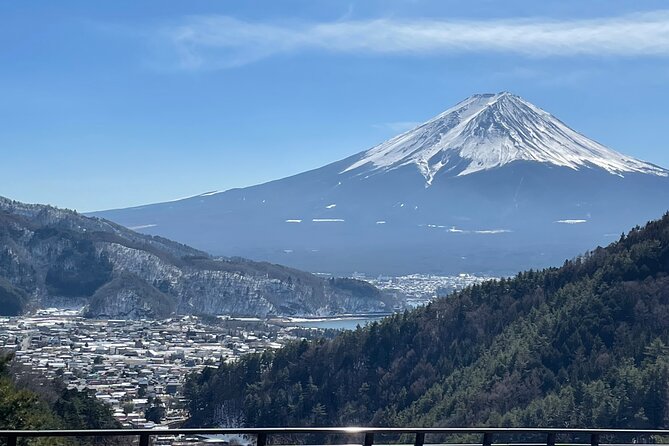
- Several Fuji viewpoints: See the mountain from shrines, Lake Kawaguchi, an old village, and Misaka Pass.
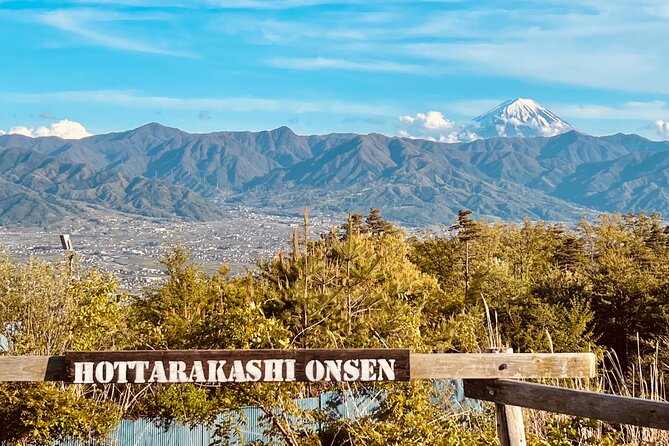
- Hottarakashi Onsen: The optional hot spring stop includes distant Fuji views and is advertised as tattoo-friendly.
- Regional food and drink: Lunch is included, with local hoto cuisine and a visit to Sasaichi Shuzo for sake tasting.
- Optional cultural add-ons: Kimono rental costs ¥2,500, and a tea experience costs ¥500 when available.
- A very full day: The 7:30 a.m. start from Shinjuku and long drive suit people who want to pack in a lot.
Why this Fuji day trip feels different
Many Mount Fuji outings from Tokyo focus on one lake, one shrine, and a crowded shopping stop. This route tries to show you the mountain from several angles while adding small cultural experiences along the way.
You begin at the Shinjuku Post Office at 7:30 a.m. and return to the same meeting point. The air-conditioned vehicle matters here. You will spend a good portion of the day on the road, but you can rest, use the internet, or ask the guide questions between stops.
A group of up to eight is the main practical advantage. Guides including Keiko-san, Yayoi-san, and Ramesh have been praised for answering questions, helping solo guests feel comfortable, and adapting the day to the group. Ramesh has also worked with Kwon-san, a driver noted for safe driving and English translation support.
The route is ambitious. That is both its strength and its weakness. You see much more than you would on a simple Fuji photo tour, but several stops last only 15 to 40 minutes. If you want a slow morning at one shrine or a long onsen session, this may feel rushed.
More Sake and Onsen Trips in Tokyo:
- Private Nagano 1-Day Tour:Snow Monkeys,Zenko-ji,Obuse,Sake,Onsen
★ 5.0 · 71 reviews - 1-Day Winter Tour From Nozawa Onsen: Snow Monkeys, Zenko-ji Temple & Sake
★ 5.0 · 32 reviews - From Nozawa Onsen: Snow Monkeys and Zenko-ji Day Trip & Sake
★ 4.9 · 13 reviews
First views at Nishikatsura and Fujiyoshida
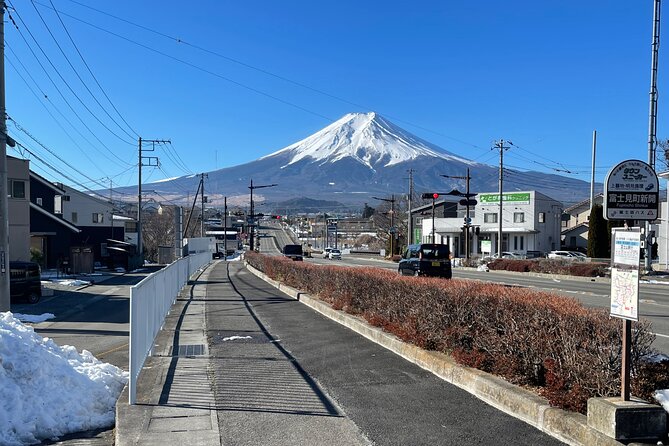
The first stop in Nishikatsura-cho is short, about 20 minutes, but it gives you an early look at Mount Fuji from close range. This is a useful first stop because it lets you check the weather before the day’s main viewpoints. Fuji can disappear behind clouds with little warning, so every clear view counts.
Fujiyoshida follows, also for about 20 minutes. Here you see the town set against the mountain and have a chance to try local Japanese sweets. The stop is less about a major monument and more about the contrast between ordinary town life and the huge cone rising behind it.
I like this early rhythm. You are not dropped straight into a major attraction and hurried through it. You get a quick visual introduction, a taste of local confectionery, and a sense of how towns around Fuji live with the mountain as their backdrop.
Still, keep your expectations sensible. These first stops are brief. If Fuji is hidden by cloud, the town views may not offer much on their own.
Climbing to Arakura Fuji Sengen Shrine
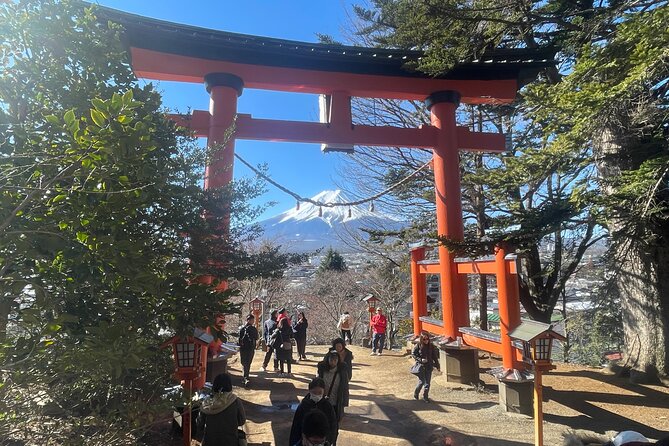
Arakura Fuji Sengen Shrine is one of the day’s main photo stops. You climb to the well-known viewpoint where the five-story Chureito Pagoda, the surrounding town, and Mount Fuji can line up in one frame.
The visit lasts about 50 minutes, and the physical effort is real. The tour asks for a moderate fitness level, and this is the clearest reason why. You need to climb shrine steps, then spend enough time at the viewpoint to take in the scene.
The reward is one of Japan’s most recognizable views. It is also a good place to learn how religious sites and Fuji imagery overlap. The shrine is not just a photo platform, so take a moment to notice the setting before reaching for your camera.
Cloud cover can spoil the classic composition. One past departure had no Fuji view at all, yet the guide still kept the day engaging with other stops and explanations. That is worth remembering: this trip is not a guarantee of a clear mountain.
Saiko Iyashi-no-Sato Nemba and the kimono option
Saiko Iyashi-no-Sato Nemba is a reconstructed traditional village near Lake Saiko. Its old-style buildings provide a slower, more atmospheric setting for Fuji photographs, and you can choose an optional kimono experience for ¥2,500 per person.
The village offers something different from the shrine and town stops. Instead of looking at Fuji from a modern road or a crowded viewing area, you see it framed by traditional buildings and rural scenery.
The kimono option needs careful attention. It is not simply an on-the-spot yukata rental, and availability may be reserved in advance. Confirm the arrangement before counting on it. Some departures may not be able to provide the experience in the way you expect.
You get about 40 minutes here. That is enough for a look around and photos, but not a long cultural workshop. If your main interests are food, the onsen, and mountain views, you may prefer to use this stop as a quick walk rather than pay extra for the costume option.
More Sake Tours with Dinner in Tokyo:
- Wagyu & Sake 8 Course Tasting Dinner in Shinjuku
★ 4.9 · 20 reviews - Osaki, Togoshi Ginza Private Walking Food , Izakaya dinner tour
★ 5.0 · 5 reviews - Tokyo: Serene Sakura & Sake: An Exclusive Brewery Pairing Lunch
★ 5.0 · 2 reviews - Kyoto Sake Brewery Tour with Lunch
★ 4.5 · 12 reviews
Kanadorii and Oishi Park by Lake Kawaguchi
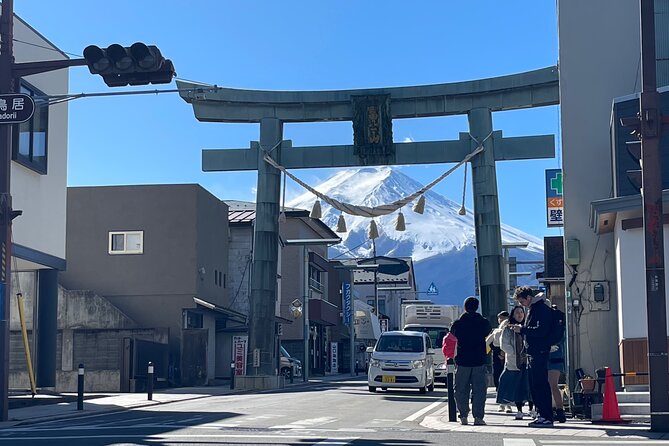
Kanadorii is a short 15-minute stop at the first torii gate connected with the main shrine that guards the base of Mount Fuji. It is a quick photo and orientation point rather than a full shrine visit.
The religious setting gives the day useful context. Fuji is not only a natural landmark. It has long been treated as a sacred mountain, and the torii helps you see the connection between the peak, pilgrimage, and Shinto practice.
At Oishi Park, you get about 20 minutes with Mount Fuji and Lake Kawaguchi in the same view. This is one of the most reliable places for a broad, open photograph when conditions cooperate. The lake adds a different frame from the town and pagoda views earlier in the day.
The time is tight. You may need to choose between walking farther along the park and simply finding a good viewpoint. Keep your camera ready and listen carefully for the departure time.
A soak at Hottarakashi Onsen
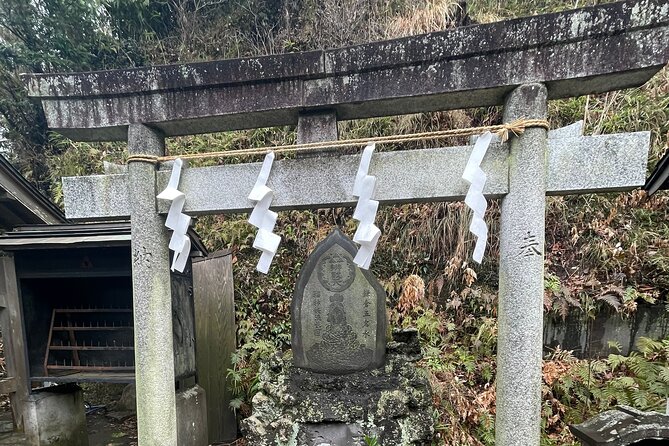
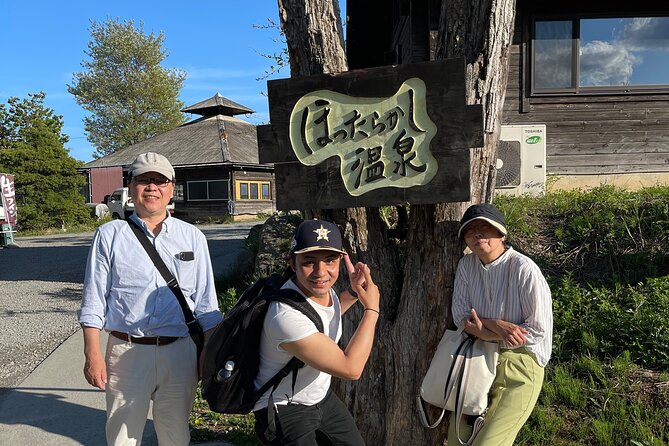
Hottarakashi Onsen is the day’s most relaxing stop. The hot spring sits high above the surrounding area, allowing you to soak while looking toward Mount Fuji from a distance. The visit lasts about 50 minutes.
The onsen entrance is optional and costs ¥900 per person. It is not included in the base price, so bring enough yen or confirm the current payment arrangement before departure. The tour title indicates that the onsen accepts people with tattoos, which makes this stop useful for visitors who often have trouble finding a suitable bath in Japan.
Fifty minutes is enough for a good reset, but it is not a long spa visit. One departure wished for more time here and less time at the village. I understand that preference. After several short photo stops and a long drive, the chance to slow down in a hot spring can feel like the most valuable part of the day.
You should also remember that the best view depends on the weather. On a clear day, the combination of warm water and Fuji in the distance is special. In cloud, the bath remains a bath, but the main visual reward may be missing.
Hoto lunch at Misaka Pass
At Misaka Pass, the tour combines another Fuji viewpoint with lunch in the area. The stop lasts about 70 minutes, and lunch is included in the price.
The regional specialty associated with this part of Yamanashi is hoto, a hearty noodle dish served in a miso-based broth with vegetables. It is simple, filling food, well suited to a cool day in the mountains. If you prefer light meals or are particular about Japanese food, keep in mind that the lunch is fixed enough to be part of the tour’s regional character.
The meal has received mixed personal reactions, so I would not book this trip solely for the food. Think of lunch as practical fuel and a chance to try something tied to the area. The Fuji view from Misaka Pass is the other reason for the stop.
Because the day includes so many locations, lunch is not a long restaurant experience. You eat, look around, and move on. That works well if you want variety, but less well if you prefer unhurried meals.
Local bread at Dangozaka Service Area
The Dangozaka Service Area is a 20-minute stop. You can pick up local breads if you missed breakfast or want something for the ride home.
This may sound like a minor break, yet it serves a practical purpose. The tour begins early, and not everyone wants to eat a full breakfast before leaving Shinjuku. A service-area stop also gives you a chance to stretch after the longer drives.
You should not expect a major attraction here. Treat it as a useful refreshment stop rather than a cultural highlight.
Sake tasting at Sasaichi Shuzo
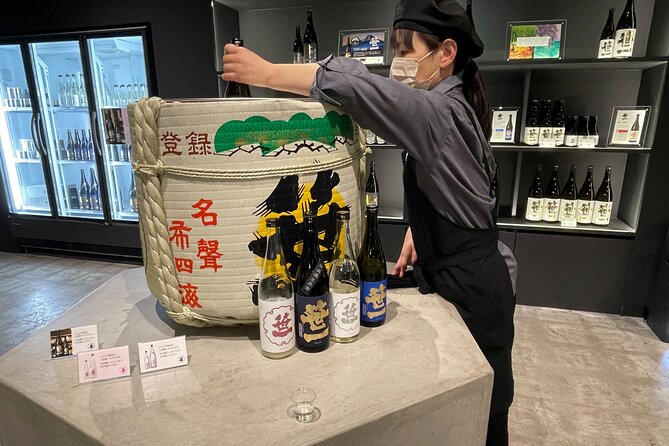
The visit to Sasaichi Shuzo adds a genuine local drink to a day already built around regional food. At the distillery, you sample virgin sake and locally produced liqueurs. The tasting lasts about 45 minutes.
This is one of the more distinctive parts of the experience. You are not only looking at Fuji from a viewpoint. You are also learning how the area presents its own food and drink traditions. The tasting can help you compare styles and decide what you might want to buy, though the supplied details do not promise a purchase allowance or shipping service.
A tea experience is listed as an optional extra at ¥500 per person. Ask the guide how that fits the day before paying for it, since the schedule is already full.
If you do not drink alcohol, this stop may be less important to you. You can still enjoy the setting and explanations, but the main activity is clearly the tasting.
The real cost of a $172 day
At $172 per person, this is not a cheap Mount Fuji outing. The price includes lunch, parking, and an air-conditioned vehicle, but not the ¥900 onsen, ¥500 tea experience, or ¥2,500 kimono experience.
The value comes from the amount packed into one day and the small group. A private car or very small custom tour would often cost more, while a large coach may offer less flexibility and fewer questions with the guide. Here you get multiple viewpoints, a regional meal, sake tasting, and a tattoo-friendly onsen option without arranging separate transport.
The tradeoff is time. Some of your payment is effectively buying convenience, because you do not need to connect trains and buses across the Fuji area. Some of the day is also spent driving, with about 400 kilometers covered on the round trip.
I would budget extra for the onsen, since it is the most appealing add-on for many people. Add the kimono or tea only if those experiences matter to you. The base tour already has plenty of stops.
Weather, fitness, and the long return to Tokyo
The tour requires good weather and may be canceled if conditions are poor or the minimum group size is not reached. If that happens, you are offered another date or a full refund.
This policy matters because Fuji views are central to the experience. A cloudy day does not erase the shrine, village, lunch, or sake tasting, but it can remove the main subject of many stops. If clear views are your only reason for booking, leave room in your Japan schedule for another attempt.
You also need moderate physical fitness for the shrine climb and general movement between stops. The vehicle reduces the strain, but this is not a sit-still sightseeing day.
Free cancellation is available up to 24 hours before the 7:30 a.m. start. Changes or cancellations inside that window are not accepted for a refund.
Who should book this Fuji tour?
I would choose this tour if you want many Fuji viewpoints in one day and do not want to manage regional trains, buses, and taxis yourself. It suits solo visitors, couples, and small groups who value conversation with a guide and a comfortable vehicle.
It is also a strong match if you want more than a photograph. The shrine, traditional village, hoto meal, sake tasting, and onsen create a broader picture of the region.
I would hesitate if you dislike long drives or want to spend an entire afternoon in one place. The schedule moves quickly, and the onsen time may feel too short. I would also think twice if the kimono experience is essential, since it may require advance arrangements and is not included.
Should you book it?
Book it if you want an ambitious, small-group Fuji day with food, sake, shrine culture, and a hot spring rather than a single lookout. The guides have shown they can make the day work even when clouds hide Fuji, and names such as Keiko-san, Yayoi-san, and Ramesh give you a sense of the personal style available on past departures.
Skip it if you want a slow pace, a guaranteed mountain view, or a long onsen visit. For most people who have only one free day from Tokyo, though, the mix is compelling. Just start early, bring money for optional extras, and accept that the road time is part of the bargain.
FAQ
Where does the tour start and end?
It starts at the Shinjuku Post Office, 1-chōme-8-8 Nishishinjuku, Shinjuku City, Tokyo, at 7:30 a.m. The tour ends back at the same meeting point.
How many people can join the tour?
The group has a maximum of eight travelers.
Is lunch included?
Yes. Lunch is included, with a meal served in the Misaka Pass area. The tour is associated with regional hoto cuisine.
Is the onsen included in the price?
No. Entrance to Hottarakashi Onsen is optional and costs ¥900 per person. The tour title indicates that the onsen accepts guests with tattoos.
Are the kimono and tea experiences included?
No. The kimono experience costs ¥2,500 per person, and the optional tea experience costs ¥500 per person.
Can I cancel for a full refund?
Yes, if you cancel at least 24 hours before the experience start time. Cancellations or changes made less than 24 hours before the start are not refunded. If poor weather or an insufficient minimum group size cancels the tour, you are offered another date or a full refund.
More Lunch Experiences in Tokyo
- Sake & Seasonal Delights Sake Pairing Lunch at the Brewery
★ 5.0 · 8 reviews - Snow Monkeys Sake Tasting Zenko-ji and Monzen Terrace Lunch
★ 5.0 · 2 reviews
Just added around Tokyo
- Tokyo: Serene Sakura & Sake: An Exclusive Brewery Pairing Lunch★ 5.0 · 2 reviews
- Tokyo Sake Tasting Tour with a Sake Expert★ 5.0 · 7 reviews
- Wagyu BBQ & Sukiyaki with Sake Pairing Experience near Ginza★ 5.0 · 2 reviews
- Japanese Sake Tasting & Wagyu Sukiyaki Cooking Class in Tokyo★ 5.0 · 10 reviews
- Tokyo Izakaya crawl (A tour of 2 izakayas, 1 bar, and a shrine)★ 5.0 · 8 reviews
- Tokyo: Learn the Art of Chopsticks in a Cozy Izakaya!★ 5.0 · 2 reviews
- Shinjuku Underground Nightlife Tour: Izakaya Food & Bar Hopping★ 5.0 · 11 reviews
- Private Tokyo Food Tour – Retro Akabane Izakaya Experience★ 5.0 · 14 reviews
Tokyo Sake Tours, compared.
Best of Shinjuku: Izakaya Food Tour (4 Stops, 14+ Tastings)
Read our review →
Tokyo: Shinjuku Local Bar and Izakaya Guided Walking Tour
Read our review →
Ramen and Sushi Cooking Class with Sake Pairing Set in Tokyo
Read our review →
Sake Tasting Masterclass in Shinjuku (8+ Varieties with a Pro)
Read our review →
Tokyo Washoku 4-hour Cooking Class: From Market to Table
Read our review →
Sake Omakase in Tokyo: Guided Tasting by Certified Sommeliers
Read our review →Browse the lists this tour appears in