
REVIEW · TOKYO SAKE TOURS
Tokyo Sushi Making Class : Sake Ceremony & Matcha Experience
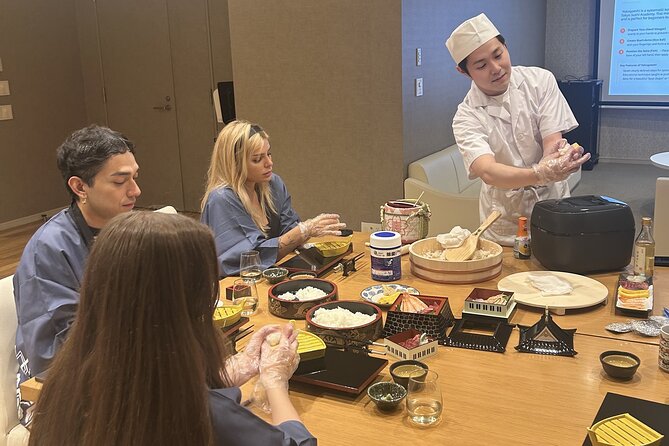
The best part of this Asakusa class is the mix of hands-on sushi work and small Japanese rituals. You begin with kagami-biraki, the ceremonial opening of a sake barrel, then learn to shape nigiri before torching salmon mayo gunkan and whisking matcha.
I like the clear variety: you get classic sushi technique, a playful modern Tokyo bite, and a quiet tea finish. I also like the friendly group energy, with chants of Yoisho! and Wasshoi! turning the lesson into a shared event.
The main consideration is time. Ninety minutes is enough for a cheerful introduction, not a full chef apprenticeship. A group of up to 20 people may also make the lesson feel more social than personal.
Key points at a glance
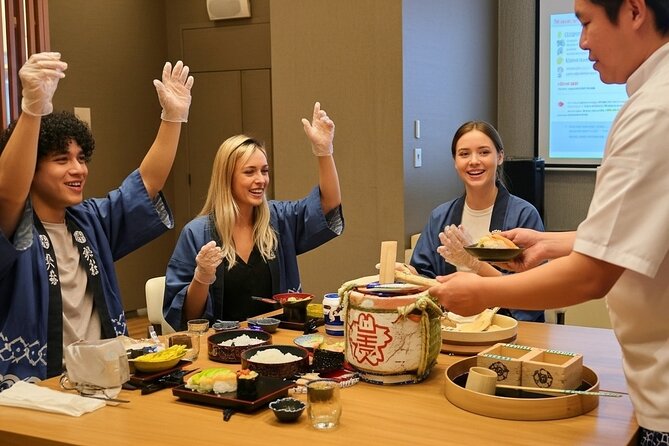
- Kagami-biraki begins the class: Help open a sake barrel and join the Yoisho! toast, with water or warm Japanese tea available instead of alcohol.
- Make 6 to 12 sushi pieces: Learn basic nigiri, rolls, and topping placement with step-by-step instruction.
- Torch a modern salmon gunkan: Add salmon and mayonnaise, then finish the piece with a quick flame for a smoky flavor.
- Whisk your own matcha: End the class by preparing a smooth, foamy bowl of Japanese tea.
- Meet in Asakusa: The class starts and ends at Sushi Meets Matcha, at 1-chōme-10-16 Hanakawado, Taito City.
- Short and easy to fit into a day: The experience lasts about 90 minutes and accepts mobile tickets.
A lively start with sake, ceremony, and a group chant
The class opens with kagami-biraki, a traditional Japanese sake barrel ceremony linked with fresh starts and good fortune. You join the group around the barrel, help open it, and raise a toast after calling out Yoisho, yoisho, yoisho!
This is a smart way to begin. You are not simply sitting down for a cooking lesson. From the first few minutes, you are taking part in a small cultural custom that works best when everyone joins in. The chant gives the opening a light, playful mood, even if you have never tried a Japanese cooking class before.
You do not have to drink alcohol. The alternative is water or warm Japanese tea, so this activity can suit people who avoid sake, children old enough to take part, and anyone who wants to keep a clear head for the rest of the day.
The ceremony is also brief enough not to take over the class. That matters because the main attraction is still the sushi work. Think of kagami-biraki as a cultural welcome, not a formal lecture.
More Cooking Classes in Tokyo:
- Ramen and Sushi Cooking Class with Sake Pairing Set in Tokyo
★ 5.0 · 291 reviews - Tokyo Washoku 4-hour Cooking Class: From Market to Table
★ 5.0 · 253 reviews - Tokyo: Sushi and Ramen Cooking Class with Sake Pairing Set
★ 5.0 · 81 reviews
Learning the basic shape of nigiri
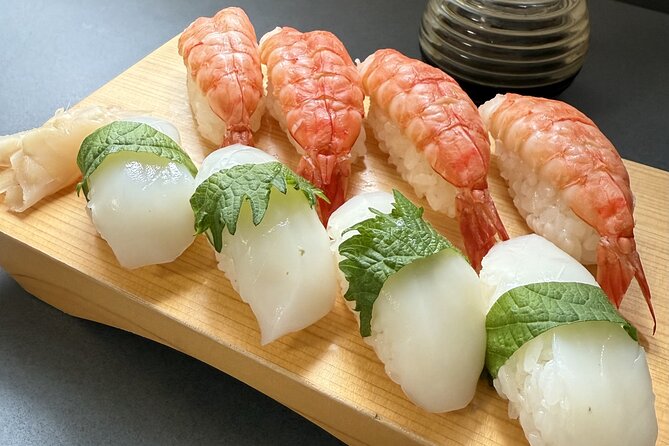
After the opening, the focus shifts to nigiri sushi. The instructor shows you how to shape the rice, handle the toppings, and place each piece neatly. These steps sound simple, but sushi rice has a delicate balance. Press too hard and it becomes dense. Press too lightly and the piece may fall apart.
That hands-on practice is where the class earns its keep. You are not only watching someone make sushi behind a counter. You are handling the rice yourself and seeing how small changes in pressure affect the final shape.
The lesson is built for beginners. You do not need prior sushi-making experience, and the step-by-step format gives you a clear path from loose rice to a finished piece. The goal is not perfect restaurant-level speed. It is to help you make sushi that looks presentable and holds together well enough to eat.
I would pay close attention to the instructor’s hand movements. The most useful details may be small: how much rice to pick up, where to place the topping, and how to turn the piece without crushing it. Since the class lasts only about 90 minutes, you will likely get an introduction to these skills rather than repeated drills.
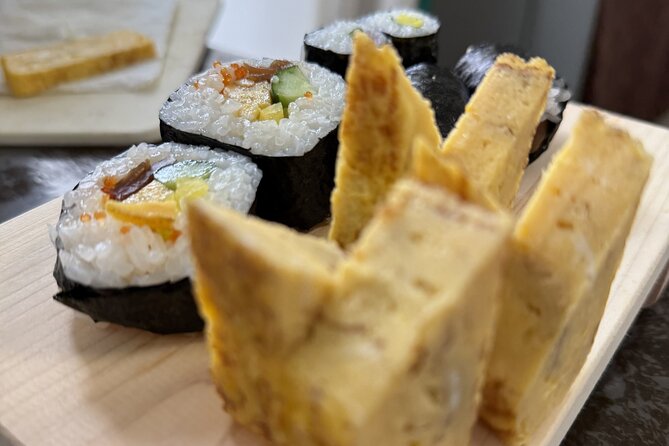
You will make between 6 and 12 pieces in total, including nigiri and rolls. The exact number may depend on the pace of the group and how quickly you work. That range is enough for a satisfying meal-sized tasting, though it is not designed as a large sushi feast.
The modern Tokyo twist: torched salmon mayo gunkan
The most theatrical food moment is the torched salmon mayo gunkan. This is not presented as classic Edomae sushi. Instead, it shows a newer, more casual side of Tokyo sushi culture, the sort of rich, highly flavored combination you might see at a popular contemporary sushi spot.
You pile salmon high, add a zigzag of mayonnaise, and use a torch for a quick finish. The flame gives the topping a smoky edge, while the salmon and mayonnaise bring a creamy, savory bite.
This part should appeal to anyone who likes a little show with their food. The group chants Wasshoi! three times, and photos are taken at the best moment. It gives the class a fun peak after the more careful nigiri practice.
There is a useful contrast here. Nigiri teaches restraint: shape the rice, place the topping, and keep the piece tidy. The salmon gunkan is more relaxed and expressive. You get to see that sushi is not one fixed style, but a broad category that includes both traditional techniques and modern combinations.
If your main goal is to study formal Edomae sushi, keep your expectations in check. The class includes Edomae-style basics, but the torch-finished salmon is deliberately a modern variation. For most first-time participants, that mix is likely a strength. You get technique without losing the fun factor.
A quiet finish with hand-whisked matcha
The final stage changes the pace. You prepare matcha yourself and learn how to whisk it into a smooth, foamy bowl. After the louder chants and the concentration of sushi shaping, this calmer ending gives the class a pleasant balance.
Matcha preparation rewards a gentle, steady motion. The aim is not just to stir the powder into water. Whisking properly helps create the light foam associated with a well-prepared bowl.
This is a useful addition because it gives you another Japanese food tradition to take home. You leave having tried a small sake ceremony, made sushi, and prepared matcha. Those three parts feel distinct, but they fit together well in a single short session.
The matcha segment also helps prevent the experience from becoming one long food demonstration. You change tasks, slow down, and finish with something warm and simple. I would see it as a tasting and cultural introduction rather than a formal tea ceremony, since the activity describes the focus as learning to whisk your own bowl.
More Sake and Food Tours in Tokyo:
- Best of Shinjuku: Izakaya Food Tour (4 Stops, 14+ Tastings)
★ 5.0 · 1,863 reviews - Sake Omakase in Tokyo: Guided Tasting by Certified Sommeliers
★ 5.0 · 239 reviews - Tokyo: The Best of Izakaya in Shinjuku Food & Cultural Tour
★ 4.9 · 221 reviews - [1 Group Only] Tokyo Shinjuku Food Tour for Family
★ 5.0 · 147 reviews
Why the 90-minute format works, and where it falls short
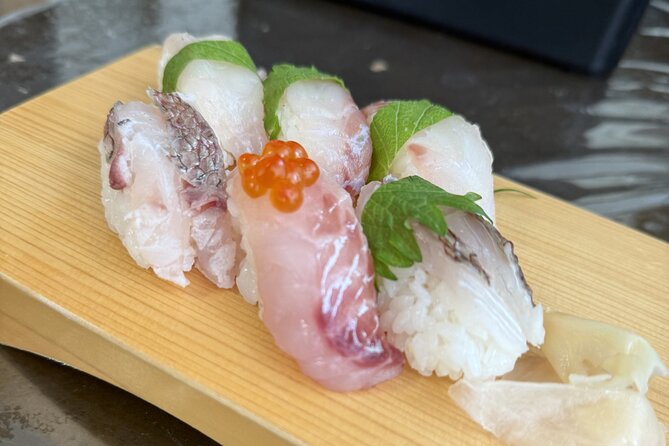
A 90-minute class fits neatly into an Asakusa sightseeing day. You can schedule it between other plans instead of giving up half a day. Since the experience begins and ends at the same meeting point, you do not need to arrange transport between separate stops.
The short length also keeps the energy up. There is enough time for several activities, but not so much that the lesson becomes repetitive. For a first taste of Japanese cooking, that is a sensible format.
The tradeoff is depth. You will not have time to study fish selection, rice seasoning, knife work, or advanced sushi presentation in detail. The class concentrates on shaping and assembling pieces, with the instructor guiding you through the essential movements.
A group of up to 20 people is another practical factor. The class can feel social and welcoming, especially during the chants and barrel opening. It may be less suited to you if you want one-on-one coaching or a quiet, highly technical workshop.
I would book this for the atmosphere as much as the food. The group format is part of the experience. You are meant to make, cheer, photograph, and eat together.
The Asakusa setting and meeting point
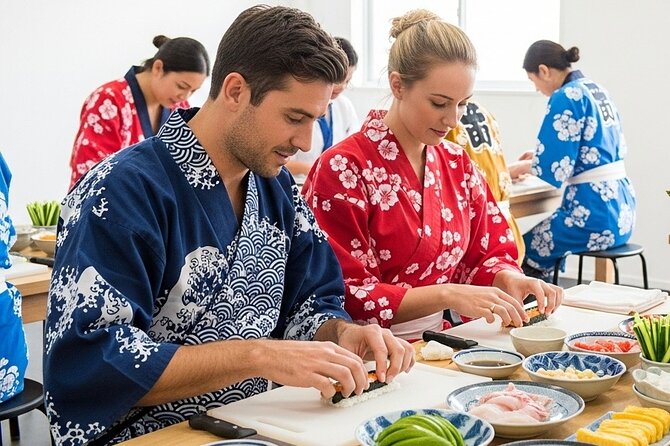
The class meets at Sushi Meets Matcha, located at 1-chōme-10-16 Hanakawado in Taito City, Tokyo. It is near public transportation, which makes it a practical choice when you are already spending time in Asakusa.
The address matters because Asakusa is one of Tokyo’s most useful areas for combining a scheduled activity with sightseeing. You can place this class into a day that includes other nearby plans, but the activity itself does not include additional sightseeing stops. The class starts and ends at the meeting point.
Allow yourself enough time to find the exact location. A mobile ticket is accepted, and confirmation is sent when you book. Since the activity returns to the starting point, you finish with a clear base for your next plan.
The supplied information does not give a recommended arrival time, so I would avoid cutting it close. A hands-on class has a fixed start, and joining late could mean missing the barrel ceremony or the first sushi instructions.
Is $45.77 a fair price?
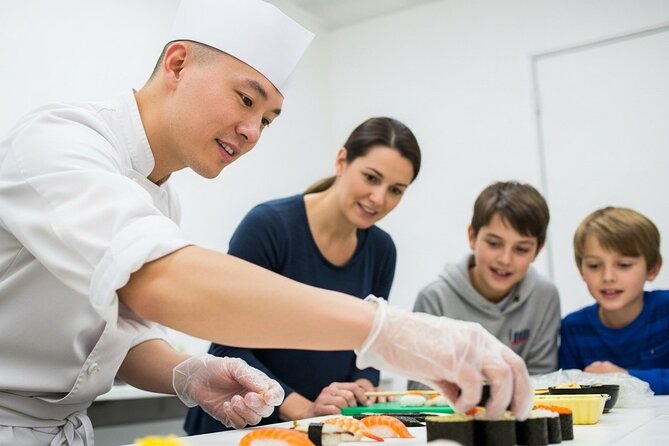
At $45.77 per person, this is not simply a sushi meal. You are paying for instruction, ingredients, a cultural activity, the sake-barrel opening, the torch demonstration, and the matcha preparation.
The value is strongest if you want several small experiences in one booking. A basic sushi lesson alone would give you one main focus. Here, you move from ceremony to technique to modern food styling and then tea. That range makes the price reasonable for someone building a Tokyo itinerary around memorable activities rather than just checking off restaurants.
The amount of food is more modest. You make 6 to 12 pieces, including nigiri and rolls, so do not book this expecting an all-you-can-eat meal. You are learning and tasting at the same time.
I also think the price works better for beginners than for experienced home cooks. If you already make sushi often, the basic rice shaping may feel familiar. The cultural opening, torch-finished salmon, and matcha may still appeal, but the instructional value will be lower.
The current rating is 5 out of 5 from 48 reviews, with 100 percent recommending the experience. One particularly strong response praised the instructor’s welcoming manner, fun approach, and willingness to go beyond the basic lesson. That fits the design of the class: its appeal depends heavily on the instructor creating a relaxed mood and keeping the group involved.
Who will enjoy this class most?
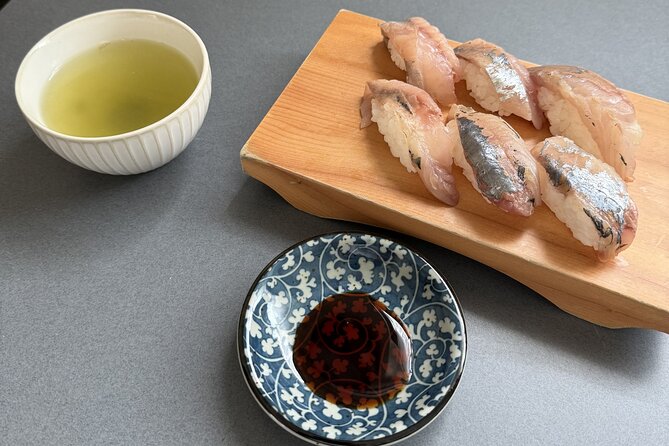
I would recommend it to first-time sushi makers, couples, families, solo visitors who enjoy group activities, and anyone who wants a short cultural experience in Asakusa. You do not need to arrive with cooking skills.
It is also a good choice if you want a break from shrine visits, shopping, and city walking. The activity keeps your hands busy and gives you something concrete to remember beyond photographs of Tokyo streets.
The class suits people who enjoy a little noise and participation. The Yoisho! and Wasshoi! chants are part of the character, not optional background decoration. If you prefer silent instruction, private coaching, or a formal tea setting, this may not be your ideal pick.
People avoiding alcohol can still take part through the water or warm-tea option. The class does not require you to join the sake toast with alcohol.
I would be less likely to choose it for a serious culinary student seeking advanced knife skills or detailed fish preparation. The experience is built around accessible basics and a cheerful cultural mix.
Small practical details that matter
The mobile ticket makes the booking easy to carry on your phone. Confirmation arrives at the time of booking, so you have the essential details soon after reserving.
The activity has free cancellation if you cancel at least 24 hours before the start time. Cancellations made less than 24 hours ahead are not refunded, and changes inside that window are not accepted. The cut-off follows Tokyo local time, so check the clock carefully if you are arranging plans from another time zone.
The class accepts a maximum of 20 participants. That is small enough to feel organized, but large enough that you should expect a shared workshop rather than a private lesson.
The starting address is also the ending address. There is no separate return transfer or final sightseeing stop included, which keeps the activity simple to fit into a busy day.
Should you book the Tokyo sushi, sake, and matcha class?
Book it if you want a friendly, compact introduction to Japanese food culture with plenty of participation. The best reasons are the unusual combination of kagami-biraki, beginner sushi instruction, torch-finished salmon gunkan, and self-whisked matcha. You get several distinct moments without committing half a day.
I especially like the balance between careful technique and playful group energy. The class gives you something to learn, something to taste, and something to photograph. At $45.77, that is solid value if you care about the full experience rather than the quantity of food.
Skip it if you want an advanced sushi course, a private chef lesson, or a traditional tea ceremony in a quiet setting. For everyone else, this is an easy-to-schedule Asakusa activity with a clear cultural focus and enough hands-on work to make the memory stick.
FAQ
How long does the sushi and matcha experience last?
The activity lasts approximately 1 hour and 30 minutes.
Where does the class meet?
It starts at Sushi Meets Matcha, 1-chōme-10-16 Hanakawado, Taito City, Tokyo 111-0033, Japan.
Does the activity end at the same place?
Yes. The experience ends back at the meeting point.
Is alcohol required during the sake ceremony?
No. You can choose water or warm Japanese tea instead of sake.
How many sushi pieces will I make?
You will make approximately 6 to 12 pieces, including nigiri and rolls.
What happens during the matcha portion?
You learn how to whisk your own matcha into a smooth, foamy bowl and enjoy it at the end of the experience.
Just added around Tokyo
- Tokyo Sake Tasting Tour with a Sake Expert★ 5.0 · 7 reviews
- Wagyu BBQ & Sukiyaki with Sake Pairing Experience near Ginza★ 5.0 · 2 reviews
- Tokyo: Serene Sakura & Sake: An Exclusive Brewery Pairing Lunch★ 5.0 · 2 reviews
- Japanese Sake Tasting & Wagyu Sukiyaki Cooking Class in Tokyo★ 5.0 · 10 reviews
- Tokyo Izakaya crawl (A tour of 2 izakayas, 1 bar, and a shrine)★ 5.0 · 8 reviews
- Private Tokyo Food Tour – Retro Akabane Izakaya Experience★ 5.0 · 14 reviews
- Tokyo: Learn the Art of Chopsticks in a Cozy Izakaya!★ 5.0 · 2 reviews
- Shinjuku Underground Nightlife Tour: Izakaya Food & Bar Hopping★ 5.0 · 11 reviews
Tokyo Sake Tours, compared.
Best of Shinjuku: Izakaya Food Tour (4 Stops, 14+ Tastings)
Read our review →
Tokyo: Shinjuku Local Bar and Izakaya Guided Walking Tour
Read our review →
Ramen and Sushi Cooking Class with Sake Pairing Set in Tokyo
Read our review →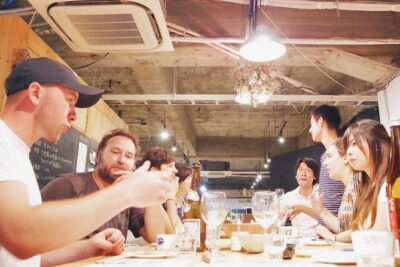
Sake Tasting Masterclass in Shinjuku (8+ Varieties with a Pro)
Read our review →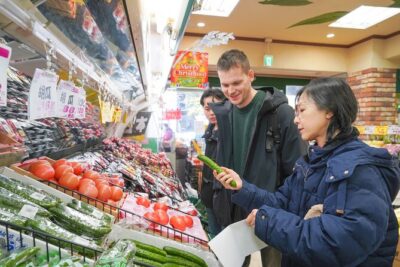
Tokyo Washoku 4-hour Cooking Class: From Market to Table
Read our review →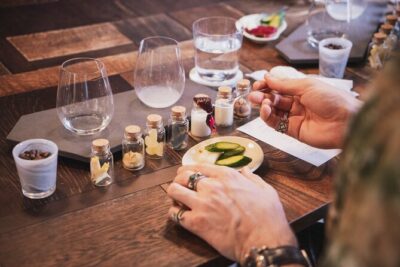
Sake Omakase in Tokyo: Guided Tasting by Certified Sommeliers
Read our review →Browse the lists this tour appears in