
REVIEW · TOKYO SAKE TOURS
Tsukiji: Outer Market Walking Tour & Sake Tasting Experience
Tsukiji is best understood with someone who knows where to pause. This three-hour tour begins at Hongwanji Temple, winds through the Outer Market, and ends with an unusually generous sake tasting. I like the mix of everyday food culture and a quiet religious stop. I also like that guides such as Kumi, Kyoko, Sarah, and Yuki help you choose market foods instead of forcing one fixed menu.
The main drawback is timing. The market can be crowded, and food purchases are extra. The sake session can also run long if you enjoy trying several varieties, so do not book it too close to your next plan. The market is closed on Sundays, national holidays, and some Wednesdays.
Key points to know before you book
- Start at Hongwanji Temple: Learn the local steps for preparing to pray before entering the market.
- Choose your own market bites: Try seafood, sweets, wagyu beef, whale meat, or other foods at your own cost, depending on what is available and what appeals to you.
- Taste far beyond basic sake: The salon offers roughly 50 to 60 types from breweries around Japan.
- Expect a guided tasting, not just a bar stop: A sake specialist explains production, brewery background, serving temperature, and flavor changes.
- Children can join: Kids receive soft drinks or tea and snacks, though the tour is naturally most appealing to mixed-age groups with adults who want sake.
- Plan for walking and stairs or uneven access: Comfortable shoes are essential, and the activity is not suitable for wheelchair users or pregnant women.
Starting with prayer at Tsukiji Hongwanji Temple
Meet your guide at the main entrance gate of Tsukiji Hongwanji Temple. This is a smart meeting point because it gives the afternoon a clear beginning, rather than dropping you straight into the market crowds.
The temple stop is brief but useful. Your guide shows you how to prepare for prayer and how to pray in a way that fits the local setting. You are not simply looking at a building from outside. You get a small lesson in behavior and respect before moving on.
That matters in Japan. Many visitors see temple customs but are unsure what to do, where to stand, or how much participation is expected. This introduction gives you enough context without turning the tour into a long lecture.
The temple also provides a calmer opening before the food stalls. If you have already visited several Tokyo shrines and temples, this may feel like a short orientation rather than a major sightseeing stop. Its value is in the practical instruction.
More Sake Tastings in Tokyo:
- Best of Shinjuku: Izakaya Food Tour (4 Stops, 14+ Tastings)
★ 5.0 · 1,863 reviews - Ramen and Sushi Cooking Class with Sake Pairing Set in Tokyo
★ 5.0 · 291 reviews - Sake Tasting Masterclass in Shinjuku (8+ Varieties with a Pro)
★ 5.0 · 271 reviews
Finding the useful side of Tsukiji Outer Market
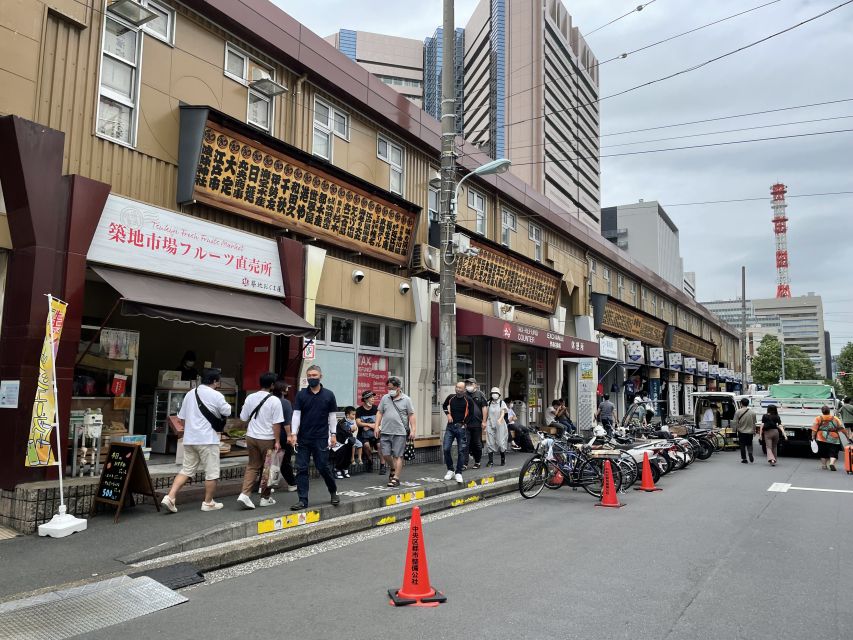
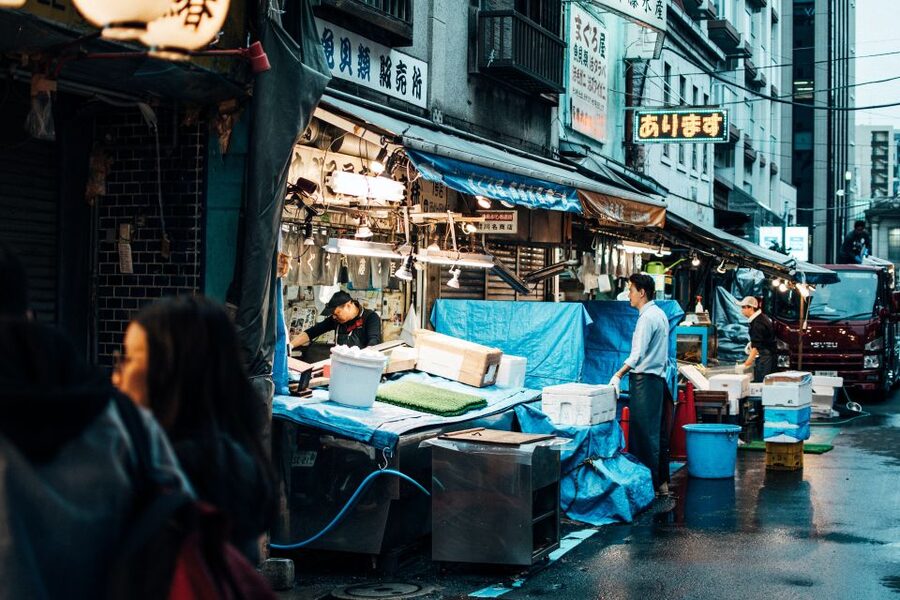
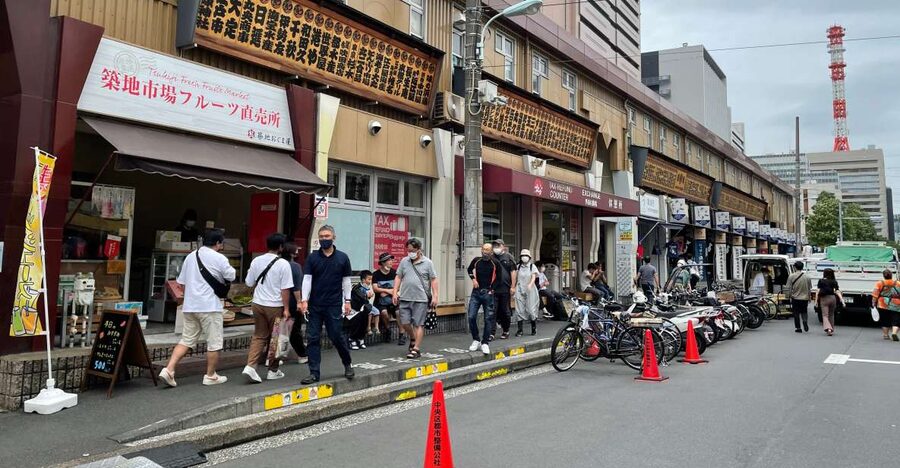
From the temple, you walk into Tsukiji Outer Market with a food guide. This is where the tour earns much of its price. The market is easy to enter but harder to read. Small shops, counters, produce sellers, seafood stalls, and snack spots can blur together when you are on your own.
Your guide points out places worth your time and explains how local shoppers use the area. Past tours have included stops or recommendations for wagyu beef, whale meat, seafood, sweets, and other local foods. You choose what you want to buy, so the experience can suit a light eater, an adventurous eater, or someone saving room for the sake.
That freedom is important. This is not a prepaid food crawl with the same bites for everyone. You pay for anything you eat, then decide how much is enough. If one person wants a small sweet and another wants something more filling, the group does not have to follow one appetite.
I would ask your guide for a short list of places to return to after the tour. Guides such as Kumi have written down extra market suggestions for later visits, which is helpful because three hours is not enough to see every corner.
The market itself can be crowded. Expect people moving in close quarters, and keep your walking pace flexible. The crowd is part of the setting, but it can make it harder to stop for long explanations or photos. Comfortable shoes are a must.
A practical point: the Outer Market is not open every day. Sundays and national holidays are closed, and some stores also close on Wednesdays. Check the date before building your Tokyo schedule around this experience. The tour runs rain or shine, so bring clothing that suits the forecast.
What you actually pay for at the market
The $70 price covers the walking tour, unlimited sake tasting, and snacks. It does not cover market food, hotel pickup, or hotel drop-off.
At first glance, the cost may seem high for a walking tour. The value improves if you plan to taste several sakes and want a guide who can make sense of the market. A simple market walk costs little on its own, but finding good stalls, understanding what you are seeing, and avoiding random purchases takes local help.
The market food budget is yours to control. You can spend very little or build a full lunch from several stops. Ask about prices before buying, especially if you are ordering seafood or premium meat. Since the tour does not include a fixed food allowance, you keep control of both your appetite and your spending.
The bigger part of the value comes after the walk. Unlimited tasting across dozens of bottles would be hard to arrange alone, especially if you do not read Japanese labels or know how sake styles differ. For someone curious about Japanese drinks, the combination is stronger than a basic market tour or a short single-flight tasting.
Moving from market snacks to the sake salon
The tour ends at a private sake salon a few minutes from either Tsukiji Station or Shintomicho Station. There is no return to your hotel, so note the final location when planning your evening.
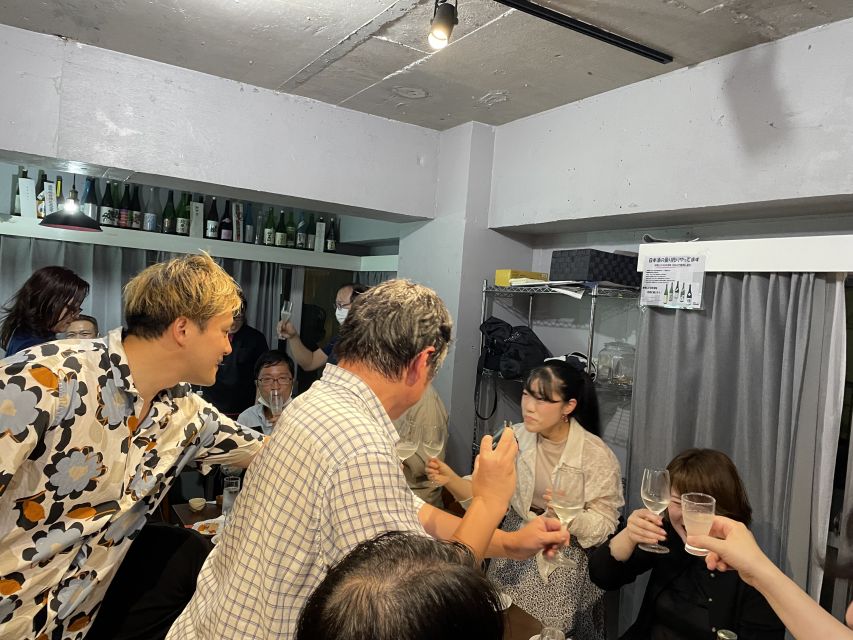
The salon portion is more organized than the market walk. A sake specialist introduces the bottles, explains where they come from, and talks about brewing, breweries, and the story behind each selection. You then taste at your own pace.
The advertised range is about 50 to 60 different sakes, though you will not necessarily sample every bottle. Past sessions have included around 15 to 28 varieties, depending on the group and the pace. That is still a large tasting, so pace yourself and drink water when possible.
The best part is the contrast between bottles. Sake is not one single flavor. Some samples may seem light, dry, sweet, fruity, earthy, or fuller in body. The specialist also serves sake at different temperatures so you can notice how warmth changes the aroma and taste.
This hands-on comparison makes the session useful even if you know little about sake. Instead of memorizing technical terms, you can work out what you like. If you prefer a certain bottle, you can focus on similar styles and, according to the experience details, may be able to buy some of the rare bottles afterward.
More Market Tours in Tokyo:
- Tokyo Washoku 4-hour Cooking Class: From Market to Table
★ 5.0 · 253 reviews - Tsukiji Market Eating Tour, Authentic Sushi & Sake Comparison
★ 5.0 · 52 reviews - Osaka: Cooking Class & Sake Tasting with Local Market Visit
★ 4.8 · 31 reviews - Private Nishiki Market Food & Sake Tour by Young Local Guides
★ 5.0 · 12 reviews
Why the tasting is more than unlimited pours
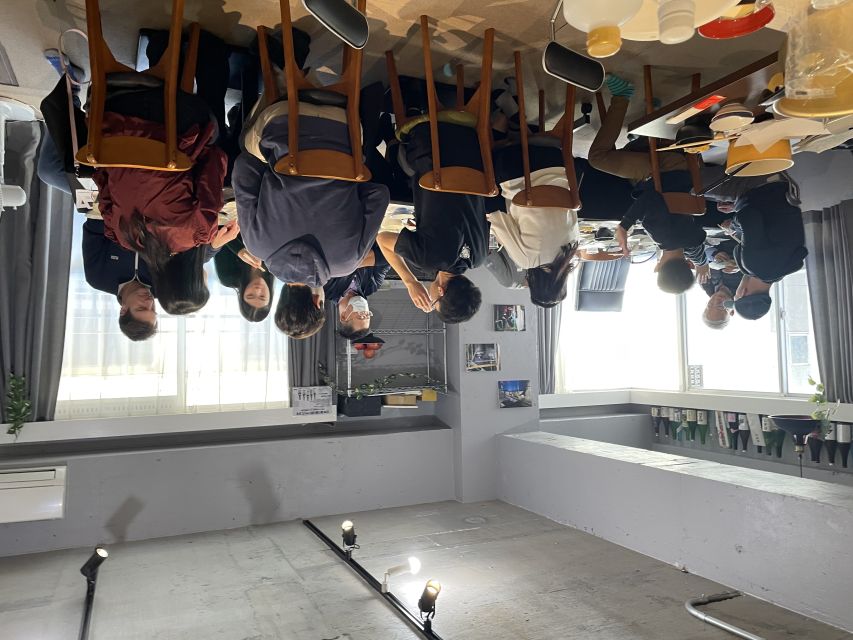
Unlimited sake sounds like the headline, but the explanations are what make the tasting worthwhile. You learn how sake is produced, how breweries differ, and why temperature affects the drink.
The snacks served during the tasting help clear the palate and pair with the samples. You can also bring market food to the salon, though those purchases remain your responsibility. This makes the two parts feel connected rather than like unrelated activities.
I would not treat the session as a race to sample the largest number. The range is generous enough that you can easily lose track of what you liked. Take note of a favorite or ask the sommelier to compare two bottles side by side.
This section suits people who enjoy wine tastings, beer brewing, or food pairing. It also works for complete beginners. Several guides explain sake in plain terms, and the tasting lets you test each idea immediately.
There is one practical concern: unlimited alcohol can make the afternoon tiring. Eat something first, use the market portion to build a proper snack or meal, and leave enough time for the tasting. You should not plan to drive afterward.
Bringing children and mixed-age groups
Children can join this experience. During the sake portion, they receive tea or soft drinks and snacks rather than alcohol. That makes the tour workable for families, especially if adults want an afternoon activity that includes local food and a cultural stop.
Still, the strongest appeal is for adults who want the sake session. A child may enjoy the temple and market, but several rounds of sake explanation will not hold every child’s attention. Keep the group’s ages and interests in mind before booking.
The walking portion is also more flexible than a fixed meal. Children can choose a snack, look at the market displays, and move on without waiting through a long restaurant course. Ask your guide for foods that fit your family’s preferences.
The activity is not suitable for pregnant women or wheelchair users. Bring a passport or identification card, with a copy accepted, as required information for the tour.
Guides make the market portion work
The guide is central to this experience. The strongest guide names associated with the tour include Kumi, Kyoko, Sarah, Yuki, Sally, and Hatsumi. English and Japanese are offered, but confirm the language available for your chosen departure.
A good market guide does more than translate signs. They adjust the walk around your appetite, answer food questions, and point out small spots you might miss. Kyoko, for example, has been praised for adapting the route and suggesting foods at sensible prices. Kumi is noted for explaining the market clearly and helping people find extra places to visit later.
The sake specialist has a different job. You want clear explanations, a good range of bottles, and enough freedom to compare what you taste. The best version of this tour gives you both: a guide who reads the market well and a sommelier who can explain sake without making it feel like a classroom.
Because the market is crowded, stay close to your group and listen for meeting instructions. The tour is walking-based, and there is no hotel pickup or drop-off.
Who will get the most from this $70 afternoon
I would choose this tour if you are visiting Tsukiji for the first time and want more than a quick meal. It gives you a starting point at the temple, a guided route through the market, and a structured tasting afterward.
It is also a good match for:
- First-time visitors who want help choosing market food
- People curious about sake but unsure what to order
- Food lovers who prefer choice over a fixed tasting menu
- Couples or friends who want a shared afternoon activity
- Families whose adults want sake while children receive nonalcoholic drinks
- Beer or wine fans interested in brewing and temperature changes
I would skip it if you want a quiet, private market visit, dislike crowds, or have no interest in alcohol. It is also a poor fit if you need wheelchair access or want every food cost included in the booking price.
Book early enough to check the day. A Sunday or national holiday will not work because the Outer Market is closed. If you have another reservation afterward, leave a generous gap. The sake portion is generous, and rushing away can spoil the last part of the afternoon.
Should you book the Tsukiji sake and market tour?
For most food-minded visitors, yes. The strongest reason is the pairing of two experiences that work well together: the market gives you local ingredients and street-level context, while the salon gives you a patient way to understand sake.
The $70 price is fair if you make use of the tasting and value local guidance. Remember to add your market food purchases, and allow extra time at the end. I would book it for an early or mid-afternoon slot on a day when you have no strict evening deadline.
Choose it especially if you have tried sake before but only know a few familiar bottles. Sampling many styles at different temperatures can change how you think about the drink. If you want to taste, learn, and leave with a better list of places and bottles for the rest of your Japan trip, this is a well-balanced choice.
FAQ
Where does the tour meet?
Meet your guide in front of the main entrance gate of Tsukiji Hongwanji Temple.
How long does the experience last?
The tour lasts three hours.
What is included in the price?
The price includes the walking tour, unlimited sake tasting, and snacks.
Is food at Tsukiji Outer Market included?
No. Food and produce purchased at the market cost extra.
How many kinds of sake can I taste?
The salon has about 50 to 60 different kinds available. The number you sample depends on the pace of the session and your preferences.
Can children join the tour?
Yes. Children receive soft drinks or tea and snacks during the sake tasting.
What happens if it rains, and when is the market closed?
The tour takes place rain or shine. The Outer Market is closed on Sundays and national holidays, and some stores also close on Wednesdays.
More Sake Walking Tours in Tokyo
- Tokyo: Shinjuku Local Bar and Izakaya Guided Walking Tour
★ 4.9 · 1,794 reviews - Tokyo: Shinjuku Local Bar Hopping Walking Tour
★ 5.0 · 186 reviews - Private Tour: Tokyo’s Oldest Sake Brewery and Riverside Walk
★ 5.0 · 25 reviews - Osaki, Togoshi Ginza Private Walking Food , Izakaya dinner tour
★ 5.0 · 5 reviews
More Shopping Trips in Tokyo
- Nishiki Market, Private Sushi class & Sake Tasting in Townhouse
★ 5.0 · 6 reviews
Just added around Tokyo
- Tokyo: Serene Sakura & Sake: An Exclusive Brewery Pairing Lunch★ 5.0 · 2 reviews
- Tokyo Sake Tasting Tour with a Sake Expert★ 5.0 · 7 reviews
- Wagyu BBQ & Sukiyaki with Sake Pairing Experience near Ginza★ 5.0 · 2 reviews
- Tokyo Izakaya crawl (A tour of 2 izakayas, 1 bar, and a shrine)★ 5.0 · 8 reviews
- Japanese Sake Tasting & Wagyu Sukiyaki Cooking Class in Tokyo★ 5.0 · 10 reviews
- Private Tokyo Food Tour – Retro Akabane Izakaya Experience★ 5.0 · 14 reviews
- Tokyo: Learn the Art of Chopsticks in a Cozy Izakaya!★ 5.0 · 2 reviews
- Shinjuku Underground Nightlife Tour: Izakaya Food & Bar Hopping★ 5.0 · 11 reviews
Tokyo Sake Tours, compared.
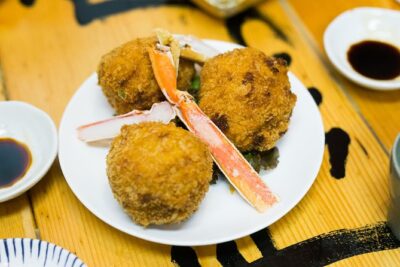
Best of Shinjuku: Izakaya Food Tour (4 Stops, 14+ Tastings)
Read our review →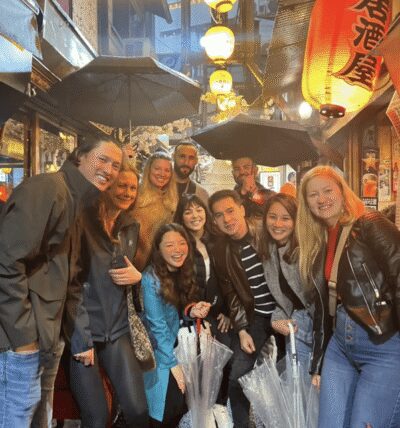
Tokyo: Shinjuku Local Bar and Izakaya Guided Walking Tour
Read our review →

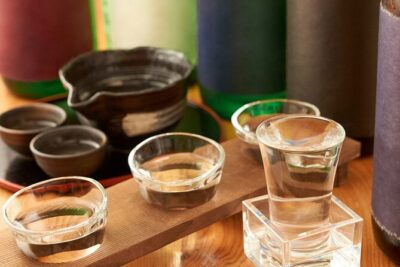
Ramen and Sushi Cooking Class with Sake Pairing Set in Tokyo
Read our review →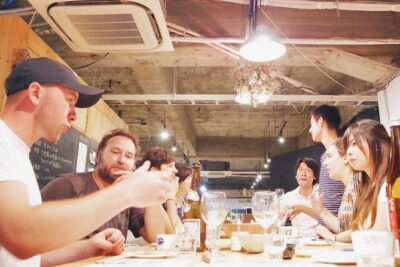
Sake Tasting Masterclass in Shinjuku (8+ Varieties with a Pro)
Read our review →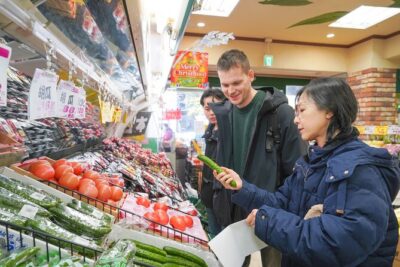
Tokyo Washoku 4-hour Cooking Class: From Market to Table
Read our review →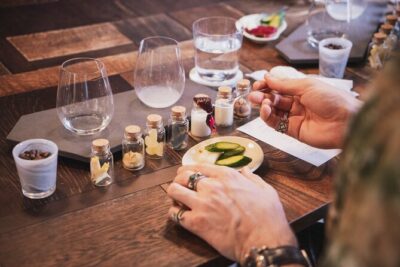
Sake Omakase in Tokyo: Guided Tasting by Certified Sommeliers
Read our review →Browse the lists this tour appears in