
REVIEW · TOKYO SAKE TOURS
Tokyo Washoku 4-hour Cooking Class: From Market to Table
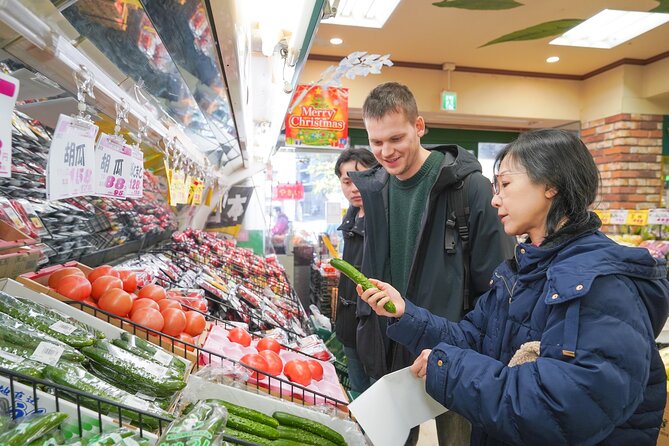
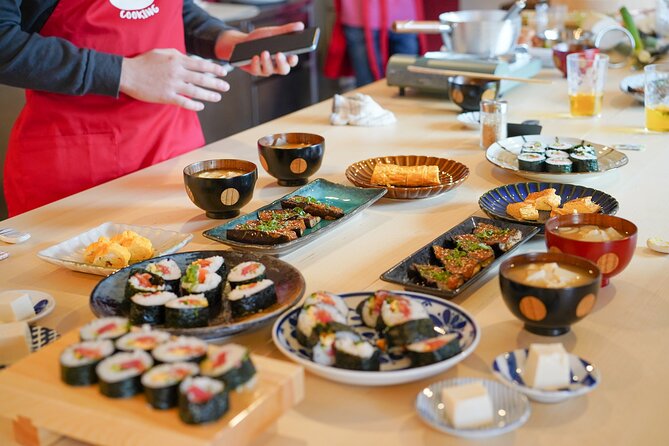
The best part of this Tokyo cooking class happens before you reach the kitchen. You shop at a local supermarket with your guide, learning how to spot Japanese ingredients and understand the everyday foods behind the dishes you will make. Then you turn that shopping trip into lunch with makisushi, miso soup, dashimaki tamago, and nasu dengaku.
I like the useful, hands-on format and the small maximum of seven people. I also like that guides such as April, Yuri, Masai, Alice, and Mihori explain techniques patiently and send you home with recipes. The main consideration is timing: you must meet at 10:00 a.m., and arriving more than five minutes late without contact can mean losing the tour and your payment.
Key points at a glance
- A supermarket lesson first: Learn how Japanese shoppers choose ingredients before cooking with them.
- Four classic dishes: Make rolled sushi, miso soup, Japanese rolled omelet, and grilled eggplant from scratch.
- Small group setting: The class has a maximum of seven participants, allowing room for questions and hands-on work.
- Guides with different strengths: April, Yuri, Masai, Alice, Taka, Suzy, and Mihori are among the instructors praised for patience, warmth, and clear teaching.
- Recipes for your kitchen: Take home instructions so the class can continue after your Tokyo visit.
- A meal with drinks: Beer or sake tasting may accompany the food, adding a pleasant Japanese dining touch.
Why the supermarket visit matters
Many cooking classes hand you a tray of measured ingredients and get straight to chopping. This one begins at a local supermarket near Iriya Station, which makes the experience more useful from the start.
Your guide shows you how to choose Japanese ingredients and explains vegetables, meat, and other foods as you move through the store. That matters because Japanese supermarkets can feel unfamiliar even when the food looks simple. Packaging, labels, cuts of meat, and prepared ingredients may not be easy to understand at a glance.
I like this part because it connects the meal to ordinary life in Tokyo. You are not only learning a recipe. You are learning what to look for when you shop on your own, which is a skill you can use again during the rest of your trip.
The supermarket stop also gives you a better sense of the meal ahead. Instead of seeing ingredients as anonymous items on a counter, you have helped select them. The cooking feels more connected to the place you are visiting.
The exact time spent shopping is not stated, so do not expect a guided food tour of the entire store. Think of it as a focused ingredient lesson before class. The guide will share practical tips, but the main purpose is to prepare for cooking.
More Cooking Classes in Tokyo:
- Ramen and Sushi Cooking Class with Sake Pairing Set in Tokyo
★ 5.0 · 291 reviews - Tokyo: Sushi and Ramen Cooking Class with Sake Pairing Set
★ 5.0 · 81 reviews - Tokyo Night Cooking Class: 5 Home-Cooked Japanese Dishes
★ 5.0 · 70 reviews
Walking from Iriya to the cooking studio
The meeting point is outside FamilyMart at 2-chōme-1-10 Shitaya, in Taito City. The listed start time is 10:00 a.m., and the activity finishes back at the cooking studio, which is also the meeting point for the return portion of the experience.
The location is near public transportation, but you should still allow extra time to find the exact starting spot. Tokyo station addresses can be precise yet confusing when you are looking at several nearby streets or exits. Since the class begins on time, arriving early is the sensible choice.
After the supermarket visit, you walk to a dedicated cooking studio. The studio is described as spacious and well set up, an important detail when several people are preparing food at once. A room with enough counter space makes it easier to see the instructor, work with your ingredients, and avoid crowding around one cutting board.
The walk also creates a natural pause between shopping and cooking. You have time to think about what you just saw, then settle into the class. The tour does not end with a transfer around Tokyo, so you can plan the rest of your day from the studio.
Kappabashi Dougu Street may be visited on your own after the class. That is a useful pairing for anyone interested in Japanese kitchen tools, but it is not presented as part of the guided activity. Plan that extra stop separately.
Four dishes, four useful techniques
The meal covers several familiar Japanese foods, and each one teaches a different basic skill.
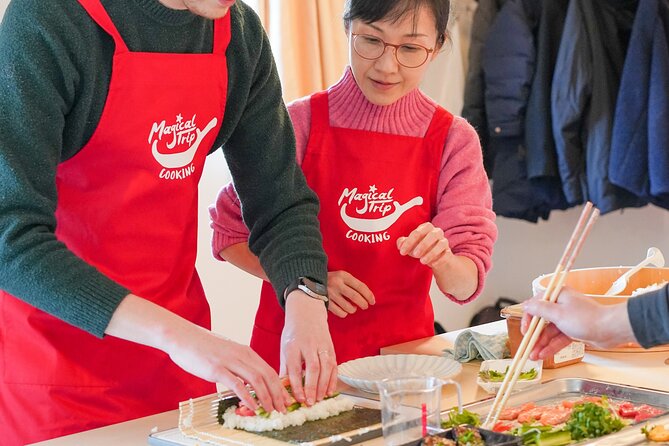
Makisushi, or rolled sushi, gives you practice with arranging ingredients, handling rice, and rolling the finished piece neatly. It is a good dish for learning how small changes in placement and pressure affect the final shape. You do not simply watch the guide make a roll. The class is designed for hands-on preparation.
Miso soup looks simple, but it is a useful introduction to Japanese flavor building. You get to work with ingredients that are common in home cooking and learn how a few well-chosen components can make a satisfying dish.
Dashimaki tamago is a Japanese rolled omelet. The technique takes care and patience because the egg is cooked and rolled in layers. It is one of the more distinctive skills in the menu, and learning it in person is more helpful than trying to copy a short written recipe.
Nasu dengaku uses grilled eggplant with a savory topping. It adds a vegetable dish to the meal and shows how Japanese cooking can make one main ingredient feel substantial without requiring a long list of components.
Together, the dishes form a full meal rather than one isolated recipe. You prepare sushi, soup, egg, and vegetables, then sit down to eat what you made. That range is one reason the four-hour duration feels justified.
If you cannot eat eggs, the food selection drops from four types to three. You should also report allergies or dietary needs at least one day before the class. Vegan and vegetarian arrangements are welcome, with ingredients and the cooking process adjusted when possible.
The operator cannot guarantee an allergy-free kitchen, and substitutions may not always be available. If your allergy is serious, read that limitation carefully before booking and contact the provider in advance.
What your guide adds to the class
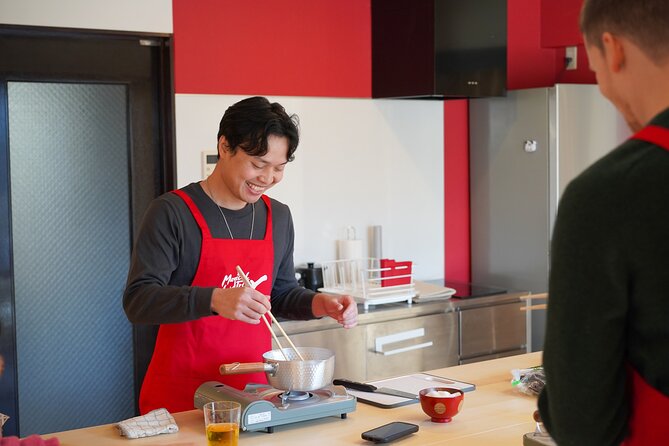
The guide is central to the experience. The cooking studio and recipes are useful, but the teaching style determines how much you take away.
April is described as encouraging and skilled at guiding participants through each step. She also introduced beer and sake tasting during the cooking lesson, adding a social element to the meal.
Yuri is praised for explaining Japanese food in detail, showing how to make each dish, and providing recipes for home use. Masai is noted for patience and for making comparisons with life in the West, which may help you place unfamiliar techniques in a familiar frame.
Alice brings a cheerful manner and stories to the cooking and meal. A class with her may feel especially conversational. Mihori combines clear instruction with light conversation and also leads the supermarket shopping section.
Other named instructors include Minnie, Taka, Nigiri, and Suzy. Suzy is noted for clear English, patience, and a personable approach. The exact instructor is not guaranteed, so book this class for the format rather than for a specific guide unless the operator confirms otherwise.
The strongest pattern is the amount of direct support. You can ask questions during the class, and the activity is designed to adjust to participant needs when possible. That makes it a better choice for a first Japanese cooking lesson than a fast demonstration where you only watch.
More Market Tours in Tokyo:
- Tsukiji: Outer Market Walking Tour & Sake Tasting Experience
★ 4.9 · 81 reviews - Tsukiji Market Eating Tour, Authentic Sushi & Sake Comparison
★ 5.0 · 52 reviews - Osaka: Cooking Class & Sake Tasting with Local Market Visit
★ 4.8 · 31 reviews - Private Nishiki Market Food & Sake Tour by Young Local Guides
★ 5.0 · 12 reviews
A meal with sake, beer, and conversation
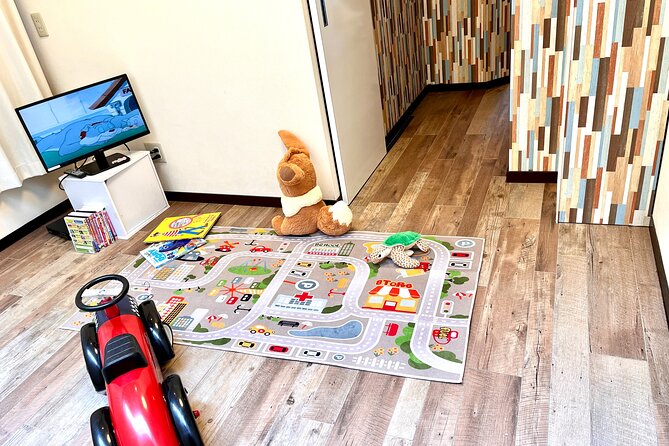
Once the food is ready, you eat together in the studio. This turns the lesson into a shared meal, not just a practical workshop.
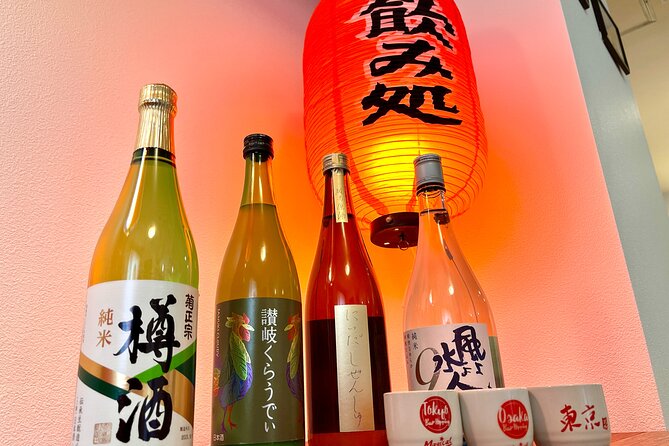
Beer and sake tasting may be included during the class. The description specifically points to experimenting with different sake or other drink pairings, so you can compare how the drinks work with the dishes. This is a modest but enjoyable addition, especially if you want a taste of Japanese dining customs without booking a separate sake tour.
The drink element may not suit everyone. Anyone avoiding alcohol should make that clear before or at the start of the class, and children or non-drinkers may prefer to focus on the food. The provided information does not promise a particular number of pours or specific sake brands, so keep expectations reasonable.
The room encourages conversation with the guide and the other participants. The maximum group size is seven, which is small enough for questions without making the class feel like private instruction. It also means you may be cooking with people from several countries, adding a social side to the meal.
Price and value for a four-hour Tokyo activity
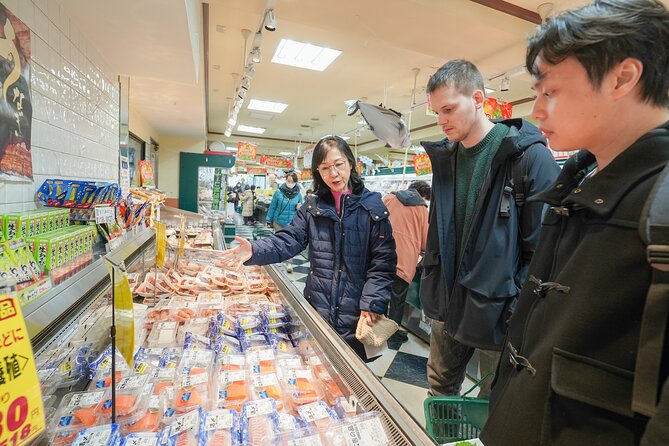
At $79.59 per person, this is not the cheapest way to eat lunch in Tokyo. It is also more than the price of buying the same basic ingredients at a supermarket and preparing them yourself.
The value comes from the combination of four parts: guided shopping, hands-on instruction, a cooked meal, and recipes to take home. You are paying for time with a local cooking guide as well as food. If you want to learn techniques you can repeat, that package is more useful than a meal where you simply arrive, eat, and leave.
I especially like the recipe element. It gives the class a life after Tokyo. Sushi rolls, miso soup, rolled omelet, and grilled eggplant are practical dishes to revisit at home, and the ingredients are less intimidating after you have learned how to choose them.
The price makes the most sense for people who want participation. If you mainly want a quick lunch or a polished food presentation, you can find simpler and possibly less expensive options. If you enjoy asking questions, chopping, cooking, tasting, and taking notes, four hours gives you a fair amount of activity for the cost.
Who should book this experience
I would recommend this class to first-time visitors who want an everyday view of Japanese food. It gives you a guided introduction without requiring prior cooking skill.
It also suits families with older children and teenagers. The work is active, the dishes are varied, and the shared meal gives everyone something to do. The group size helps, though the class is not described as a private family activity.
Vegetarians and vegans are welcome with advance notice. People with allergies should be more cautious because the kitchen cannot promise an allergy-free environment. Egg-free diners can participate, but the meal will include three types of food rather than four.
You should also be comfortable with a fixed schedule. The class starts at 10:00 a.m. and does not wait for late arrivals. Free time or date changes are available up to 24 hours before the start, but late changes, no-shows, or cancellations after the start time are not refunded.
Tokyo weather matters too. Summers can reach 40°C, while winter temperatures can fall to -5°C. Dress for the season, especially for the walk between the supermarket and studio.
Practical details before you go
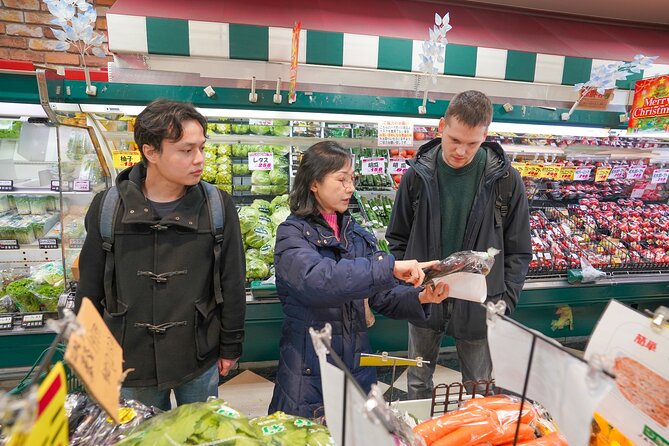
Use the mobile ticket and make sure you know the meeting point at FamilyMart before leaving your hotel. Build in spare time for public transportation and the final walk to 2-chōme-1-10 Shitaya.
Tell the provider about dietary requests or allergies at least one day ahead. Same-day requests cannot be accommodated, and substitutions are not guaranteed.
The class ends at the cooking studio. From there, you may choose to visit Kappabashi Dougu Street independently, but allow time for that extra visit rather than assuming it is part of the four-hour schedule.
For cancellations, you receive a full refund if you cancel at least 24 hours before the local start time. Changes made inside that window are not accepted. Poor weather may lead to a new date or a full refund.
Should you book the Tokyo Washoku cooking class?
Book it if you want to understand Japanese food through action. The supermarket visit, small group, varied menu, patient guides, and take-home recipes give you more than a standard cooking demonstration.
I would be especially keen to book if this is your first trip to Japan, if you enjoy cooking at home, or if you want a relaxed morning activity that ends with your own lunch. The main reasons to hesitate are strict timing, limited options for serious allergies, and the fact that the instructor is assigned rather than guaranteed.
For $79.59, the class offers good value when you count the shopping lesson, four hours of instruction, meal, drinks, and recipes. It is a practical Tokyo experience with something to show for it after you return home.
FAQ
Where does the cooking class begin?
The class begins at FamilyMart, 2-chōme-1-10 Shitaya, Taito City, Tokyo 110-0004, near Iriya Station.
What time does the activity start?
The start time is 10:00 a.m. The group begins on time, and arriving more than five minutes late without contacting the provider is treated as a cancellation.
How long does the cooking experience last?
The activity lasts approximately four hours.
What dishes will I prepare?
The planned dishes include makisushi, miso soup, dashimaki tamago, and nasu dengaku. If you cannot eat eggs, the food selection is reduced from four types to three.
Can vegetarians and vegans join?
Yes. Vegan and vegetarian participants are welcome, but you must provide dietary details at least one day before the class.
How many people can join the class?
The maximum group size is seven participants. Other people may be part of your cooking group.
What is the cancellation policy?
You can cancel for a full refund up to 24 hours before the experience start time. Cancellations or changes made less than 24 hours before the start are not eligible for a refund or date change.
More Shopping Trips in Tokyo
- Nishiki Market, Private Sushi class & Sake Tasting in Townhouse
★ 5.0 · 6 reviews
Just added around Tokyo
- Tokyo: Serene Sakura & Sake: An Exclusive Brewery Pairing Lunch★ 5.0 · 2 reviews
- Tokyo Sake Tasting Tour with a Sake Expert★ 5.0 · 7 reviews
- Wagyu BBQ & Sukiyaki with Sake Pairing Experience near Ginza★ 5.0 · 2 reviews
- Japanese Sake Tasting & Wagyu Sukiyaki Cooking Class in Tokyo★ 5.0 · 10 reviews
- Tokyo Izakaya crawl (A tour of 2 izakayas, 1 bar, and a shrine)★ 5.0 · 8 reviews
- Tokyo: Learn the Art of Chopsticks in a Cozy Izakaya!★ 5.0 · 2 reviews
- Shinjuku Underground Nightlife Tour: Izakaya Food & Bar Hopping★ 5.0 · 11 reviews
- Private Tokyo Food Tour – Retro Akabane Izakaya Experience★ 5.0 · 14 reviews
Tokyo Sake Tours, compared.
Best of Shinjuku: Izakaya Food Tour (4 Stops, 14+ Tastings)
Read our review →
Tokyo: Shinjuku Local Bar and Izakaya Guided Walking Tour
Read our review →

Ramen and Sushi Cooking Class with Sake Pairing Set in Tokyo
Read our review →
Sake Tasting Masterclass in Shinjuku (8+ Varieties with a Pro)
Read our review →
Sake Omakase in Tokyo: Guided Tasting by Certified Sommeliers
Read our review →
Tokyo: The Best of Izakaya in Shinjuku Food & Cultural Tour
Read our review →Browse the lists this tour appears in